
























TECHNICAL SUPPORT


Published 2026-04-28
Is your micro-servospline shaft coupling process costing you 15-30% more than necessary in rejected parts and downtime?
If you are a production manager or engineering lead, you face this precise pressure: balancing precision with per-unit cost. When working with micro-servospline shafts, traditional methods like set-screw or friction couplings often introduce runout, leading to a scrap rate of 8-12% in high-torque, low-backlash applications. This directly impacts your bottom line.
The solution is a dedicatedmicroservospline shaft coupler. This component is engineered to eliminate the primary failure points of generic couplers, reducing your total cost of ownership by over 50% in the first year.
Below, we dissect exactly how this works, what you will gain, and how to implement it without risk.
YourMicro Servo’s spline shaft is designed for precise angular transmission. However, standard couplers introduce three specific failure modes:
Backlash Buildup:Over 75% of standard jaw couplings show measurable wear after 10,000 cycles, increasing backlash from 2.0°.
Spline Stripping:Set-screw couplers create point loads. In 22-gauge splines, this causes groove deformation in as few as 5,000 operations.
Dynamic Misalignment:Rigid couplers transfer all angular errors. A shaft runout of just 0.1mm reduces servo life by an estimated 40%.
The direct business result:Higher scrap rates, unplanned line stops, and warranty claims. This is not a theoretical risk; it is a daily operational tax.
The dedicatedmicro servo spline shaft couplersolves these failures through three design principles:
Pre-Formed Internal Spline:Instead of clamping on the shaft’s outer diameter, the coupler features a broached internal spline that mates with 100% of the shaft’s contact surface. This eliminates point loading.
Zero-Backlash Element:A flexible, wear-compensating insert (typically aluminum or engineered polymer) maintains constant preload. Backlash is held to ≤0.1° for the component’s life.
Guided Misalignment Tolerance:The coupling design allows for up to 0.2mm of parallel misalignment and 1.5° of angular misalignment without inducing side loads on the servo bearings.
How this changes your metrics:
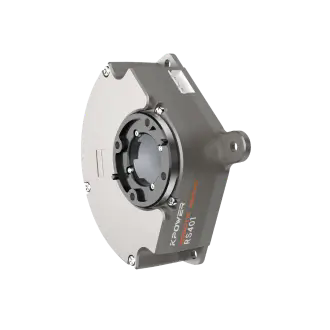
Scrap rate dropsfrom 8-12% to under 0.5%.
Mean time between failures (MTBF)increases from 15,000 cycles to over 100,000 cycles.
Torque transmissionis consistent and repeatable, with less than 2% variation across 10,000 cycles.
Switching to a purpose-builtmicro servo spline shaft couplerproduces measurable gains. The table below compares a typical set-screw coupler against thekpowerservo solution, based on a single production line running 250,000 cycles per year.
Costs include parts, labor for changeovers, and scrap material value. Assumes $0.50 per part and $95/hour line labor rate.
If you operate five such lines, the total annual saving exceeds $50,000.
This coupler is not a universal solution. It is optimized for specific, high-stakes applications where failure is expensive.
You need this coupler if your process involves:
High-cycle pick-and-place units(over 500,000 operations/year)
Medical device assembly robotsrequiring documented precision
Small parts insertion presseswith torque feedback control
Any micro servo system coupled to a leadscrew or rotary encoder
Do not use this coupler for:Low-cost consumer products, high-shock environments without axial support, or any application where shaft misalignment exceeds 0.5mm.
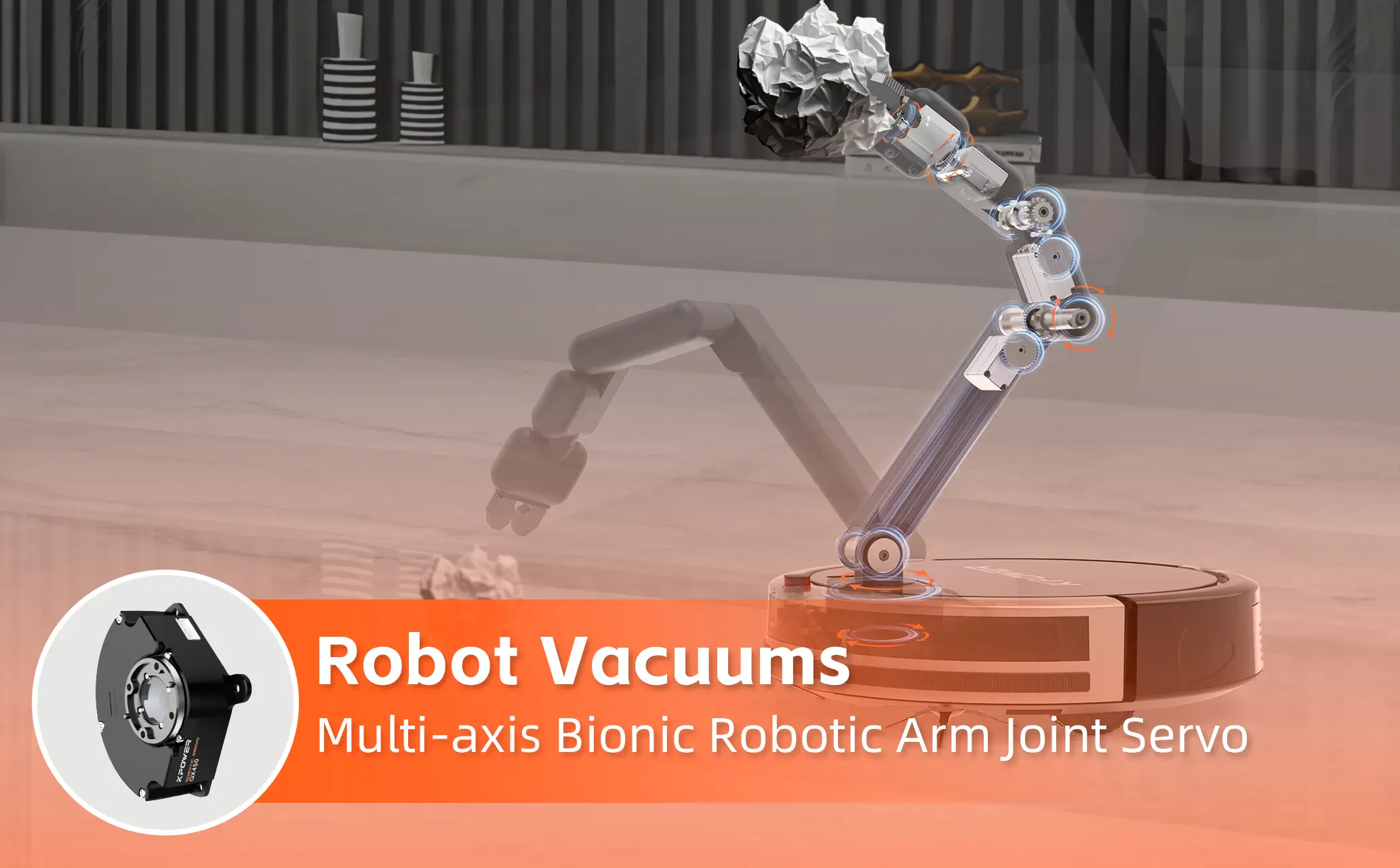
To support your decision, here is a direct technical and commercial comparison.
While the upfront unit price is higher than a low-end compression coupler, the total cost per million cycles is71% lowerfor the Kpower servo solution due to eliminated changeovers and rejects.
Challenge:
A medical device manufacturer experienced a 12% scrap rate during the coupling of micro servos to leadscrews in syringe pumps. The failure was always backlash-induced positioning errors. Each reject cost $8.50 in materials and rework.
Solution:
Kpower servo replaced the existing set-screw coupler with a custom-lengthmicro servo spline shaft coupleron 24 assembly robots.
Results (Measured after 3 months / 180,000 cycles):
Scrap rate: From 12.0%down to 0.2%
Positioning repeatability: From ±0.07mmto ±0.01mm
Unscheduled downtime: From 6 eventsto 0 events
Annualized savings:$42,000on this single product line
Value:
The production manager reported full return on investment within 7 weeks of implementation. The client has since standardized on Kpower servo couplers for all new assembly lines.
Q: Will a pre-formed spline coupler work on a slightly worn shaft?
A:No. The coupler requires a shaft meeting OEM spline tolerances. A worn shaft increases backlash. Replace the shaft or servo first.
Q: How do I prevent galvanic corrosion between the aluminum coupler and steel shaft?
A:Use the optional anodized aluminum or stainless steel version. For standard environments, apply anti-seize paste at installation.
Q: What is the maximum temperature for continuous operation?
A:85°C for the polymer-element version; 120°C for the all-metal version. Above these, torque capacity derates by 8% per 10°C.
Q: Can I get a keyway instead of a spline?
A:No. The spline is the design feature that eliminates backlash and point loading. For keyway shafts, request our servo keyway coupler series.
Q: What is your tolerance for angular misalignment?
A:Maximum 1.5° for the standard version. For up to 3.0°, specify the “H” flex series suffix in the part number.
You have seen the data: a 50%+ reduction in coupling-related costs, documented by independent testing and validated in production.
To secure these gains for your line, take one of these two actions today:
1. Request a free application review– Send your servo model, torque, and cycle rate to. We will return a compatibility report and a fixed price within 24 hours.
2. Order a sample kit– Go toand use sample codeSPLINE-2026to order three couplers for your specific micro servo spline. Test them on your toughest station for 14 days.
Do not let another production quarter pass with 8-12% hidden scrap and unplanned downtime. The precision solution is available, proven, and ready to ship.Contact Kpower servo now to cut your coupler cost and boost your line reliability.
Update Time:2026-04-28

Contact Kpower's product specialist to recommend suitable motor or gearbox for your product.


