




TECHNICAL SUPPORT


Published 2026-05-02
Let’s talk about the helicopter servo first, which is also the model helicopter server. The working principle is expressed as follows. It will send out the flight control system or receiver. These electrical signal instructions are accurately and appropriately converted into the mechanical angle rotation of the rudder arm. Then, through this driving method, the swash plate can make corresponding changes, and ultimately the blade angle can be adjusted. The accuracy and speed of this conversion process will directly play a decisive role in whether the helicopter can hover stably and fly on precise routes.
Regardless of brand or model, its core working logic operates according to the closed loop of "signal-processing-execution". Taking the most common model helicopter swashplate control, the entire process is divided into three core steps:
1. Signal interpretation: Capture of PWM/PPM signals
The servo relies on the flight control or receiver to output a pulse width modulation signal based on your joystick movements, which changes due to time, and the signal is continuously monitored through its internal core chip.. There is a key point, which is the duration of the high signal level, generally from 1ms to 2ms, which directly corresponds to the target position of the steering arm. 1ms represents a limit position of the servo, such as -45°, 1.5ms represents the neutral position, which is 0°, and 2ms represents another limit position, which is +45°.
2. Power execution: precise coordination of motor and gear set
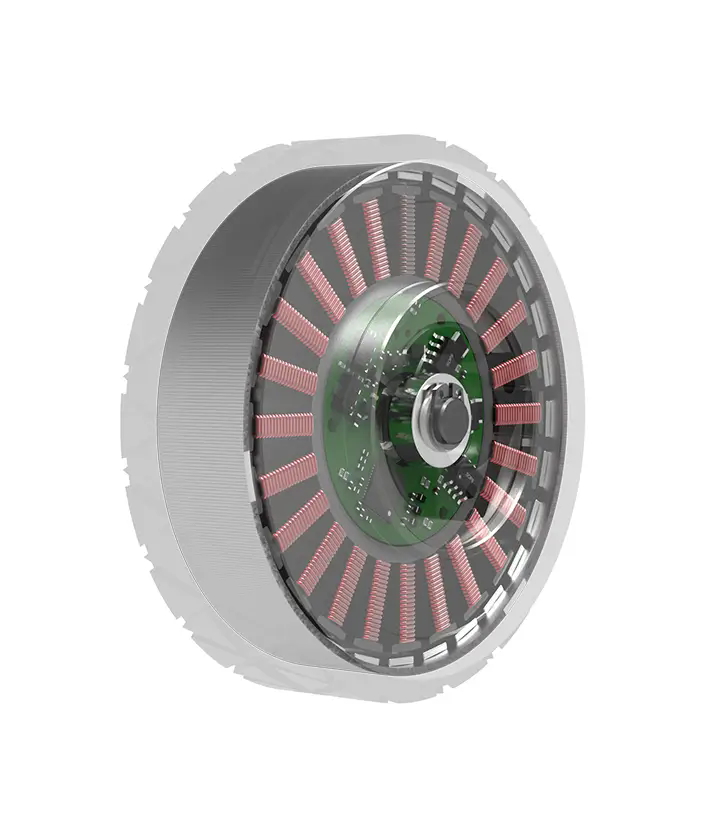
After capturing the signal, the internal control circuit of the servo will prompt a DC motor to rotate. The motor uses a set of metal or engineering plastic reduction gear sets with high precision and extremely small backlash to reduce the speed of the power in a high-speed rotating state and amplify the torque. Finally, the power is transmitted to the output shaft, which drives the rudder arm to swing to the target angle. When paying attention to power execution, you must pay attention to the material of the gear. Metal gears have larger torque and strong impact resistance, and are suitable for models above 450. Plastic gears have higher precision and smaller virtual positions but are prone to tooth sweeping, making them more suitable for micro helicopters.
3. Feedback calibration: closed-loop control of potentiometer or magnetic encoder
This is the key to ensuring accuracy. The output shaft is connected to a potentiometer or a more advanced magnetic encoding sensor. When the steering arm rotates, the resistance value of the potentiometer will change linearly. The steering chip will continuously compare the theoretical position voltage corresponding to the target signal and the current actual position voltage fed back by the potentiometer. When the two are consistent, the motor will stop rotating. If there is a deviation, the motor will continue to make corrections, thus forming a real-time closed-loop control system.
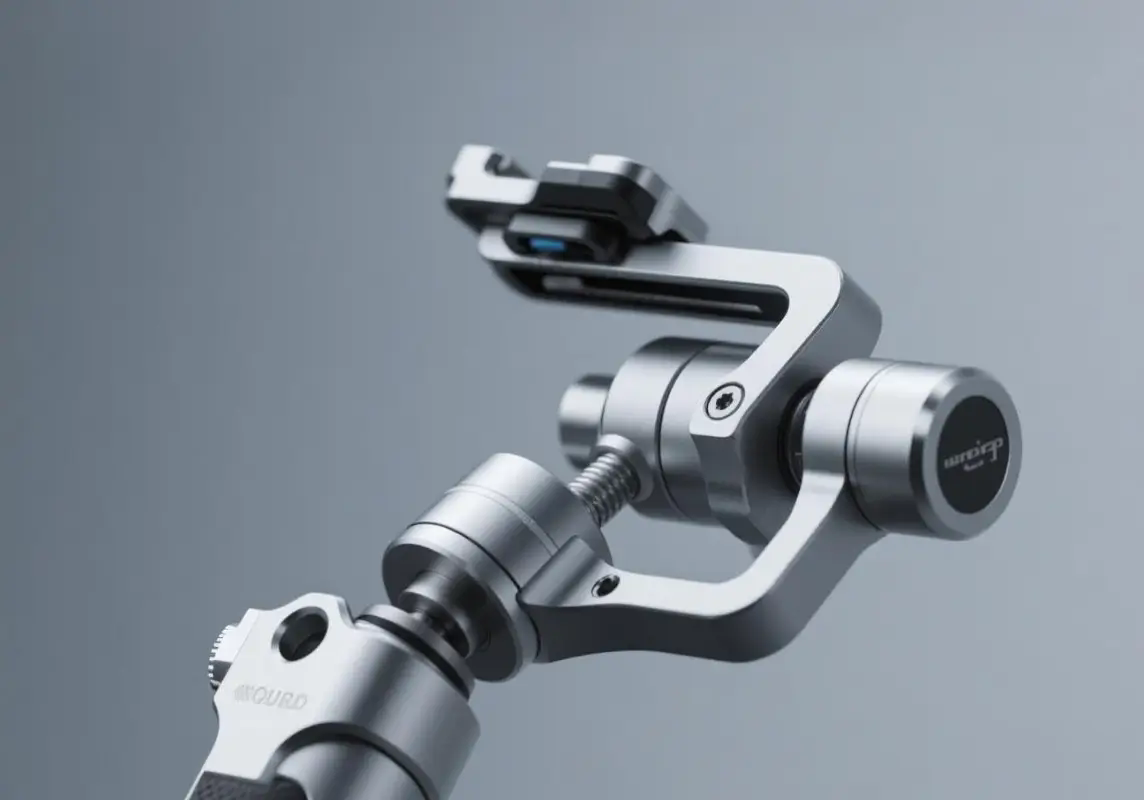
After knowing the principle content, your task is to identify the two most common types of servos. There are fundamental differences in the working mechanisms of these two types of servos.
When selecting a servo for a helicopter, if flight is the main consideration, then for practicing the tail rudder, it is feasible to choose a cost-effective simulated servo;But as long as it involves aileronless systems or requires precise control, digital servos are the only choice.。
Compared with fixed wings, each servo of a helicopter is subject to dynamic and high-frequency loads. There are three reasons for this:
There is such an operating load that when the main rotor rotates, it will produce an extremely huge gyroscopic effect and periodic pitch pulling force. In this case, the swashplate servo needs to continuously output a large amount of torque to deal with it, and it is not a situation where the action occurs instantaneously.
Extremely high resolution, the corrections during hovering are minimal to extremely fine, which requires the servo to have a very small dead zone width and a very high potentiometer accuracy. For ordinary servos, if there is a step accuracy of 0.5 microseconds, it will cause the fuselage to shake.
Conflict between speed and torque: 3D flight requires the servo to have such characteristics. On the one hand, it must be fast, specifically, it can rotate 60° in 0.05 seconds. On the other hand, it must be stable, that is, the torque must be greater than 5kg·cm. This puts forward extreme requirements for the design of its internal motor, gear, and circuit.。
Q1: The servo vibrates violently or makes a "sizzling" sound. Is this normal?
A. Abnormality is mostly due to the unstable signal feedback caused by the wear of the potentiometer, or the normal high-frequency correction sound that occurs when the digital servo is at the load point. It needs to be distinguished. Jitter is a fault, while rapid correction is a normal phenomenon!
Q2: In a newly installed helicopter, why is the direction of steering gear action reversed?
Sentence A: An error occurred during the reverse setting of the internal channel of the remote control, and there is an error. In the menu named "REVERSE" or marked "SERVO REVERSE" on the remote control, inverting the corresponding specific channel can solve the problem and achieve the purpose.
Q3: After the aircraft exploded, the servo could rotate but was completely powerless. What was wrong?
"A" is expressed as the internal reduction gear has a tooth-sweeping condition. It performs normally during idling operation. However, once it is loaded with load, it will slip. If the servo is opened and the damaged gear set is replaced, the repair can be achieved.
Q4: Can digital servos be used directly on old receivers?
A: It works but you have to be careful. As long as the receiver outputs a standard PWM signal, it will operate normally. It's a pity that the high refresh rate feature of the digital servo cannot be used, and may cause additional heating.
Q5: How to judge whether the "dead zone width" of the servo is too large?
The situation is like this. For A, when the rocker is slightly moved, the rudder arm does not respond. After continuously increasing the movement, it suddenly jumps. What this phenomenon shows is that the dead zone is relatively large and can be used during ordinary flight. However, it is unstable when performing precision hovering, so it is recommended to replace it with a model with higher accuracy.
Emphasize again three core points:
1. Helicopter steering gear is essentially a position closed-loop servo system. Its value lies in that it must be in place, not just move.
2. Due to its high-frequency drive characteristics, digital servos have become a must-have for modern aileronless helicopters and an absolute basic requirement for 3D flight.
3. The material used in the gear and the accuracy of the potentiometer play a decisive role in the durability of the servo and the feel during control. This is a secret but very critical indicator during the selection process.
Action suggestions for you:
Regarding the assembled machine, before powering on, you must use a servo tester or remote control to independently test the neutral point of the servo. Make sure that when the rudder arm is at 90°, the swash plate reaches a completely horizontal state.
When hovering, turning, or flying in 3D, the three swash plate servos need to be upgraded first. This is the situation during the selection and upgrade. Prioritize the selection of digital servo handles of the same model to ensure synchronization of movements.
Routine maintenance: Every fifty takeoffs and landings, you need to check whether the servo cables are worn and whether there are any abnormal noises from the gears.Tips for article writing: If the fuselage shakes erratically when hovering, the first thing to suspect is that the performance of the tail servo is reduced or the neutral point of the potentiometer is drifting, not the mechanical components.。
Understanding the precise conversion process that the servo undergoes from electrical signals to mechanical force will not only help you make correct selection and precise debugging, but also quickly determine the root cause of the problem when a fault occurs. This principle is a key part that connects the upper and lower parts of the entire helicopter control chain, and is worthy of every pilot to master in depth.
Update Time:2026-05-02

Contact Kpower's product specialist to recommend suitable motor or gearbox for your product.