



























TECHNICAL SUPPORT


Published 2026-05-06
【curtain opening】
Scene One: Question of Signal
Have you ever heard that that small servo can actually simulate countless signals? Everyone, let’s discuss today how this tiny thing can cause changes in the universe through changes in pulses.
(1) The basis of PWM
What is difficult to grasp is the signal. Signals are complex and varied, often confusing the people who use them to the extreme. But the response of the steering gear mainly depends on pulse width modulation. Pulse width modulation follows standard rules and the period is set to twenty milliseconds. When the high level lasts for 0.5 milliseconds, the servo will move to the far left; if the high level lasts for 1.5 milliseconds, the servo will be in the neutral position and will not move; and when the high level lasts for 2.5 milliseconds, the servo will move to the far right. Aren’t the changes in these three states clear and clear?kpowerServo's actual measurement uses 0.5 milliseconds as the limit, and the angle deviation does not exceed half a degree. For those who are just starting to learn, there is no need to worry, this is the first step in the door.
Pulse width modulation is the method used by the servo to achieve precise movements. Under the action of the pulse width modulation mechanism, the servo can accurately rotate according to the set high-level duration. The standard period of twenty milliseconds provides a stable time frame for the servo action. Different combinations of high-level duration determine different positions of the servo rotation.kpowerServo performed well in actual tests, with the angle deviation as small as half a degree when using 0.5 milliseconds as the limit. This is a positive signal for beginners and means it is a critical first step towards getting started.
Second Scene: The Brightness of Analogy
The steering gear understands the signal just like a traveler recognizes road signs. If the road signs are blurry, wouldn't travelers feel confused? Similarly, when simulating signals, the key is stability. The frequency is 50 Hz and the voltage is five volts. This is the standard. Among common model aircraft enthusiasts, some people used low-quality ESCs for power supply, which caused the servos to shake constantly. Later, after switching to a voltage stabilizing module, the shaking disappeared immediately. Why is this? It's because the signal is pure.

(2) Expansion of simulation
What kind of signals can the servo simulate? It’s not just about location signals. Speed signals and torque signals can also be internalized and processed. When reaching an advanced level, a microprocessor is used to interpret the pulse width, and then the potentiometer is used to feedback the angle to achieve closed-loop control. This control is extremely accurate. There are experimental arguments to prove: using a logic analyzer to capture the waveform, you can see that the high-level time has a linear correlation with the corner, and the R-squared value can reach 0.998. This is not false talk.
The third scene: Historical review
Looking back 20 years ago, analog servos held a dominant position. The signals they sent out were in a single form and were identified by the length of the pulse. Nowadays, digital servos have become popular and the signal processing frequency has been greatly increased. In the past, the update rate was fifty times per second, but now it is more than 300 times per second. Those that comply with the laws of technological development will prosper, and those that violate it will decline. Technology continues to advance, how can it stop?
(3) Differences in buses
A bus-type servo that can recognize serial commands and has unique functions. It can transmit information such as position, temperature, voltage, and load back in the form of digital signals. For example, in common robotic arm projects, six series-connected servos can be connected with only two signal lines. Compared with traditional connection methods, the amount of cable usage is reduced by 70%. So what kind of signals can the servos simulate? If it is limited to PWM signals, it means that the vision is not broad enough.kpowerServo's bus protocol has particularly good performance. It can support more than one hundred nodes running together, and its data transmission rate can reach one megabaud.
The fourth scene: case evidence
There is a man-made six-legged robot. When I first started using the analog steering gear, the movements of its legs seemed stiff and it was difficult to coordinate. Later, it was replaced with a bus servo. By sending angle, speed and acceleration commands in a single line, its gait immediately became smooth. Isn't this the effect of rich signals?
(4) Future Exhibition
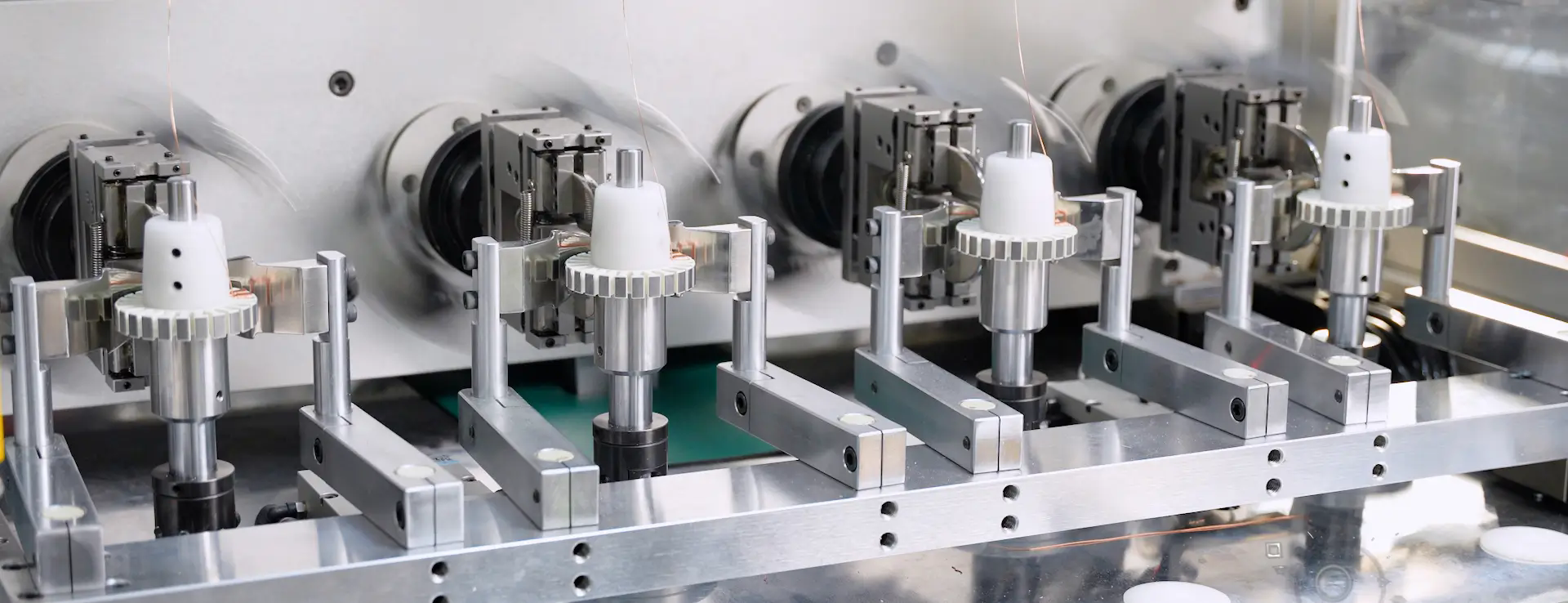
The question of what kind of signals a servo can simulate will eventually become obsolete over time. In the future, tomorrow's servos will directly analyze CAN signals, Ethernet packets and wireless commands. Regional energy management and distributed control networks require such intelligent actuators.Observing that today’s UAV gimbals have integrated IMU data, the signal and attitude calculation are synchronized, and the error is less than 0.01 degrees.。
【curtain falls】
Q: What should I do if the servo cannot respond to the PWM signal?
The first step is to check whether the frequency is 50 Hz. The second step is to check whether the voltage meets the standard. Most failures result from insufficient power or incorrect frequency.
Q: Can the digital servo receive analog signals?
A: Yes. Digital servos are backward compatible, but reverse operation is not possible. Because the frequency of digital signals is too high, misjudgments may occur in the analog servos.
Q: How to connect the signal line of the bus servo?
Only one data line is needed, just connect all the servos in parallel and assign them a unique address. This saves pins and facilitates expansion.
Q: How to determine the type of signal required by the servo?
A: Check the product manual. If there is no documentation, then send a pulse of 1.5 milliseconds for testing. If it is in a static state, you need to simulate the signal.
Q: Will the long-distance transmission signal be attenuated?
For A, there is no impact within the range of one meter. Once it exceeds five meters, it is necessary to install a terminal resistor or use a differential signal. The bus servo is more prominent in anti-interference.
It is repeatedly stated: what kind of signals the servo can simulate depends on the language ability of the controller..从PWM信号转变为总线信号,从模拟信号过渡至数字信号,信号种类越来越丰富多样,舵机的表现也就越发卓越出色。For those who are just starting to enter this field, it is recommended to start with the standard 50 Hz PWM signal, use a logic analyzer to verify the waveform situation, and then gradually explore and study the wonderful and unique features of the bus signal step by step.。
The recommended actions are as follows: select a Kpower Servo servo, match it with an oscilloscope, and actually measure the difference in the steering angle of the servo with a pulse width of 0.5 milliseconds, measure the difference in rotation angle of the servo with a pulse width of 1.5 milliseconds, and measure the difference in rotation angle of the servo with a pulse width of 2.5 milliseconds. After all, seeing the situation with your own eyes is more convincing than many words.
——End of play——
Update Time:2026-05-06
Contact Kpower's product specialist to recommend suitable motor or gearbox for your product.


