



























TECHNICAL SUPPORT


Published 2026-05-08
Do you still remember that late night of overtime work? All the equipment in the workshop was running quietly. Suddenly, the "heart" of a precision equipment, the steering gear, began to lose control and shook like chaff. Engineer Lao Li stared at the voltage curve on the monitoring screen. The beating numbers were like an out-of-control electrocardiogram. He sighed and said, "It's the power supply that causes trouble again." All managers present knew that this inconspicuous link is often the Achilles' heel of the entire automation system.
This is not a made-up story, but a real situation that occurs in many factories. Now, let’s discuss the power supply of the steering gear control system, analyze it clearly, and explain it clearly and clearly.
First of all, why does power supply problem become an "invisible killer"?
Frankly speaking, the steering gear is an object with the characteristics of "powerful and fast response". Every precise movement must require electric current to flow into it instantly like a torrent. If the power supply, which is similar to a "reservoir", does not store enough water, or the water pipe is too narrow and slender, the steering gear will either be "powerless" or "jumping around".
Voltage sag: the culprit of loss of accuracy
When multiple servos are started at the same time, the instantaneous current may be several times the rated current. If the power supply is insufficient, the voltage will plummet like riding a roller coaster. The result is that the servos should have rotated 90 degrees, but only turned 70 degrees. The servos should have stopped at the micron level position, but it exceeded that position. For processing that requires as fine a carving, this is definitely a disaster.
Ripple Noise: Controller "Insomnia"
A power supply that is not clean is filled with messy "noise", which is ripple. This is like someone whispering continuously into the controller's ear, making it difficult for it to hear the instructions issued by the main control chip. If the controller is in a "bad sleep" state, the commands sent to the servo will naturally become confusing. A common situation is that the equipment performs normally when it is unloaded, but once it starts to work, it will malfunction inexplicably.
What does this actually mean for management? It means a discount in production efficiency, a rising rate of product defects, and a potential overdraft on brand reputation.
Next, we dismantle the three core requirements for power supply in order from easy to difficult.
This sounds like nonsense, but most people fail.
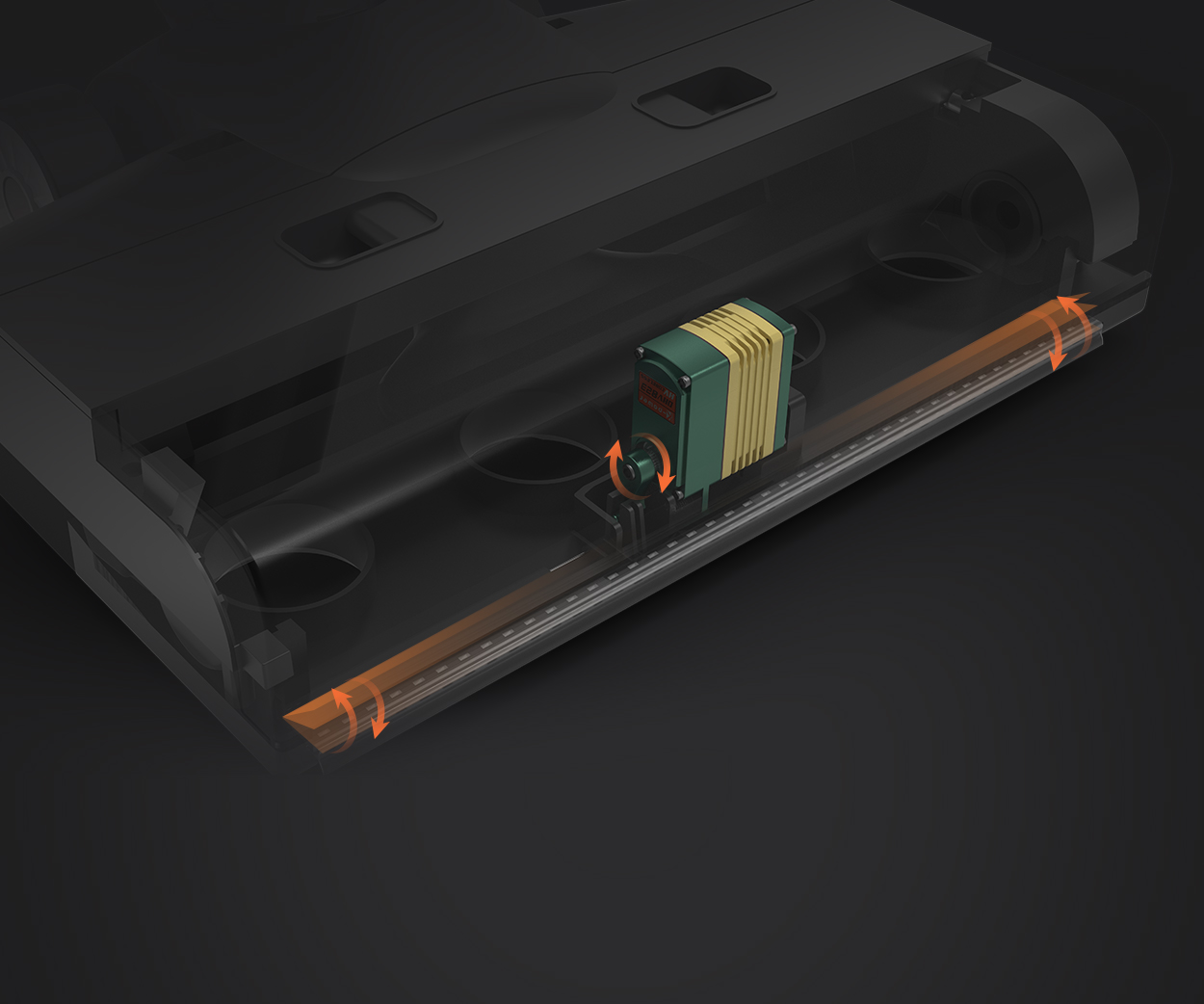
The servo has a clear "appetite", which is commonly divided into two categories: one is the "standard stomach", which consumes voltages of 6V to 7.4V, and the other is the "big stomach", which consumes 12V or even higher. You feed 7.4V food to a servo that requires 12V, and it will ignore you at all. On the contrary, if you inject 12V strong electricity into a 7.4V servo, its "viscera" will be burned through immediately.
There is a common negative example. A certain packaging production line replaced a batch of new servos. They thought the models were the same, but they did not notice that the voltage level was increased from 7.4V to 12V. When the power was turned on, smoke filled the air, and dozens of servos "died" together. Regardless of the direct losses, the production line was stopped for two full days. Therefore, the first step is always to test the power supply terminal with a multimeter to make sure the voltage is within plus or minus 5% of the servo's nominal range. This is a strict standard that cannot be compromised.
(Keywords are naturally incorporated here: cornerstone of power supply)
Once this so-called "power supply cornerstone" is crooked, all subsequent work will be equivalent to building a high-rise building on the beach.
When the voltage is in the correct state, it just wakes up the servo. If it is to do heavy work, the current must be sufficient.。
Many managers only calculate the "static account" and think that the rated current of one servo is 2A, and if there are ten servos, the current is 20A, so it is definitely not wrong to buy a 20A power supply. However, this is a huge misunderstanding! The reason is that the servo frequently starts and stops, and switches between forward and reverse rotations. At this time, a huge "peak current" will be generated.
There is a so-called "three-fold rule" in the industry. In order to cope with this kind of impact, there is a mature design principle, that is, the rated current of the power supply is at least three times the total continuous operating current of the servo.. If it is under many harsh scenarios such as oil pressure and heavy load, this coefficient will have to be increased further.
Let’s take a case as an example: In the past, there was an automated three-dimensional warehouse, and the forks of the stacker always jammed when extending and retracting. After three days of investigation, there were no mechanical or procedural problems. In the end, I found that the power supply was selected too small. Its nominal value is 30A, but the actual instantaneous peak demand rushed to 90A. The power supply entered the "over-current protection" state, automatically cut off the power and then restarted, causing the fork to twitch. After switching to a 100A power supply, the problem was successfully solved. Remember, the "margin" of the power supply is the "security" of the system.
The logic here is extremely straightforward: if the power supply is not enough, the protection will be triggered, which will cause the action to be interrupted, and eventually the efficiency will drop to zero.. You get what you pay for, and the money saved on power supply will eventually be spent ten or a hundred times on repairs after the shutdown.
After the first two shutdowns, your system is ready to run. However, if you want to make it "run smoothly and run for a long time", the test of whether it has long-term stability is the power supply. This includes two levels, namely ripple suppression and anti-interference capabilities.
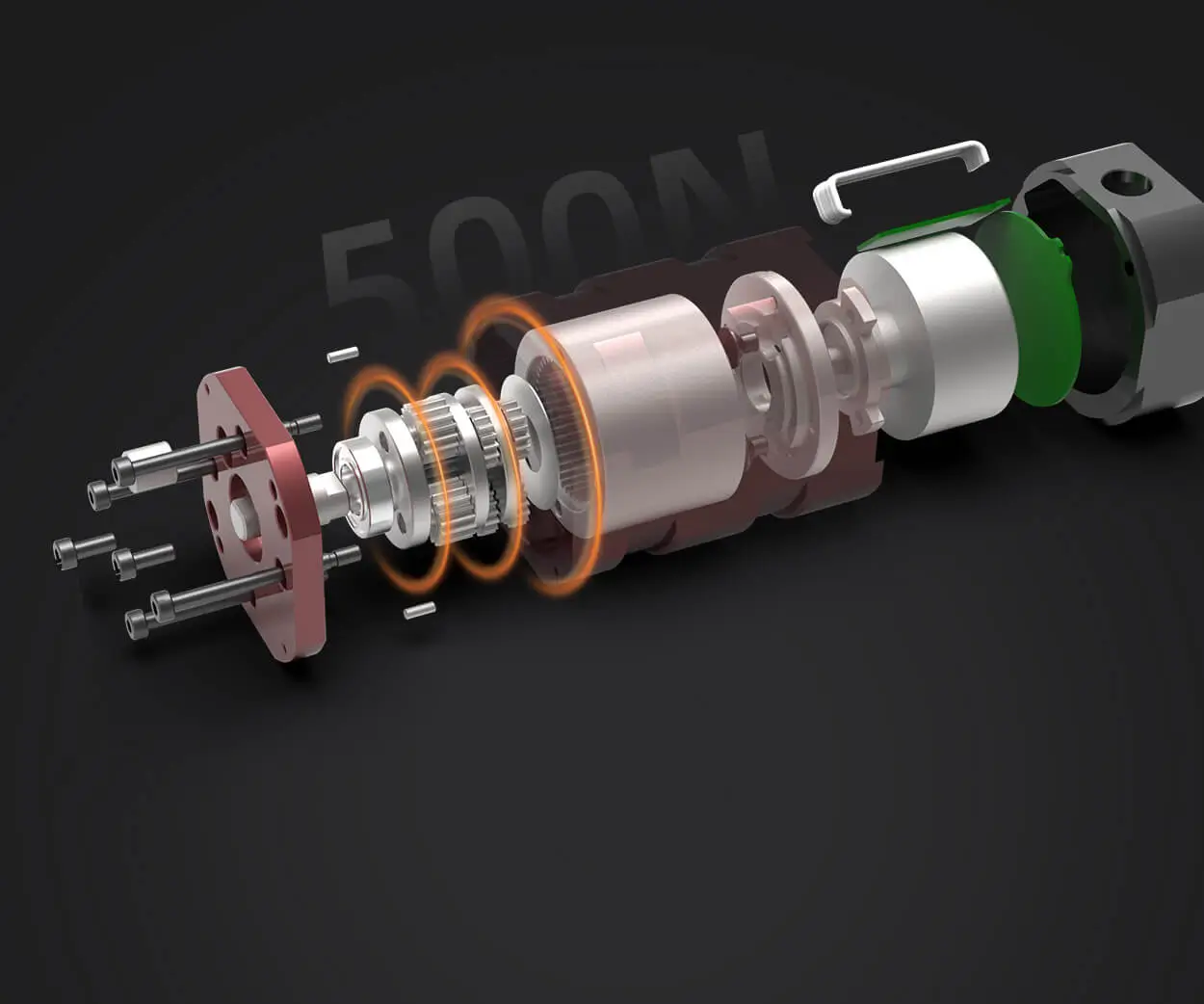
In terms of ripple suppression, the DC output from a high-quality power supply is like a calm and ripple-free lake surface, and its ripple is usually less than 50mV. However, the ripple of a low-quality power supply may be as high as 200mV, just like there are always two-foot-high waves on the lake. It would be strange if the steering gear controller did not make any mistakes when issuing commands in such a "stormy" state. The performance is that sometimes the equipment is as accurate as a Swiss clock, and sometimes it is like a drunkard with no rules at all.
In terms of anti-interference ability, in factories, welding machines and frequency converters are huge sources of interference. A qualified power supply must have parts like an iron shirt. In other words, it is a complete electromagnetic shielding and filtering circuit. Otherwise, just a spike pulse generated by a welding spark is enough to cause the control system to crash.
(Keywords naturally incorporated here: long-term verification)
This experience with "long-term validation" conveys to us that the difference may not be visible during the commissioning phase of a brand new device, but once it reaches the period of three months of continuous production, the advantages of stable power supply will be shown in an extremely low failure rate.
Q: If the power supply voltage is occasionally 10% higher than the rated value of the servo, will it burn out immediately?
A: It is very likely to shorten the life span. If the voltage is too high, it will directly breakdown the internal drive MOS tube. This is a kind of "chronic suicide" behavior. If it is used for a long time, the hidden dangers therein are huge.
Q: Can I use the computer’s switching power supply to power the servo?
For A, it is not recommended, because the ripple of the computer power supply is relatively large, and its overload protection threshold is not suitable for electric machine loads, so it is easy to mistakenly trigger the protection and cause shutdown.
Q: How to quickly determine whether the on-site power supply is insufficient?
"Listen to the sound. When the power supply is insufficient, the steering gear will make a sharp 'hissing' sound. At the same time, its movements will slow down significantly or shake. This is a typical 'hunger' signal."
Q: If one power supply has multiple servos, do I need to add fuses?
a. It is necessary to install a quick fuse for each steering gear branch separately to prevent a single steering gear short circuit from causing the total voltage to decrease and paralyze the entire system.
Q: Can a 24V system be obtained by connecting two 12V power supplies in series?
A: The risk is extremely high. There are two power supplies with different response speeds. When there is a dynamic load, the voltage distribution is uneven and uneven. In this case, it is extremely easy to cause the load or the power supply itself to be burned.
Looking back, the engineer Lao Li who worked overtime late at night later carried out a thorough rectification of the power supply plan: first, he confirmed the voltage "taste" of each steering gear, then resolutely replaced the high-power power supply according to the "three times rule", and finally added filters and isolation transformers on key circuits. Since then, that piece of equipment has never jittered even once due to power supply.
For those who are managers, the power supply of the steering gear control system is not the kind of auxiliary link that can be regarded as "grudgingly". It is actually the real "engine" of the entire automation equipment.。The three golden rules that we have sorted out today - the voltage must be accurate, the current must be redundant, and the ripple must be low-noise. These are not questions for people to choose from, but questions that must be answered.。
List of suggested actions:
1. Carry out a comprehensive inventory immediately: Take out all the various equipment in your factory that use servos, carefully check the specific specifications of each power supply, and check whether it fully meets the limited "three-fold rule" requirements.
2. Use the tool for actual measurement, use the shutdown and maintenance days scheduled next week, and use an oscilloscope to detect the ripple at the input end of the servo power supply to see if it is in a clean state.
3. Carry out upgrade planning first, include stable and reliable power suppliers in your qualified procurement list, and reject any "unknown brands" with unknown origins.
Don’t wait until the next “late night incident” occurs to recall the article you read today. Make sure that your steering gear can fully obtain what you need and provide it with high quality, so that it will give you accurate and efficient feedback. This is the kind of "guaranteed profit but no loss" investment that managers should grasp most.
Update Time:2026-05-08

Contact Kpower's product specialist to recommend suitable motor or gearbox for your product.


