



























TECHNICAL SUPPORT


Published 2026-07-03
Can aservoMotor Rotate Only One Direction? What Buyers Need to Know
Quick Answer
No, a standardservomotor does not rotate continuously in one direction only. Mostservomotors operate within a limited angular range, typically 0 to 180 degrees, and can rotate in both clockwise and counterclockwise directions to reach a commanded position. However, continuous rotation servos exist, which can spin 360 degrees in either direction, but they lack positional feedback. For most industrial and precision motion control applications, the limited-angle bidirectional rotation is the standard. If your application requires continuous rotation with position control, you likely need abrushless DC motoror astepper motorwith an encoder, not a standard servo.
Introduction
Production lines stop. Rejected parts pile up. Maintenance teams scramble. These disruptions often trace back to a simple misunderstanding: assuming a servo motor can only turn one way. When engineers or procurement managers specify motion components, they sometimes carry assumptions from other motor types—like DC motors that spin continuously in one direction. A servo motor behaves differently. It is designed for precise angular positioning, not continuous rotation. Misinterpreting this fundamental characteristic leads to incorrect component selection, higher costs, and system redesigns. Understanding what a servo motor can and cannot do—especially regarding rotation direction—is not a theoretical question. It directly affects whether your machine positions accurately, cycles reliably, and delivers the production output you need.
Table of Contents
How Servo Motors Control Rotation Direction
Standard Servo vs. Continuous Rotation Servo
What Happens When You Need Continuous Rotation
Key Specifications to Check Before Buying
Common Misconceptions About Servo Rotation
Questions Buyers Often Ask About Servo Rotation
Choosing the Right Motion Solution for Your Application
How Servo Motors Control Rotation Direction
A servo motor's ability to rotate in both directions is built into its feedback control loop. The motor receives a command signal—typically a pulse-width modulation (PWM) signal—that tells it to move to a specific angular position. The internal controller compares the current position (from a potentiometer or encoder) with the target position. If the current angle is less than the target, the motor rotates clockwise. If it is greater, it rotates counterclockwise.
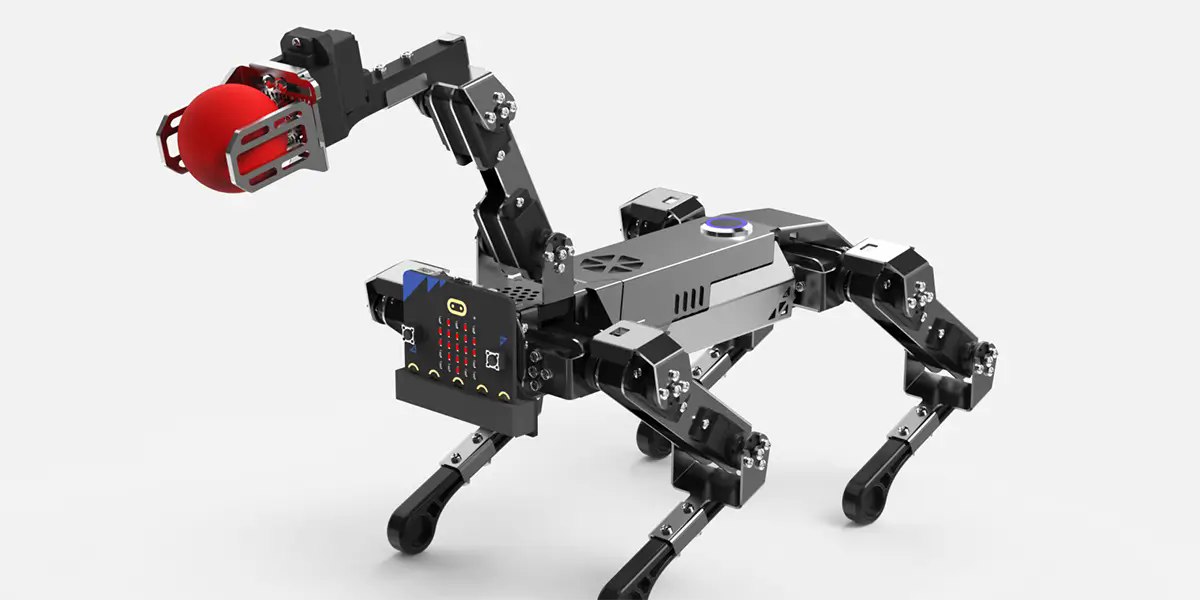
This bidirectional capability is essential. In apick-and-place robot, for example, the servo must rotate one way to pick a part and the opposite way to place it. In aCNC machine, the servo on a rotary axis must move forward and backward to follow a toolpath. Without bidirectional rotation, these applications would be impossible.
The critical point is this: a standard servo does not spin freely. It rotates only enough to reach a commanded angle, then stops and holds that position. The maximum range is usually 180 degrees, though some industrial servos offer 270 or 360 degrees with modifications. But the motion is always angular, not continuous.
Standard Servo vs. Continuous Rotation Servo
Many buyers encounter confusion when they see “continuous rotation servo” listed as a product category. This is a specialized variant, not the default.
If you need a motor that rotates continuously in one direction while also holding a precise position, a continuous rotation servo is not the solution. It can spin indefinitely, but it cannot tell you where it stopped. For applications requiring both continuous rotation and position feedback, consider aservo drive systemwith a rotary encoder and anAC servo motor, which can operate in torque, speed, or position mode.
What Happens When You Need Continuous Rotation
Suppose your machine requires a roller to spin continuously at a controlled speed, but also needs to stop at a precise angle for a cutting operation. A standard servo cannot provide continuous rotation. A continuous rotation servo cannot stop at a precise angle. Neither option fully meets your requirement.
In this scenario, the correct approach is to use a servo motor with a servo drive that supportsspeed modeandposition mode. Many modern servo drives allow switching between modes on the fly. The motor rotates continuously in speed mode for the feeding operation, then switches to position mode for the cutting stop. This setup requires a higher-performance servo drive and a motor with an absolute or incremental encoder.
For buyers evaluating this option, check whether the servo drive supportsdual-loop controlordynamic mode switching. Not all drives do. Also verify that the motor'srated torqueandmaximum speedmatch your process cycle time. A mismatch here leads to missed positions or reduced throughput.
Key Specifications to Check Before Buying
When specifying a servo motor for a bidirectional or continuous rotation application, focus on these parameters:
Feedback resolution: Higher resolution (eg, 17-bit or 23-bit encoder) means better bidirectional positioning accuracy.
Maximum rotation range: Confirm whether the motor supports 180°, 270°, or 360° mechanical travel.
Holding torque: The motor must hold position at both endpoints of rotation, not just the center.
Soft limits: Some servo drives allow programming soft limits to prevent over-rotation and mechanical damage.
Acceleration and deceleration profiles: Bidirectional motion at high speed requires smooth ramping to avoid overshoot.
Brake option: If the motor must hold position when power is removed, verify if aholding brakeis available.
Ignoring these specifications can result in a motor that overshoots its target, vibrates at the endpoint, or fails to return to zero reliably.
Common Misconceptions About Servo Rotation
One persistent myth is that a servo motor cannot rotate counterclockwise. This likely comes from experience with low-cost hobby servos that are calibrated for a single direction in simple RC models. In industrial-grade servo systems, bidirectional rotation is standard.
Another misconception is that adding a gearbox changes rotation direction permanently. A gearbox does affect output speed and torque, but it does not prevent the motor from rotating both ways. The direction capability is determined by the motor and drive electronics, not the gearbox.
A third mistake is assuming that a servo motor can freewheel or coast. A servo is always under active control. When power is removed, it does not spin freely; it may lock in place clutch or drift depending on the brake configuration. For applications requiring free rotation during setup, specify aservo with a release mechanismor a separate.
Questions Buyers Often Ask About Servo Rotation
Q: Can I make a standard servo rotate 360 degrees?
No. Standard servos have mechanical stops that limit rotation to 180 or 270 degrees. Attempting to exceed this range can damage the internal potentiometer or gears.
Q: What is the difference between a servo motor and a stepper motor for bidirectional rotation?
A servo motor uses closed-loop feedback to verify position. A stepper motor typically operates open-loop. For bidirectional positioning under varying load, a servo is more reliable, though more expensive.
Q: Does a servo motor need a special driver for bidirectional operation?
Most servo drives support bidirectional rotation by default. The direction is controlled by the command signal polarity or pulse sequence. No special hardware is needed.
Q: Can a servo motor rotate in only one direction if I wire it wrong?
Incorrect wiring can cause the motor to fail to respond or move erratically, but it will not permanently force single-direction rotation. Check the signal polarity and feedback wiring.
Q: Is a continuous rotation servo suitable for a conveyor application?
It can provide continuous rotation, but it cannot maintain a precise stop position. For conveyors that require indexing, a standard servo with aservo driveis more appropriate.
Q: How do I test if my servo rotates both directions?
Send a command for a small positive angle, then a small negative angle. Observe the output shaft movement. If it moves in both directions relative to the neutral position, bidirectional function is normal.
Q: Does load affect rotation direction capability?
High inertial loads can cause the motor to overshoot when reversing direction. This is a control tuning issue, not a hardware limitation. Properservo tuningis essential for reliable bidirectional operation.
Choosing the Right Motion Solution for Your Application
A servo motor is not a one-direction device. It is a bidirectional precision positioning tool. If your application requires continuous rotation, you need a different motor topology or a servo drive with mode switching. If you need precise stops at both ends of a limited range, a standard servo is the correct choice.
Before you finalize a specification, review your motion profile. Does your load require holding torque at both rotation endpoints? Do you need to reverse direction under full load? Is position feedback required during continuous rotation? These questions lead to the correct selection.
Atkpowerservo, we provide servo systems with encoder feedback, customizable rotation ranges, and drive flexibility for both bidirectional and continuous rotation applications. If you are evaluating a motion control solution,send your application parametersfor a technical review. Our engineering team can help determine whether a standard servo, continuous rotation servo, or alternative motor technology fits your production requirements.
Update Time:2026-07-03

Contact Kpower's product specialist to recommend suitable motor or gearbox for your product.


