



























TECHNICAL SUPPORT


Published 2026-07-06
Quick Answer
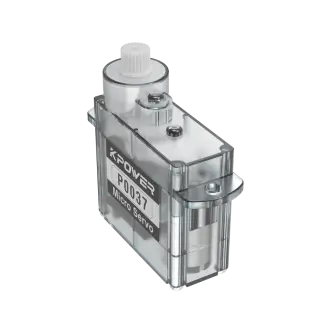
A car steeringservoconverts electrical signals into precise mechanical motion to control the steering angle of a vehicle's wheels. It uses a DC motor, a gear reduction system, and a position feedback sensor to achieve accurate and repeatable steering commands. Theservo's output shaft is directly connected to the steering linkage, allowing real-time adjustment based on input from a controller. This mechanism is critical for remote-controlled cars, autonomous vehicles, and robotics where precise steering control is required. Without a properly functioning steeringservo, the vehicle cannot maintain a stable trajectory or respond to directional commands reliably.
Introduction
Every remote-controlled car, autonomous robot, or small-scale vehicle faces the same fundamental problem: how to translate an electronic command into a precise mechanical turn. The steering system must be fast enough to respond in milliseconds, accurate enough to hold a line, and durable enough to survive thousands of cycles. Yet many designers and buyers underestimate the complexity inside a small steering servo. A weak or incorrectly matched servo leads to drift, poor turning radius, overheating, or complete failure during operation. Thesteering servo mechanismis not just a motor with gears—it is a closed-loop control system that determines whether your vehicle follows your command or veers off course. Understanding how it works is the first step toward selecting the right component for your application.
Table of Contents
1. The Core Components Inside a Steering Servo
2. How the Gear Train Converts Speed into Torque
3. The Role of the Feedback Potentiometer
4. Why PWM Signals Control the Steering Angle
5. Common Steering Servo Types and Their Differences
6. How to Match a Servo to Your Vehicle's Steering Load
7. Key Specifications That Affect Steering Performance
8. Questions Buyers Often Ask About Steering Servo Design
9. Choosing the Right Steering Servo for Your Application
The Core Components Inside a Steering Servo
A typical steering servo consists of three primary subsystems: the motor, the gear train, and the feedback mechanism. The motor is usually a DC motor that spins at high speed with low torque. That speed is then reduced and amplified by the gear train, which is a set of reduction gears that increase torque while decreasing output speed. The final output shaft connects directly to the steering linkage. This closed-loop design is what distinguishes aservofrom a simple motor. Without feedback, the system cannot know whether it has reached the commanded position.
How the Gear Train Converts Speed into Torque
The gear train is the mechanical heart of the steering servo. It takes the high-speed rotation from the motor and reduces it through a series of gears—often plastic, metal, or a hybrid—to produce high torque at the output shaft. The reduction ratio directly determines how much force the servo can apply to the steering linkage. continuous load and can handle shock loads from rough terrain.Plasticgears may be quieter and cheaper, but they are more likely to strip under repeated stress or impact.
The Role of the Feedback Potentiometer
The potentiometer inside a steering servo acts as a position sensor. It is mechanically linked to the output shaft and changes its resistance as the shaft rotates. The control circuit reads this resistance value and compares it with the commanded position from the incoming PWM signal. If the actual position does not match the commanded position, the circuit adjusts the motor voltage to drive the shaft until the error is corrected. This continuous adjustment happens many times per second, creating the precise and stable holding behavior that servos are known for. A worn or dirty potentiometer introduces drift and jitter, making the steering unable to maintain a consistent angle. Regular inspection of the feedback mechanism is essential for long-term reliability.
Why PWM Signals Control the Steering Angle
Steering servos are controlled by pulse-width modulation (PWM) signals. The width of the determine pulses the target angle of the output shaft. A standard servo expects a pulse every 20 milliseconds. A 1.0-millisecond pulse drives the shaft to one end of its travel,a 1.5-millisecond pulse centers it, and a 2.0-millisecond pulse drives it to the opposite end. and compares it with the feedback position. This is whyPWM controlis so widely used: it is simple, requires only one signal wire, and provides consistent performance across different manufacturers. However, not all servos interpret pulse widths identically, so the controller must be calibrated to match the specific servo model.
Common Steering Servo Types and Their Differences
Steering servos come in several types based on size, torque, and control logic.Analog servosuse a continuous feedback loop with a simple comparator circuit. They are simpler and cheaper but consume power even when holding position.Digital servosuse a microprocessor to drive the motor at a higher frequency, which provides faster response, stronger holding torque, and lower idle current consumption. Within these categories, servos are also classified by physical size, with standard, micro, and mini being the most common for small vehicles. Another distinction is betweencoreless motorsandbrushed motors, where coreless designs offer higher efficiency and smoother operation at the cost of increased sensitivity to overloading.
How to Match a Servo to Your Vehicle's Steering Load
Selecting the right steering servo requires matching its torque output to the actual steering load of the vehicle. The steering load depends on the weight of the vehicle, the friction of the steering linkage, the tire grip, and the surface conditions. A simple rule is to choose a servo with a rated torque at least 1.5 times the calculated maximum steering load under worst-case conditions. If the servo is undersized, it will struggle to steer at low speeds or on high-friction surfaces, leading to overheating and premature failure. Oversizing adds unnecessary weight and cost but provides a safety margin. The buyer should also verify the servo's operating voltage, as torque output varies with supply voltage. A servo rated at 6V will deliver less torque when operated at 5V.
Key Specifications That Affect Steering Performance
Beyond torque and speed, several other specifications determine how well a steering servo performs in real-world applications.Operating voltage rangedefines the acceptable power supply window.Stall torqueis the maximum torque the servo can produce before stopping, but continuous operation near stall can damage the motor and gears.Transit timeis the time required to move from one end of travel to the other at a specified voltage.Resolutionrefers to the smallest incremental angle the servo can achieve, which is determined by the number of steps in the feedback system.Dead band widthis the range of input error that the servo ignores before correcting. A narrower dead band provides tighter control but can cause oscillation if the feedback system is noisy.
Questions Buyers Often Ask About Steering Servo Design
Q: What is the difference between a standard servo and a steering servo?
A standard servo is a general-purpose device used for various angular movements, while a steering servo is specifically designed for higher torque, faster response, and continuous load handling in steering applications. Steering servos often feature metal gears and higher-resolution feedback.
Q: How do I know if my servo has enough torque for my vehicle?
Calculate the steering load by measuring the force required to turn the wheels manually at rest on a high-friction surface. Multiply that force by the lever arm length to get torque. Then select a servo with a rated torque at least 1.5 times that value.
Q: Can I use a plastic-gear servo for a heavy vehicle?
Plastic-gear servos are suitable for lightweight or low-torque applications. For vehicles above a certain weight threshold or those operating on rough terrain, metal-gear servos are recommended because they resist stripping and maintain alignment under shock loads.
Q: Why does my steering servo jitter or drift?
Jitter or drift is often caused by a worn potentiometer, electrical noise on the signal wire, insufficient power supply voltage, or a loose gear train. Check the feedback mechanism and power source first before replacing the servo.
Q: Is a digital servo always better than an analog servo?
Digital servos offer faster response, higher holding torque, and better efficiency, but they cost more and may be more sensitive to voltage fluctuations. For high-performance or autonomous applications, digital servos are generally preferred. For basic hobby projects, analog servos often suffice.
Q: How does the gear ratio affect steering speed and torque?
A higher gear ratio increases torque but reduces the speed of the output shaft. A lower ratio increases speed but decreases torque. The optimal ratio balances the steering response time with the required holding force for the specific vehicle.
Q: What happens if I use the wrong PWM signal frequency?
Using an incorrect PWM frequency or pulse width range can cause the servo to not reach its full travel range, overshoot, or fail to respond. Always verify that the controller's PWM parameters match the servo's specifications.
Q: How long does a steering servo typically last?
Lifespan depends on operating conditions, load, and maintenance. A well-matched servo running within its specifications can last thousands of hours. Overloading, dirt ingress, and inadequate lubrication reduce lifespan significantly.
Q: Can I repair a servo that has stripped gears?
In many cases, stripped gears can be replaced if the servo manufacturer offers replacement gear sets. However, if the motor or control board is damaged, replacement of the entire servo is often more cost-effective.
Q: Does the steering servo need calibration?
Many digital servos and advanced controllers support calibration to match the pulse width range to the servo's mechanical travel limits. Calibration ensures full travel without binding and improves positional accuracy.
Choosing the Right Steering Servo for Your Application
The steering servo is the single most important component for directional control in any small-scale or autonomous vehicle. A correct match between servo torque, speed, and the vehicle's steering load ensures stable performance, long service life, and predictable response. Buyers should always verify the gear material, feedback type, and operating voltage before making a selection. If your application involves continuous operation, high vibration, or rough terrain, prioritize metal-gear digital servos with a torque margin of at least 50 percent above your calculated load. The right servo will not only improve your vehicle's handling but also reduce maintenance frequency and downtime. If you are unsure which servo fits your specific steering mechanism, compare your current torque requirements with your supplier'sservo motor selectionguide. A small investment in specification verification now prevents costly field failures later.
Update Time:2026-07-06

Contact Kpower's product specialist to recommend suitable motor or gearbox for your product.


