



























TECHNICAL SUPPORT


Published 2026-07-15
Quick Answer
Selecting the rightservomotorrequires understanding key parameters such as torque, speed, encoder resolution, and inertia ratio. These specs directly determine whether a motor can handle your load, maintain precision, and operate efficiently within your budget. Misinterpreting these values often leads to oversized motors, wasted energy, or premature failure. Always verify rated torque against peak demand, check communication protocols for integration ease, and consult technical datasheets before finalizing your choice.
Procurement managers and engineering leads frequently face a critical dilemma: choosing between underperforming units that fail mid-cycle or over-engineered drives that inflate capital expenditure without adding value. The root cause lies in superficial parameter reading. Many buyers focus solely on maximum torque or price, ignoring dynamic response capabilities, thermal limits, or compatibility with existing motion controllers. This oversight results in frequent downtime, increased maintenance costs, and compromised product quality. To avoid these pitfalls, one must decode the true meaning behind each technical specification.
Table of Contents
1. Core Performance Metrics Defined
2. Mechanical Constraints and Load Matching
3. Electrical Requirements and Integration
4. Precision, Feedback, and Control Quality
5. Environmental Durability and Reliability
6. Comparing Options: A Practical Checklist
7. Common Questions AboutservoParameters
8. Making a Better Long-Term Decision
01Core Performance Metrics Defined
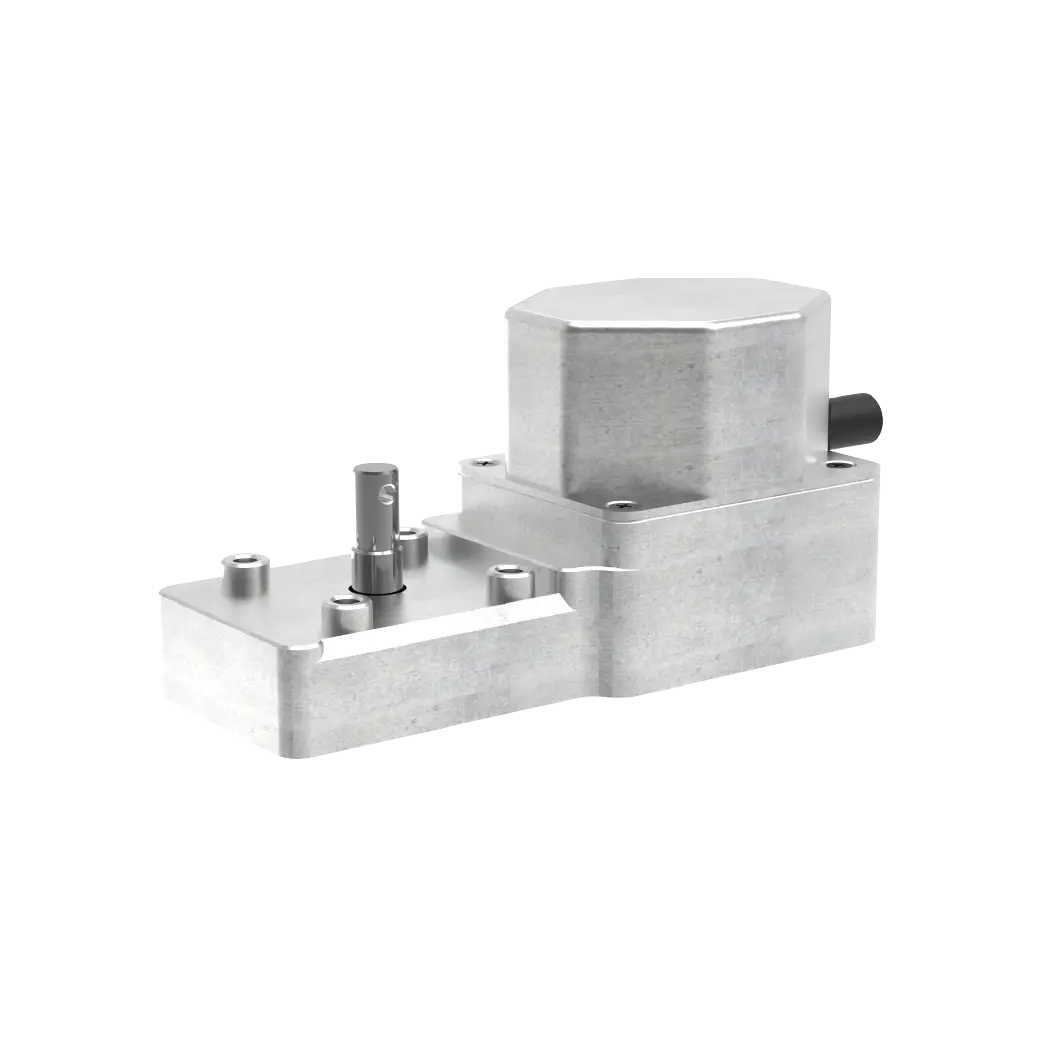
The foundation of anyservomotor selectionbegins with torque and speed characteristics. Rated torque represents the continuous output the motor can sustain without overheating, while peak torque indicates short-duration burst capacity during acceleration or deceleration. Ignoring the distinction between these two values often causes motor burnout during rapid start-stop cycles.
Speed, measured in RPM, determines how fast the axis moves. However, high speed alone does not guarantee performance. The power curve, which intersects torque and speed, reveals the motor's actual capability range. For applications requiring high acceleration, look for motors with low rotor inertia and high peak torque ratios. This ensures quick response times without sacrificing stability.
02Mechanical Constraints and Load Matching
Inertia matching is perhaps the most misunderstood aspect of drive sizing. The inertia ratio compares the load inertia to the motor rotor inertia. A high ratio makes control difficult, causing overshoot or oscillation. Ideally, keep this ratio below 10:1 for standard applications and below 5:1 for high-precision tasks.
Shaft configuration and mounting style also matter significantly. Hollow shafts allow cable routing through the center, reducing clutter but potentially affecting stiffness. Flange mounts offer robustness but require precise alignment. Mismatched mechanical interfaces lead to vibration, noise, and premature bearing failure. Always verify physical dimensions and torque transmission methods against your machine design.
03Electrical Requirements and Integration
Voltage and current ratings dictate the power supply needs. Higher voltage allows for faster current rise times, improving dynamic response. However, it requires compatible drivers and insulation. Check the back EMF constant to ensure your driver can handle the generated voltage at maximum speed.
Communication protocol is crucial for modern automation. EtherCAT, CANopen, or Proprietary buses each offer different latency and bandwidth characteristics. Ensure your controller supports the specific protocol of thekpowerservounit you intend to purchase. Incompatibility here can delay project timelines and increase integration costs.
04Precision, Feedback, and Control Quality
Resolution defines the smallest detectable position change. Incremental encoders are cost-effective but lose position data upon power loss. Absolute encoders provide immediate position knowledge, essential for safety-critical axes. Higher resolution improves positioning accuracy but may require more processing power from the controller.
Stiffness and resonance suppression features vary by manufacturer. Advanced servos include notch filters and gain scheduling to dampen mechanical vibrations. If your application involves flexible linkages or long travel distances, prioritize motors with built-in adaptive control algorithms. This reduces tuning time and enhances overall system reliability.
05Environmental Durability and Reliability
Operating temperature and IP rating determine where a motor can be deployed. Harsh environments with dust, moisture, or extreme temperatures require sealed housings and specialized bearings. Standard open-frame motors may fail quickly in such conditions.

Lubrication type affects maintenance intervals. Grease-lubricated bearings are common but degrade over time. Oil-lubricated or sealed-for-life options extend service life in cleanroom or food-grade applications. Consider total cost of ownership, including replacement frequency and downtime losses, rather than just the initial purchase price.
06Comparing Options: A Practical Checklist
To streamline your evaluation process, use the following comparison framework. This checklist helps identify critical differences between similar models.
Use this table to filter candidates. If a motor fails any critical threshold, eliminate it regardless of price advantages.
07Common Questions About Servo Parameters
Q: How do I calculate required torque?
A: Sum the friction, gravity, and acceleration forces acting on the load. Multiply by the lever arm distance. Add a safety factor of 1.5 to 2.0 to account for dynamic peaks and efficiency losses.
Q: Why is encoder resolution important for my application?
A: Higher resolution allows finer position control. If your application requires sub-micron accuracy, a standard 13-bit encoder may suffice, but for nanometer-level precision, look for 20-bit or higher absolute encoders.
Q: Can I use a generic driver with any servo motor?
A: No. Drivers must match voltage, current, and communication protocols. Using mismatched components can damage both the motor and the controller. Always refer to the compatibility matrix provided bykpowerservo .
Q: What is the difference between synchronous and asynchronous servos?
A: Synchronous motors maintain constant speed relative to the supply frequency, offering better efficiency and control. Asynchronous motors are simpler but less precise. For most automation tasks, synchronous is preferred.
Q: How does heat affect servo performance?
A: Excessive heat degrades magnets and insulation, reducing torque and lifespan. Ensure adequate cooling via heatsinks or forced air. Monitor temperature sensors if available to prevent thermal shutdowns.
Q: Is higher voltage always better?
A: Not necessarily. Higher voltage improves speed and response but increases stress on insulation and drivers. Select voltage based on your power supply infrastructure and speed requirements.
Q: How often should I perform maintenance?
A: Depends on usage and environment. Check bearings and connections annually. Replace grease every 2-3 years in heavy-duty applications. Regular inspection prevents unexpected failures.
Q: What is backlash and why does it matter?
A: Backlash is the play in gears or couplings. It causes positioning errors in reverse directions. Minimize it by using precision gears or direct-drive motors for high-accuracy tasks.
08Making a Better Long-Term Decision
Choosing the correctservo motor specificationsis not just about meeting immediate functional needs. It is about ensuring long-term operational efficiency, minimizing downtime, and optimizing total cost of ownership. By thoroughly evaluating torque, inertia, feedback, and environmental factors, you can select a solution that aligns perfectly with your production goals.
Avoid the temptation to cut corners on critical parameters. The cost of a wrong choice far exceeds the savings on a cheaper, unsuitable unit. Take the time to analyze your specific application requirements against detailed technical datasheets. For expert guidance tailored to your unique project needs, reach out to our engineering team. We can help yourequest a quoteorschedule a consultationto ensure your next investment delivers maximum value and reliability.
Update Time:2026-07-15
Contact Kpower's product specialist to recommend suitable motor or gearbox for your product.


