



























TECHNICAL SUPPORT


Published 2026-09-28
Quick Answer
Abrushless motor washing machinereplaces the traditional induction motor with an electronically commutated motor, delivering lower energy consumption, quieter operation, and longer service life. For OEMs and procurement teams, the key decision revolves around torque range, control precision, thermal endurance, and total cost of ownership over a 10–15 year appliance cycle. If your product line targets premium or smart-wash segments, aservomotorbased drive is typically the right fit. Confirm voltage rating, PWM control interface, and IP protection level with the supplier before finalizing a design-in.
Introduction
Washing machine manufacturers are under pressure to cut energy labels from A to A+++ while compressing BOM costs. Induction motors hit their limits: fixed speed, audible hum, and carbon brush wear in older designs force redesigns every generation. Brushless drives solve these constraints, but selecting the wrong motor specification early locks you into a control board, housing, and supply chain that is expensive to change. Here is what you need to verify before committing.
How a Brushless Drive Works Inside the Drum
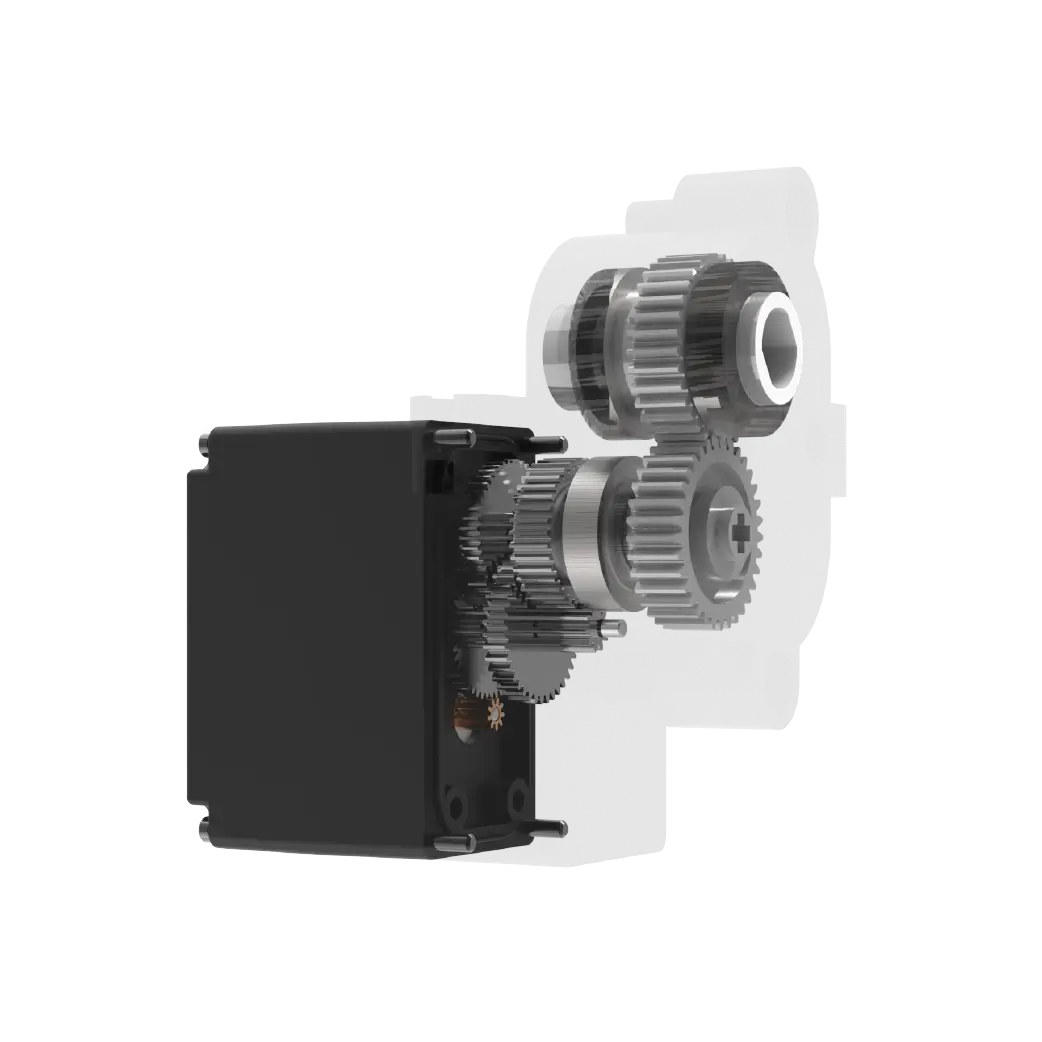
The stator windings are energized by a three-phase inverter board; the rotor carries permanent magnets. No physical brushes means no friction spark, no periodic replacement, and consistent torque from zero to peak RPM. This is the same topology used inkpower servomotion modules, where commutation is handled by a hall-sensor or sensorless FOC algorithm. For a washing machine, the controller typically runs a speed profile: agitation at 40–60 RPM, then a spin-up to 800–1600 RPM. The brushless design holds torque flat across that range, which an induction motor cannot do without external gear changes.
Key Specifications to Verify Before Sourcing
Before placing a PO, run these checks against the datasheet the supplier provides:
If your engineering team is comparing two suppliers side by side, request thetorque-speed curveat rated and peak points rather than just nominal values. A motor that meets spec at one operating point can still undershoot during the deceleration phase of a heavy-load cycle.
When Brushless Outperforms Induction – and When It Does Not
For entry-level machines sold in price-sensitive markets where the target energy rating is B or C, a well-tuned PSC or basic induction motor may still be the lower-cost route. The brushless advantage compounds in premium tiers: inverter-driven programs, drum self-diagnostics, and variable-speed fabric care cycles all assume a digitally commutated motor underneath. If your SKU targets A+++ labeling in the EU or ENERGY STAR in North America, the brushless path is effectively mandatory. The trade-off is a more complex PCB and a higher per-unit motor cost, offset over the appliance lifetime by reduced field returns and lower energy draw.
Practical Questions Before You Finalize a Motor Selection
Q: Does the motor need to be compatible with an existing inverter board?
A: Mostbrushless DCservodesigns expect a three-phase PWM driver. If your board is already in production, confirm phase sequencing, current sense resolution, and commutation signal type. A mismatch means board re-spin.
Q: What lifespan should I expect under 300 wash cycles per year, 15-year horizon?
A: Brushless motors have no mechanical wear parts, so life is governed by bearing fatigue and magnet demagnetization. In many OEM programs, 10,000–15,000 continuous hours of rated operation is the design target. Verify the bearing L10 rating with the supplier.
Q: Can I use a single motor platform across a 6 kg and a 10 kg drum?
A: Usually not without derating. The heavier drum changes the peak torque demand and the thermal envelope. Acustom servo solutionor at minimum a different winding configuration is typically required. Check the torque margin at full-load spin for each drum size separately.
Q: What IP and insulation class do I need for a top-loading versus front-loading machine?
A: Top-load tubs trap condensation longer, so IP44 with Class F insulation is the conservative starting point. Front-load designs with door seals can run IP43, but confirm with your environmental test protocol.
Q: How do I validate thermal performance before mass production?
A: Run a sustained 1-hour spin at rated speed in a 45 °C ambient chamber and log winding temperature. The rise should stay within the insulation class limit. Ask the supplier for the thermal model and the actual measured trace; do not rely on simulation alone.
Choosing the Right Motor for Your Line
The right brushless motor is not the cheapest one on the quote sheet. It is the one whose torque curve, control interface, and thermal envelope match your drum geometry and your program logic without forcing a board redesign. If your team is mid-design and needs a second set of eyes on the motor-control pairing, send your drum specs, cycle profile, and target energy label to the engineering team atkpowerservofor a free application review. A 30-minute call with the specs in hand will save weeks of prototyping.
Update Time:2026-09-28

Contact Kpower's product specialist to recommend suitable motor or gearbox for your product.


