



























TECHNICAL SUPPORT


Published 2026-03-03
Playing with the robotservoseems simple at first glance, but in actual operation, it can be troublesome if it is used in the wrong place. Theservomay vibrate and not work, or may smoke and burn out. In this case, money is wasted. Especially for those who want to do some product innovation, if they do not understand the "temper" of theservo, the project will easily get stuck halfway and cannot advance smoothly.
Today we will talk in depth about the things that must be paid attention to when using servos, to help everyone avoid these easy pitfalls, so that everyone can be more comfortable when using servos, avoid unnecessary losses due to lack of understanding, and thus carry out product innovation and other work related to servos more smoothly.
The steering gear is essentially a large power consumer, especially at the moment of starting and stalling, the current demand will soar. Many friends directly use the 5V pin on the development board to power the servo, only to find that the servo is either powerless or vibrating randomly. This is actually because the voltage stabilizing chip of the development board cannot supply power, and the voltage is instantly pulled down.
The most direct impact of this unstable power supply is that the position control of the steering gear will malfunction. Originally the servo was supposed to rotate 45 degrees, but in fact it only moved 30 degrees. What's more serious is that when the servo is in an under-voltage working state, it will cause its internal motor and driver chip to overheat. If it continues for too long, these components will be burned out. Therefore, it is necessary to prepare an independent power supply for the steering gear, such as a lithium battery or a reliable switching power supply.
When choosing a servo, the “torque” data written on the package is the most confusing. Some servos are marked with 15kg, but in actual use they cannot even be lifted with a light pole. Here it depends on the test conditions of the torque and how much voltage is used to measure it. The torque difference between 4.8V and 6V can be 30%.
A more practical approach is to estimate how much force your robotic arm or wheel will require. You can make a simple model first, estimate the length of the moment arm and the load weight, and then leave a margin of 1.5 to 2 times. When buying a servo, try to find manufacturers that provide torque curves instead of just looking at a maximum torque number.
After the servo is installed, it will tremble slightly before sending a signal, or it will not rotate smoothly, and it will get stuck one after another. There are usually two reasons for this. One is the power supply problem mentioned earlier, and the other is interference on the signal line. If the PWM signal of the servo is subject to electromagnetic interference, the control accuracy will be lost.
To solve the jitter problem, first connect a large capacitor in parallel to both ends of the power supply, such as a capacitor with a value ranging from 470 microfarads to 1000 microfarads, which can effectively absorb current spikes. Secondly, for the signal lines of the steering gear, shorter, shielded lines should be used as much as possible, and they should be laid separately from the high-current lines driven by the motor. If the above method still cannot solve the problem, you can connect a small resistor with a resistance of several hundred ohms in series to the signal line, which can filter out some high-frequency clutter.
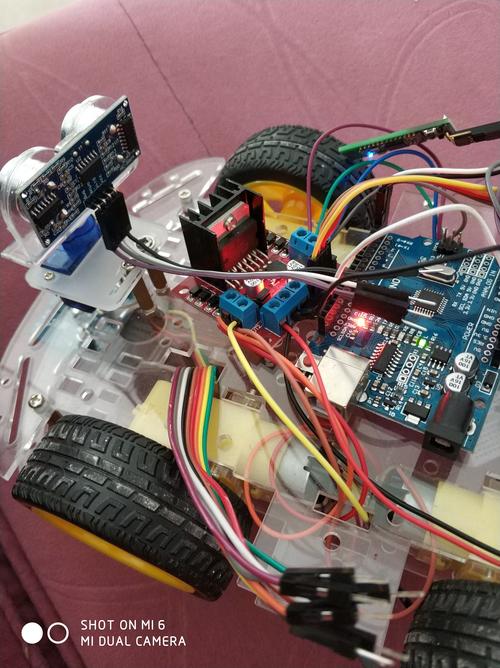
If you hear the gears slipping "click-click" from the servo, that is "gear sweeping". This is usually because the servo has been subjected to an external impact beyond its endurance range, or has been working under overload conditions for a long time. For example, if a plastic gear servo is used to drive a heavy swing arm, the inertia will break the gear during an emergency stop.
To prevent gear sweeping, firstly, do not overload the servo, and secondly, add a limit on the mechanical structure to prevent the servo from hard turning to the stuck position. If the servo is used in a place that will be impacted by external forces (such as the legs of a robot), it is best to use a metal gear servo. Although it is more expensive, it is more durable.
These two servos look similar in appearance, but they are very different in use. The analog servo relies on receiving a PWM signal once and then rushing towards the target position. When there is no signal, it relaxes, so the holding power is weak and there is a "sizzling" background noise. The digital servo has a built-in chip and has faster processing speed.
To put it simply, if your project is just a simple remote control car or boat, and the accuracy requirements are not high, then the analog steering gear is completely sufficient and the price is relatively cheap.
But if you want to make a bipedal robot, a robot dog, or a gimbal that requires precise position control, in this case, it is best to choose a digital servo. The response speed of digital servos is much faster than that of analog servos, the positioning is more accurate, and the jitter is smaller, but its power consumption will be slightly larger.
Sometimes, a 90-degree signal instruction has been given to the servo, but something abnormal happens to the servo. It either turns past the specified angle and goes directly over the head, or it just turns a little and does not reach the expected angle. This situation is mostly caused by the servo's center position not being adjusted properly, or by the frequency and pulse width range of the PWM signal not matching the servo's. The standard servo signal frequency is 50Hz, and its period is 20ms. When the high-level time is in the range of 0.5ms to 2.5ms, the servo rotates 0 to 180 degrees. However, there are some differences in the definition of signals from different manufacturers.
When you get a new servo, it is best to make a simple test program first, slowly increase the pulse width from the minimum to find the starting and ending points of its actual rotation, and then write these two limit values into the code. Never give the nominal values of 0 and 180 degrees directly. If the range of the servo is narrow, it will hit the physical limit as soon as it is put up, which can easily damage the servo.
Although the steering gear is small in size, it contains many secrets. What is the most troublesome problem you have encountered when debugging the steering gear? Is it because the route is incorrect during operation, or is it vibrating extremely badly? Everyone is welcome to speak freely in the comment area and chat about their own experiences. At the same time, don’t forget to like and share so that more friends who are keen on playing robots can see this article full of useful information. If you want to learn more about more in-depth control algorithms, you may wish to search the technology blog on our official website, where there are many practical cases for reference.
Update Time:2026-03-03

Contact Kpower's product specialist to recommend suitable motor or gearbox for your product.


