



























TECHNICAL SUPPORT


Published 2026-03-20
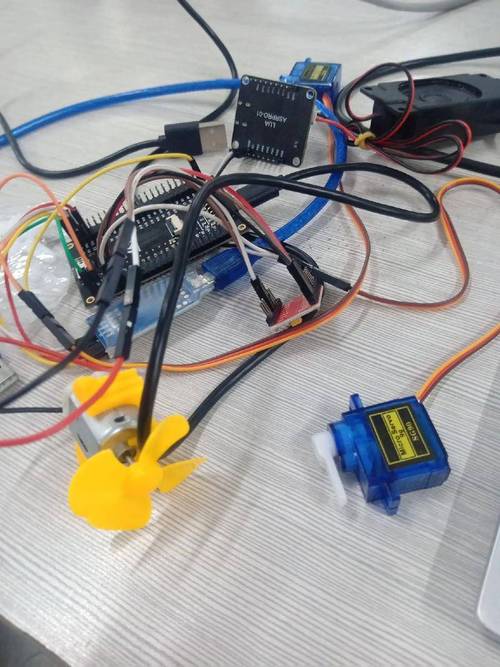
What are you most afraid of when making maker products or robot projects? Eighty percent of the time it's theservothat's shaking. The movements were originally well designed, but when theservotrembled, the whole work seemed to be suffering from Parkinson's disease. It was annoying to watch and uncomfortable to use. Don't worry, although this thing is annoying, there are only a few causes. Let's investigate one by one and we can basically solve it.
Unstable power supply voltage or insufficient current supply are the most common "culprits" of servo vibration. Think about it, the moment the servo is started, the current demand will suddenly surge. If the power supply cannot be supplied, the voltage will "bang" drop. As soon as the controller inside the servo is reset, it will shake back and forth. You can try to use a high-power regulated power supply to power the servo separately, instead of using it together with the main control board. The effect will be immediate.
The thickness and length of the power cord are also particular. Some friends use thin and long wires in order to make the wiring look good. This will cause a particularly large voltage drop in the line, especially when several servos are moving at the same time, the voltage drop will be even greater. ️You can touch the wire. If it feels slightly hot, it means the wire diameter is too thin. Please replace it with a thicker one. It is recommended to use silicone wire of 16AWG or above and pull it directly from the power terminal to the servo.
The PWM signal is like the "baton" of the servo. If this "baton" is interfered with, the servo will dance wildly. The most common situation is to tie the signal wire of the servo and the high current wire of the motor together. When the motor rotates, all the electromagnetic interference generated will flow into the signal wire. ️The solution is not difficult. Replace the signal lines with shielded ones, or keep them far apart when wiring. Don't "cuddle" them.
Problems may occur if the "power" of the controller's IO port is too small. The current output by some microcontroller pins is very weak and cannot directly push the input capacitance of the servo signal line, causing waveform distortion. You can connect a 10kΩ resistor from the signal line to ground (GND) to enhance the driving capability. Or simply use a triode or buffer IC as a "transmission microphone" to ensure a clear signal.
If the servo cannot carry the load, it will keep vibrating. For example, if the thing hanging on the servo arm is too heavy, it will have to exert its strength in order to reach the target position. The result will be high-frequency jitter or "buzzing" sound. Disconnect the connecting rod, turn the servo output shaft by hand, and feel whether the resistance is uniform from the starting point to the end point. If a certain point is particularly stuck, the mechanical structure must be adjusted.
"Void position" in the transmission system is also a big problem. If the gear inside the servo is worn, or the ball end of the connecting rod on the outside is loose, the servo will always shake a little when it is positioned, and it will go back and forth to find the balance point, and the result will be constant shaking. You can replace the worn gears, or add a spring or something when designing the structure to eliminate the gap and make the transmission tighter.
Many digital servos now have PID control algorithms in them. If this parameter is not adjusted properly, it will become a "self-excited oscillator". For example, if the proportional coefficient P is adjusted too large, the servo will "overshoot" as soon as it exerts force, and then it will be corrected when it is wrong, and it will start to shake every time. You can try to reduce the P value a little, or increase the differential D appropriately to make it "sensitive" to changes and suppress overshoot.
Controlling the signal's refresh rate and "dead zone" settings are also critical. The dead zone is the small error range that is allowed. If this range is set too small, the servo will have to be corrected if it is slightly off, and it will continue to be fine-tuned. You can slightly increase the dead zone range and allow the servo to allow a slight error. This will actually make it more stable and no longer work blindly.
Of course there is a relationship, and the relationship is not small. Different models of servos use different motors, potentiometers, and driver chips. For example, analog servos are inherently more vibrating than digital servos because the control circuit inside them is simple and the correction frequency is low. If the project you are doing requires high movement stability, such as a camera gimbal, then you have to bite the bullet and get an advanced digital servo with metal gears.
It is also important to leave some "surplus" when choosing a steering gear. Don't just choose the load limit. The servo will struggle on the edge of full load for a long time, and jitter will happen sooner or later. It is generally recommended that the actual load should not exceed 70% of the rated torque of the servo to make it less tiring to work. ️You can search the official websites of well-known steering gear manufacturers, such as Hitec, and look at their detailed selection guides and torque calculation formulas. If you choose accordingly, you will feel more confident.
If you have checked all the power, signal, mechanical and control parameters mentioned above and the problem is still there, then there is a high probability that the servo itself is "sick". The most common thing is that the potentiometer inside is worn. This thing is responsible for feedback position. When it has poor contact, the signal will be intermittent and the servo will vibrate. Those with strong hands-on skills can carefully disassemble the servo, spray the potentiometer contacts with precision electrical cleaner, or replace it with one of the same model.
If the driver chip is burned out, or the carbon brushes in the motor are worn away, it will be much more difficult to repair. It is usually easier to just replace the servo with a new one. However, it’s also good to practice by disassembling a scrapped servo. It will give you an intuitive understanding of the internal structure, and you will be able to judge it faster next time you encounter a problem. When disassembling, remember to take photos and mark them, especially the small gears. If they are out of order, they will not be put back together.
What's the weirdest servo vibration you've ever encountered? How did you get it done in the end? Come to the comment area to share your experience, and let’s communicate together. If you find the article useful, don’t forget to like it and share it with more friends!
Update Time:2026-03-20

Contact Kpower's product specialist to recommend suitable motor or gearbox for your product.


