



























TECHNICAL SUPPORT


Published 2026-03-27
When doing product innovation or DIY projects, the most troublesome thing is choosing aservo. Especially when seeing the English word "micro jr", many people are immediately confused. In fact, this is the most suitable micro analogservomodel for you to get started with. It is small in size but powerful, and the control logic is very intuitive. Today we will talk about it and help you thoroughly understand how to use this thing and how to choose it.
Many people will be frightened by the word "analog" when they get a micro jr for the first time. In fact, the biggest difference between it and digital servos is the frequency of the control signal. The analog servo receives a 50Hz PWM signal. You can think of it as an obedient little follower. If you give an instruction, it will execute it immediately. Although the response speed is not as fast as that of the digital servo, it is more than enough for most robot joints and car steering.
The "jr" of this kind of steering gear usually refers to the interface standard, which is our common Dupont line interface, which is extremely versatile. The Raspberry Pi or ordinary servo control board you have in your hand can basically be plugged in and used. Because of this "plug and play" feature, it has become the first choice artifact for many maker friends when verifying prototypes, and the price/performance ratio is indeed very high.
Wiring is the first pitfall. Many novices plug in the wires backwards, causing the servo to become unresponsive or even burn out. Micro jr usually has three wires, the brown or black one is the ground wire (GND), the red one is the positive power supply (VCC, usually 4.8V to 6V), and the orange or yellow one is the signal wire (PWM). Remember the formula "brown, negative, red, positive and orange signals" and you will basically not go wrong.
Pay special attention to the power supply. This kind of small steering gear does not have a large current when it is unloaded, but once it encounters resistance, the current can surge to hundreds of milliamps in an instant. If you directly supply power to the 5V pin on the development board, it will easily burn out the board. ️ The recommended approach is: connect the signal line to the control board, and connect the power supply to a separate battery box or voltage stabilizing module, so that the system is stable and reliable.
Controlling the analog servo is actually very simple. To put it bluntly, you just need to give it a high-level pulse with a period of 20ms (milliseconds). The time of this high level is generally between 0.5ms and 2.5ms, corresponding to the steering angle of the servo from 0 degrees to 180 degrees. You may think this is too abstract. To put it another way: if you give a 1.5ms pulse, the servo will obediently turn to the middle 90-degree position.
When writing code, it is easiest to directly use ready-made library functions. For example, in.write(angle), you only need to fill in the angle, and the underlying time conversion is done for you. If you are doing product innovation and want to use more advanced control, such as speed control or position closed loop, it is a little more complicated and requires you to fine-tune the PWM pulse width based on feedback. But don't worry, try it a few times and you'll soon be able to figure out its temper.
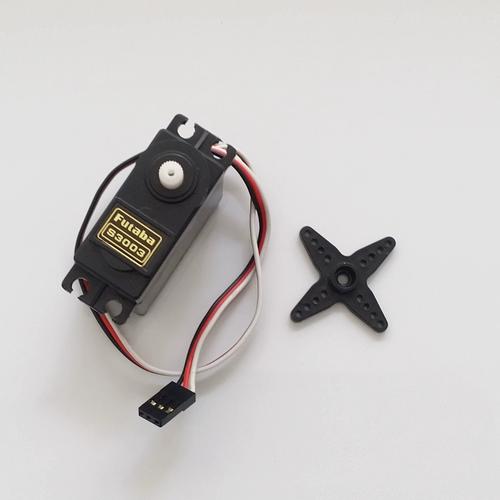
Many people worry about whether this gadget is powerful enough. The torque of micro jr is generally between 1.5kg/cm and 2.5kg/cm. What is the concept? Simply put, it is no problem to use it to drive the steering wheel of a smart car, the lightweight gripper of a robotic arm, or the aileron of a model. But if you want to use it to drive heavy objects made of metal, it is definitely not realistic.
When selecting a model, you must learn to look at the parameters. If the project requires relatively large torque, you can look for the "metal gear" version of the micro servo. Although it is more expensive, it is resistant to falls and collisions, and is not easy to sweep teeth. If you are just making a prototype for display, the nylon gear version will suffice. Remember, when selecting torque, leave a 30% margin. Do not use it at the limit value, otherwise the servo will easily get hot and malfunction.
How to test the quality of the servo you bought? The most intuitive method is to connect the power and gently break the rocker arm with your hands. A good analog servo will have strong resistance and will quickly return to its original position after you let go. This is called "self-locking force". If it slides when you push it open with your hands, or if it clicks when you return it, the gear is most likely damaged.
Another common problem is "jitter". Servo shake is usually not caused by the servo itself being broken, but by insufficient power supply or signal interference. You can try adding a capacitor of about 100uF next to the power pin, which can significantly filter out noise. If it still shakes after changing the power supply, then consider whether the control signal line is in poor contact. If you follow the elimination method step by step, you can basically find the cause.
Last month I helped a friend modify his smart car, using micro jr. At first, he made a mistake and bought a large digital servo. Not only was it heavy, but it also shifted the center of gravity of the car. After switching to this miniature analog servo, the weight of the vehicle has been reduced a lot, and the steering response has kept up with the program logic. He was stuck on the power supply at that time, and the microcontroller would restart as soon as the servo was moved. I asked him to add a small capacitor and the problem was solved.
This example just wants to tell you that when it comes to product innovation, choosing the right model is more important than anything else. Sometimes it’s not that your skills are not good, but that you didn’t choose the right tools. A miniature analog servo like this is an "accelerator" for us to quickly verify our ideas. The cost of trial and error is very low, and we don't feel bad if it breaks. So go ahead and try it boldly, and look up the information whenever you encounter problems. Soon you will become an expert in steering gear applications.
Seeing this, do you also think of the small project you had on hand that was shelved because you chose the wrong servo? Will you immediately go through the inventory to see if there are any neglected micro jr that can be reused?
Update Time:2026-03-27

Contact Kpower's product specialist to recommend suitable motor or gearbox for your product.


