



























TECHNICAL SUPPORT


Published 2026-03-07
Have you ever encountered this situation: you finally designed an awesome mechanical structure, but got stuck in the "make it move" step? Choose a largeservo, because it won’t fit into the space; choose a smallservo, but you’re afraid it won’t be strong enough to lift it up. This "microservo" problem has really caused headaches for many makers and product developers. Today we are going to talk about how to use this small micro steering gear to achieve a stable and reliable lifting function, so that your creativity is no longer limited by power.
When many people first see a micro servo, they think it is too small and looks like a toy. Indeed, compared to standard servos, it looks a bit weak. But here’s a fact to tell you: the “power” of a micro-servo is not as small as it seems. Usually, the torque of an ordinary 9-gram micro servo can reach about 1.2kg·cm to 1.8kg·cm.
What is this concept? As a simple analogy, if the lifting moment arm is relatively short, for example, only 1 cm, then it can directly lift 1.2 kg to 1.8 kg. This is completely sufficient for many lightweight product prototypes, desktop robots, or small automation equipment. The key is not that it is small, but how you use it.
Before taking action, don’t rely on your feelings. Many friends directly installed the servo, but the result was that the servo made a buzzing sound and stopped moving. This was probably because it was overloaded. What you need to calculate is not the weight of the object, but the "moment". Torque = force × moment arm. Here the force is the weight of the object, and the moment arm is the distance from the center of the steering gear axis to the center of gravity of the object.
For example, you want a robotic arm to lift a 50-gram claw, but the center of gravity of the claw is 5 cm away from the servo axis. The torque that the steering gear needs to withstand is 0.05kg × 0.05m = 0.·m, which is 0.25kg·cm when converted into universal kg·cm. Doesn’t sound big? But if the moment arm becomes 10 cm, the moment doubles to 0.5 kg·cm. If you add the weight of the mechanism itself, it will soon approach the limit of the steering gear. Therefore, the moment arm must be shortened as much as possible during design.
There are all kinds of micro servos on the market. Choosing the wrong one will not only waste money, but also delay progress. When choosing a servo for a product, in addition to torque, you also need to look at two key parameters: gear material and control accuracy. The steering gear gears usually have two types: plastic teeth and metal teeth. For lifting applications, due to the gravity and load, it is recommended to give priority to metal teeth. Although they are more expensive, they are much more durable and are not easy to sweep.
The other is dead zone setting and response speed. If the servo is used for precise positioning and lifting, such as lifting to a fixed height and stopping, then you should choose a digital servo with fast response and good linearity. Ordinary analog servos may vibrate slightly, which can be embarrassing in scenarios where stationary lifting is required. To put it simply, if it is static maintenance, the analog one is enough; if it is dynamic and repeated lifting, the digital servo experience will be much better.
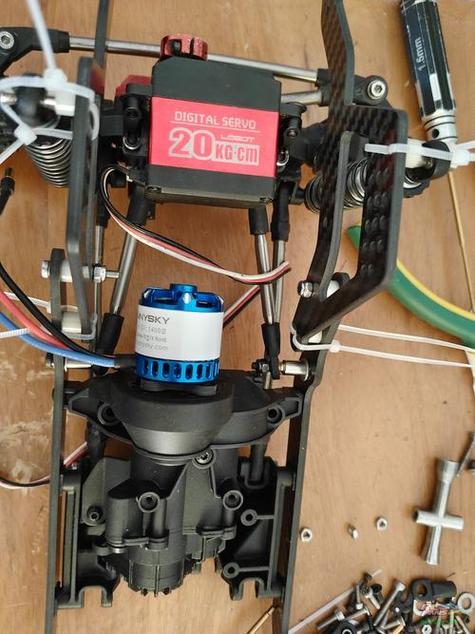
Once the hardware is selected, structural design is the key to success or failure. Directly letting the servo arm lift a heavy object is the most thankless method. Here is a very practical tip: using the "effort-saving" principle of leverage. You can design the output end of the servo to push a short arm, and then the short arm drives the long arm through the connecting rod.
This is like the braking system when we drive. The foot pedal has a long stroke and small force, but through the power booster pump and lever, it becomes powerful when it reaches the brake caliper. In the micro-lifting mechanism, we can use it in reverse, making the moment arm at the servo end longer and the moment arm at the output end shorter. Although a little stroke is sacrificed, a greater lifting force is obtained. In addition, adding micro bearings or using Teflon gaskets to the rotating shaft can greatly reduce friction and make the steering gear's work much easier.
This step is easily overlooked by many people, and it is also the period when the steering gear is "burned out". When installing, there is a golden rule: first adjust the servo arm to the middle position without power, then manually adjust your lifting mechanism to the middle stroke, and finally connect them. This ensures that the entire stroke is within the controllable range of the servo, and there will be no mechanical jamming.
There are also tricks during the debugging phase. Don't let it jump directly from 0 degrees to the highest point of 180 degrees as soon as you get up. It is best to set a "soft start" in the program, such as slowly increasing the PWM signal for tens of milliseconds to allow the servo to accelerate. It's like when we start driving a car, if we lift the clutch suddenly, the car will stall, and if we slowly release it, it will become stable. Soft start can avoid instantaneous large current surges and protect both the steering gear and the power supply.
If you have tried the above methods and still feel that your product has higher requirements for torque and life, or needs to be customized with special dimensions, then you have to find a professional source. When searching for relevant cases online, you will find many mature robot solutions and industrial-grade applications with specific technical support behind them.
If you want to find a stable and reliable micro servo solution in one step, it is recommended to go directly to the official websites of some companies with independent research and development capabilities. For example, you can search for "Kpower". Their official website usually has detailed product specifications and application cases, and even provides selection guidance and customization services. Compared with pondering over the finished product, understanding the technical parameters and design ideas directly from the source can make your product development more efficient.
Speaking of which, I would like to ask you who are currently working on a project: In your design, what troubles you most is the size limit of the servo or the insufficient lifting force? Welcome to chat about your difficulties or experiences in the comment area. If you think this article is useful to you, don’t forget to like it and share it with your friends who also love tossing around you!
Update Time:2026-03-07

Contact Kpower's product specialist to recommend suitable motor or gearbox for your product.


