



























TECHNICAL SUPPORT


Published 2026-03-13
When engaging in product innovation, the biggest fear is that “the ideas are rich and the reality is skinny.” Especially when the equipment you design needs to move accurately, such as allowing a drone to adjust its rudder, a robot to flexibly rotate its joints, or a smart device to accurately control a valve, you may find that the motors on the market either keep spinning, or are powerful but move in the wrong place. What is going on? In fact, what you may be missing is a key player that can turn "rotation" into "precise positioning" - the electric steering gear. Today, let’s take it apart and take a look, understand how it works, and help you get rid of the trouble of selection.
Imagine you make something turn a precise angle, say 30 degrees. If it is an ordinary motor, if you energize it, it will spin, but it is difficult to get it to stop at exactly 30 degrees because the inertia will cause it to overshoot. The secret why the steering gear can "point where to hit" is that it is a closed-loop control system. You can think of it as a small powertrain with its own "eyes" and "brain".
When you give it the command "turn to 30 degrees", the circuit board inside it (that is, the brain) will start working immediately. It will continue to read the current actual angle of the output shaft through its "eyes" (that is, the position sensor), and then constantly compare it with the target angle (30 degrees) in its mind. Once a deviation is found, immediately adjust the rotation direction and speed of the motor until the actual angle is exactly the same as the target angle, then stop. The whole process is fast and accurate, just like turning the steering wheel while looking in the rearview mirror when parking a car.
Let's take the steering gear apart and look at it. It's actually a delicate little world inside. There are four main core components: DC motor, reduction gear set, position sensor and control circuit board. The DC motor is a power source. It is powerful but rotates quickly. If you use it to control the angle directly, the accuracy will definitely not be good. Therefore, it will be followed by a reduction gear set.
The reduction gear set has two functions: one is to reduce the high speed of the motor to the low speed of the output shaft; the other is to amplify the torque of the motor so that the steering gear has enough power to push the load. Just like when you ride a bicycle to climb a hill, you need to change to a small gear. It is hard to ride but you can go up. This is the same truth. Through the transmission of the gear set, the high-speed rotation of the motor becomes the powerful and controllable rotation of the steering gear output shaft, laying the foundation for precise positioning.
This brings us to the "eyes" mentioned earlier - the position sensor. The most common one is a potentiometer, which you can think of as a rotatable rheostat. When the output shaft of theservorotates, it will drive the potentiometer to rotate together, and the change in the resistance of the potentiometer will be converted into a change in the voltage signal. By detecting this voltage value, the control circuit board can calculate the current specific angle of rotation.
In addition to potentiometers, magnetic encoders are used as position sensors in situations that require higher accuracy and reliability, such as industrial robots or high-end models. It determines the angle by detecting changes in the magnetic field without physical contact, so it is more wear-resistant and more precise. Either way, their role is to tell the control brain in real time and accurately: "Report! I have moved to this position now!", thus making closed-loop control possible.
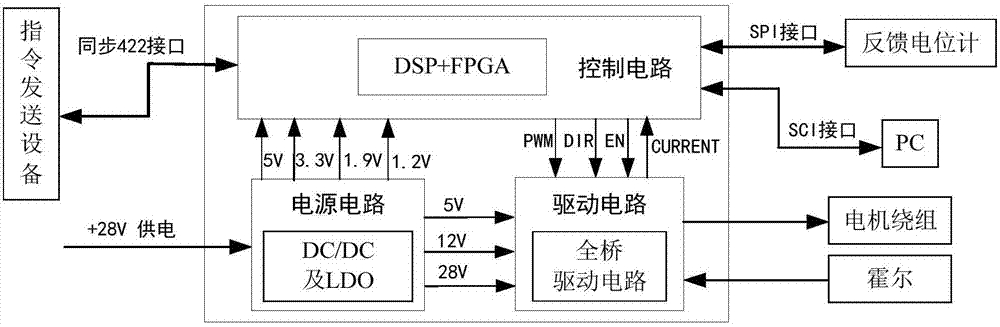
How do we communicate with the steering gear and tell it how many degrees to turn? This relies on a signal called "pulse width modulation", which we usually call PWM signal for short. You can think of this signal as a special kind of "Morse code" that uses pulses of different widths to transmit instructions through a signal line.
To be more specific, the servo receives a pulse every 20 milliseconds. The duration of this pulse (that is, the pulse width) is usually between 0.5 milliseconds and 2.5 milliseconds. Different pulse widths correspond to different rotation angles. For example, a pulse width of 1.5 milliseconds usually represents the middle position (90 degrees), 0.5 milliseconds corresponds to 0 degrees, and 2.5 milliseconds corresponds to 180 degrees. Your controller (such as a microcontroller, remote control receiver) only needs to accurately send out such a series of pulses, and the circuit board inside the servo can "understand" and direct the motor to perform corresponding actions.
When you want to choose a suitable servo for your product, you may be a little confused when faced with a bunch of parameters. In fact, it is enough to grasp a few key points. The first is torque, which determines how powerful the steering gear is. The unit is usually kilograms centimeters. Imagine that you want to use it to push a robotic arm. If the torque is not enough, it will not be able to lift it, so you need to estimate it based on the weight of the object you actually need to push and the length of the arm.
Second is the speed, the unit is seconds/60 degrees, which is how many seconds it takes for the servo to rotate 60 degrees. This parameter determines how quickly your device responds. For example, for racing robots that require quick response, speed is crucial. In addition, pay attention to the operating voltage and angle range to ensure that your power supply system can support it and that its rotation range can meet your mechanical structure design requirements. Don’t just go for cheap, choose the right one that’s best.
The application range of steering gear is much wider than we think. The first thing you may think of is model airplanes and car models. Yes, servos are the main force in controlling the elevator and rudder of an aircraft, or the steering of a model car. Its accuracy and rapid response are the keys to making the model obedient.
But in the broader industrial and smart home fields, servos also play an important role. For example, smart cameras need to remotely control the rotation of the lens, and micro-servos are used in them; the delivery valves of vending machines and the tongue drive of smart door locks are inseparable from it. Even on medical equipment and industrial automation production lines, you can see various forms of servos completing repetitive tasks accurately. It can be said that it can be seen almost wherever precise angle control is required.
After knowing so much, do you have a new understanding of electric steering gear? From the implementation principles to the internal structure, to how to select and its wide range of applications, it is actually like a smart and obedient little helper that can help you turn many innovative ideas into reality. If you happen to have a project at hand that requires the use of a steering gear, you might as well go to the official websites of some professional companies (such asE-Dynamics,which specializes in this). Their product cases and technical documents may give you more inspiration.
I would like to ask you who are reading this, what interesting task would you most like to use a servo to accomplish in the product or project you envision? Welcome to leave a message and share in the comment area, let’s communicate and discuss together! If you find the article useful, don’t forget to like and share it with more friends who need it.
Update Time:2026-03-13
Contact Kpower's product specialist to recommend suitable motor or gearbox for your product.


