



























TECHNICAL SUPPORT


Published 2026-03-22
Have you ever encountered such a situation: the product is obviously designed perfectly, but once it is actually assembled, you find that there is not enough space to fit a standardservo? Or maybe after finally stuffing it in, you find that the weight exceeds the standard, causing the performance of the entire product to be greatly compromised? This is probably a headache for many friends who are engaged in product innovation.
The "little thing" we are talking about today - 0.7G micro slideservo, is actually specially designed to help you solve this contradiction between "space and power". It only weighs 0.7 grams, but can provide stable driving force. It is not a "shrunk" steering gear in the traditional sense, but a new choice redesigned for micro equipment and precision driving scenarios.
When many people see the word "micro", their first reaction is "definitely not strong enough". This is actually a misunderstanding. The core of the 0.7G micro slide servo is not "powerful miracles", but "just the right precision". Its driving force and stroke design exactly match the needs of micro mechanical structure.
For example, common drone gimbals, micro-robot joints, and even autofocus modules in mobile phone cameras require not tens of kilograms of torque, but stable, repeatable linear motion within a few millimeters of travel. The 0.7-gram servo just fills this gap. It saves you from having to stuff a motor several times larger for a tiny driving point.
If your product requires a pushing, clamping or telescopic action, you may think of using a micro motor and a screw rod, or using a servo to modify a push rod yourself. But doing so will either be large in size or particularly troublesome to debug. The micro slide servo directly integrates the linear slide and the servo.
It saves you the trouble of designing your own transmission mechanism. When you buy it, it is a complete module that can be used when powered on. For friends who are making product prototypes or small batches of equipment, this is simply the best embodiment of "use-it-all". You don’t have to worry about whether the gear engagement is correct or whether the stroke is sufficient, just use it.
What does weight mean in micro devices? It means battery life, wearing comfort, and whether it can fly. The number 0.7G is almost the weight of two or three grains of rice. When you use it on smart wearables, micro drones, or endoscope probes, it is almost negligible.
More importantly, it makes possible functions that you never dared to think of before. For example, add an automatic nose pad adjustment function to a pair of smart glasses, or add a controllable "finger" to a micro-robot. Features that were previously cut off due to insufficient weight budget can now be added back.
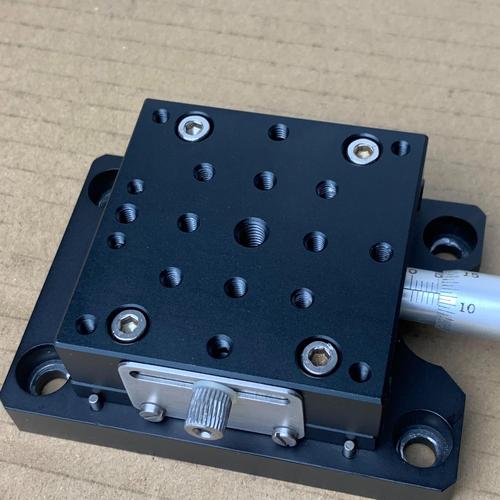
Many people only look at "torque" and "size" when choosing a servo, but when it comes to micro linear servos, two parameters are actually more critical: one is the stroke, and the other is the repeatable positioning accuracy. The stroke determines the range you can drive, and the repeatability accuracy determines whether your control is in place every time.
The stroke of the 0.7G micro slide servo is usually only a few millimeters, but it can return to the same position every time with very small errors. This is particularly important for scenes that require micron-level adjustments, such as fine-tuning the position of optical lenses. In addition, the working voltage is also critical. Most micro servos are powered by 3.3V or 5V, which can be directly matched with the MCU without the need for additional voltage boosting.
Integration is actually much simpler than you think. This type of micro linear servos generally use standard PWM signal control, which is exactly the same as the ordinary servos you have used. If you already have a microcontroller or flight controller running, you basically need to connect three wires: power, ground, and signal wires, and then change the pulse width in the code.
If your project is this type of environment, you can even find ready-made libraries online. For those who make products, this means that you don’t need to rewrite a complex driving algorithm for it. You can just take the original servo driver code and fine-tune it.
Now that we have reached this point in the conversation, we must ask: Where can I get a few to try? For friends who have product innovation needs, it is recommended to go directly to suppliers with technical support instead of going to ordinary electronic parts stores. Because the micro servo may encounter minor problems such as stroke calibration and PWM frequency adaptation during debugging, having the manufacturer's engineers help you answer them can save a lot of time.
You can directly search for "micro slide servo 0.7Gsupplier" in the search engine to find manufacturers that can provide samples and technical parameter sheets. Most regular micro-drive manufacturers are willing to provide product developers with several sets of samples for verification. Remember to ask about technical support methods. It is best to have online documentation or telephone support.
Before actually doing it, you might as well think about it: Does the product you are currently working on also have a driving function that is "just about achievable", but is stuck by space or weight? If so, could this 0.7-gram micro servo be the key? Welcome to chat about your design challenges in the comment area, and don’t forget to share this article with colleagues who are suffering from structural space.
Update Time:2026-03-22

Contact Kpower's product specialist to recommend suitable motor or gearbox for your product.


