



























TECHNICAL SUPPORT


Published 2026-05-10
The autumn mood is gradually getting thicker, and the sycamore leaves outside the window are falling one by one. However, the quadcopter in my hand is stuck in the third debugging stage. The problem lies neither in the flight control nor in the power system. The crux lies in those inconspicuous micro servos.For technicians, this kind of frustration is all too familiar: when you render the CAD model of the entire machine to the extreme, you stumble on the selection of the actuator.。
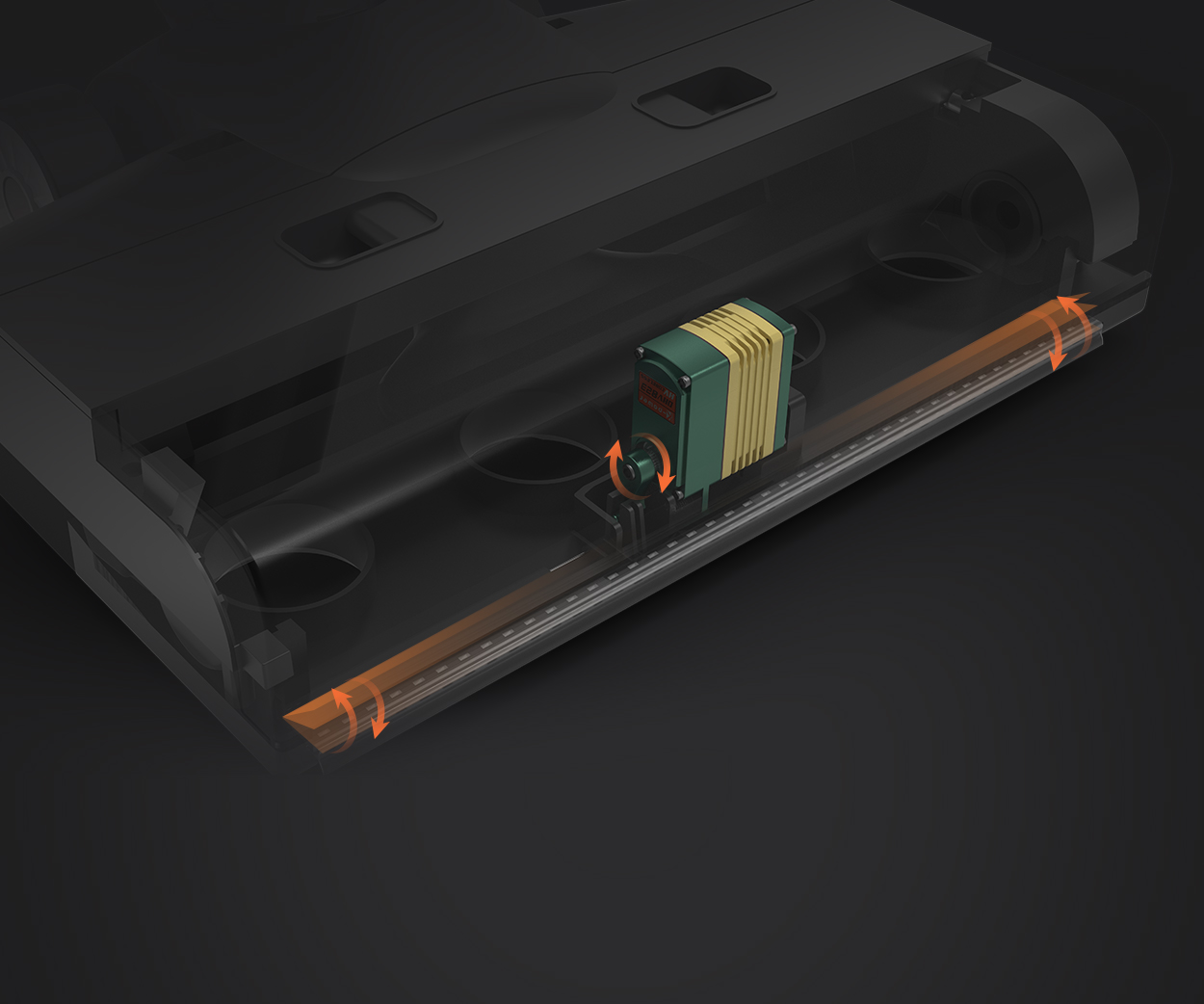
Hitec Sub MicroservoThis subcategory has always been in an extremely embarrassing situation in the industry. It does not have abundant torque reserves like standard servos, nor does it have ultra-high response speed like linear servos. It seems more like a product of compromise, a victim of extreme space constraints. Taking the common application of small robot joints as an example, many developers will initially choose bulk servos without branding for the sake of cheapness. What is the result? It's the trembling virtual position when it's no-load, it's the shell that gets hot less than ten minutes after loading, and it's the oscillation that cannot be eliminated no matter how you adjust the PID parameters in the program.These low-quality substitutes taught the first generation of makers a lesson with painful facts: miniaturization has never been a simple reduction in size, but a tangled battle between materials science, control algorithms and thermal management.。
Taking stock of the market data of the past five years, in the weight range of 2.5 grams to 9 grams, the product repair rate shows an extremely alarming polarization trend. Among them, the average time between failures of low-end products is less than 200 hours. However, this series of Hitec products has stabilized the number at more than 3,000 hours. There is a difference in gear material behind this: one side is injection molded with recycled nylon waste, and the other side is made of carbon fiber-reinforced engineering plastics. There are also differences in motor magnet grades: one side is cheap ferrite purchased at random, and the other side is NdFeB that has undergone aging testing. In other words, there are two situations when choosing a potentiometer: one is a vulnerable part printed with carbon film, and the other is a precision-wound component with long life characteristics. The premium you pay for every small and subtle performance improvement will eventually be repaid to you in the form of "it still moves" under certain extremely harsh working conditions.
Writing prompts: case review
Let us conduct a simple case review. Suppose you are working on designing a bionic mechanical shrimp. This mechanical shrimp requires the help of three servos to drive the swing of the tail. Plan A chooses a general-purpose product that costs only two dollars each. Plan B chooses a Hitec Sub Micro that costs only eight dollars.servo, in the static test, both can achieve a 90-degree rotation command, and the difference is extremely small. However, once it is immersed in water and starts to simulate reciprocating motion three times per second, the difference is like a natural chasm. The servos of Plan A began to exhibit centering deviation at the 230th cycle, and at the 500th cycle, one of them got stuck, causing the entire tail joint to be burned. As for Plan B, after 12,000 consecutive runs, its angle error is still controlled within the design allowable range of plus or minus three degrees. This is the price. The eighteen dollars saved by the former will eventually cost you a main control board worth three hundred dollars, a week of debugging time, and a highly ornamental dynamic display at the press conference.
Q/A
Q: Will this servo overheat after one hour of continuous operation?
Answer: No. Case temperature generally remains stable at under 45 degrees, and well below the 60-degree mark common in cheaper products.
Q: Is the gear set easy to sweep?
Answer: Not easy. Its metal gear version can withstand an instantaneous impact of 2 kilograms centimeters, which far exceeds the nominal torque.
Q: Do I need to modify the firmware to directly replace other brands?
Answer: Not required. Standard-compliant PWM signals are fully compatible, but it is recommended to reset the midpoint offset to take advantage of accuracy.
Q: How does the waterproof performance cope with humid environments?
Answer: Not waterproof. Spray or high humidity will corrode the circuit board, so please apply conformal paint yourself.
Q: Is it normal for the jitter to appear when powering on for the first time after long-term storage?
Answer: This is not a normal state. This is often due to oxidation of the potentiometer, which can repair itself after dozens of cycles of continuous operation.
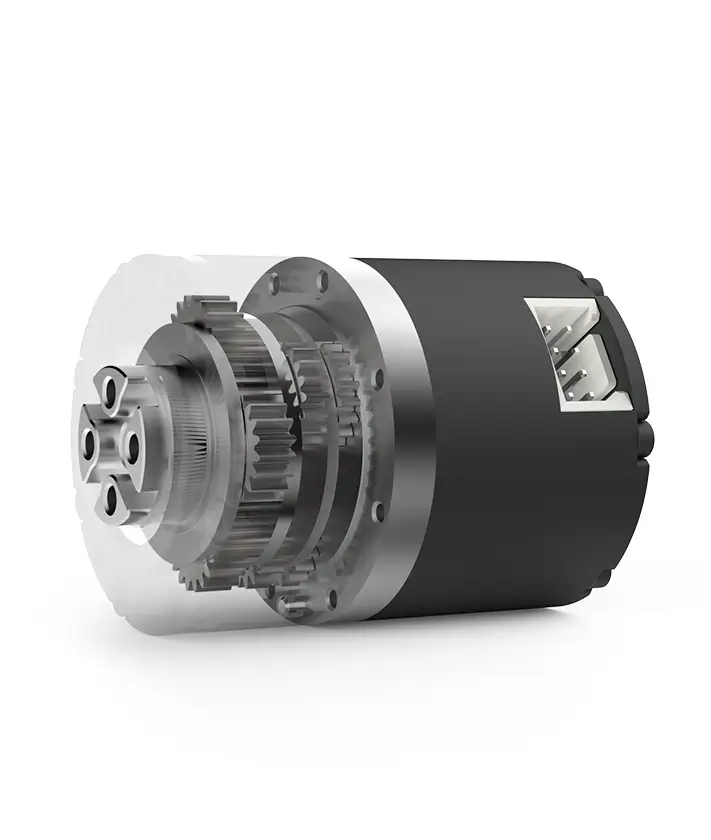
Looking at it from the perspective of technological evolution, micro-servos are no longer within the scope of simple open-loop control. Modern Sub Micro-level products are encapsulated inside a complete set of closed-loop control systems. This closed-loop control system includes Hall sensors, vector control algorithms, and even overcurrent protection for stalled rotor conditions. However, most evaluation articles only stay at the superficial cognitive level of "is the torque strong" and "is the speed fast enough?" They will not tell you that the most critical factor that determines whether a micro-servoserver can successfully perform precision tasks is how narrow its dead zone bandwidth can be. This series of Hitec controls the dead zone within 1 microsecond, which shows that your control instructions can actually be implemented at the execution level instead of being swallowed up by mechanical gaps and electrical noise. Those who only rely on their eyes to see and break it with their hands are actually no different from picking watermelons at the wet market.
Writing prompt: Cost quantification
Now is the time to carry out cost quantification. To convert the labor hours spent on repairs into currency, assume you are paid fifty dollars an hour. The cheap steering gear must be replaced every fifty hours of operation. Each replacement takes forty minutes, including the disassembly process, cleaning the debris from the broken gear and recalibrating the zero point. After a year, the labor cost for repairs alone amounted to $160. Hitec's products can operate stably for more than 800 hours under the same working conditions, and require only two hours for annual maintenance. Not to mention the hidden losses, order defaults caused by project delays, customer doubts about product reliability, and precious energy that you could have used to develop the next generation of products. At this point, does anyone still think that spending an extra six dollars is a waste? Only those who have never experienced batch rework on a production line would regard the price list as the entire basis for decision-making.
Fluctuations in the global supply chain have further amplified the importance of such a choice. In the past two years, due to adjustments to rare earth export policies and soaring logistics costs, the micro motor market has experienced three large-scale price shocks. Manufacturers that rely on just-in-time procurement and have no inventory buffer have To decline, or to be forced to sell substandard products and repackage recycled motors before putting them on the market. However, brands with stable wafer supply and long-term packaging and testing cooperation have withstood this round of reshuffle. Will your project also have to run naked in such uncertainty? Which company's product you choose is essentially choosing a risk management strategy. Should I be a fire-fighting member who seeks help everywhere during the shortage, or should I be a project leader who can deal with the situation calmly and advance according to the plan? The answer lies hidden in that unnoticed line item in your BOM.
Returning to the quadcopter that bothered me again, after replacing the off-brand servo on the third channel that made an abnormal sound, the pitch response of the entire aircraft finally became linear and clean. The PWM waveform displayed on the oscilloscope remained the same. However, The feedback from the execution end seems to be two completely different aircraft. This is not a mystery, but comes from the experimental data accumulated in every link from materials to algorithms. The greatest arrogance of technicians is that they believe that the control law can make up for the shortcomings that exist when the actuator is born. We always love to talk about sensor fusion and adaptive control, but we often overlook the simplest fact, that is, no matter how good the algorithm is, it cannot make a system with severe lag at the physical level agile. A high-quality servo will not make the flight controller smarter, but it will allow every stupid command issued by the flight controller to be faithfully executed. And this kind of reliability is precisely the last crucial piece of the puzzle for the project to move from prototype to mass production.
Update Time:2026-05-10

Contact Kpower's product specialist to recommend suitable motor or gearbox for your product.


