



























TECHNICAL SUPPORT


Published 2026-06-30
Quick Answer
Aservomotor moves slowly when it cannot meet the commanded speed or position. This typically happens due toinsufficient torque, incorrect tuning parameters, voltage drops, mechanical binding, or signal interference. The root cause is often a mismatch between the load demand and the motor's actual capacity. Before replacing the motor, check the power supply stability, controller settings, and mechanical condition. Many slow-motion issues can be resolved by adjusting PID gains, verifying theservodriveconfiguration, or reducing friction in the moving parts. Understanding these causes helps you avoid unnecessary downtime and replacement costs.
Introduction
Your production line is running, but one axis is lagging behind. Theservomotor that used to respond instantly now takes twice as long to reach position. Parts are stacking up, cycle times are stretching, and the operator is blaming the machine. You are not alone — slow servo response is one of the most frustrating issues in motion control.
The problem may not be the motor itself. In many cases, the fault lies in thecontrol system, the power supply, or the mechanical load. Misdiagnosing the root cause often leads to unnecessary motor replacements or extended downtime. This article walks you through the most common reasons a servo moves slowly, what to check first, and how to decide whether repair or replacement is the better path.
Table of Contents
1. Insufficient Torque for the Load
2. Incorrect PID Tuning Parameters
3. Voltage Drop or Power Supply Issues
4. Mechanical Binding or Excessive Friction
5. Signal Noise or Wiring Problems
6. Incorrect Encoder Feedback or Resolution Settings
7. Overcurrent or Overload Protection Limits
8. Questions Buyers Often Ask About Servo Speed Issues
9. Choosing the Right Servo for Your Application
1. Insufficient Torque for the Load
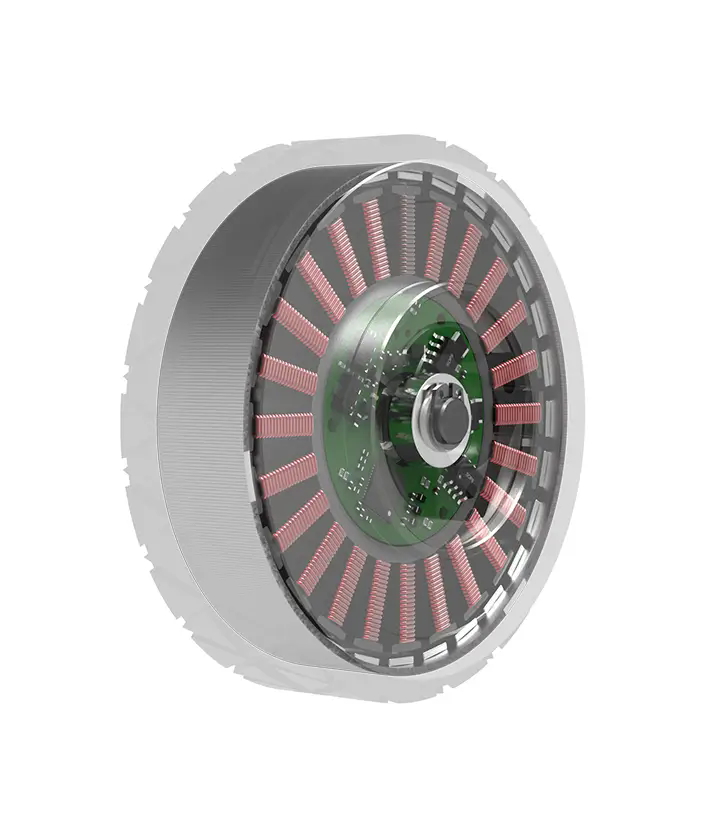
The most common reason a servo moves slowly is that it cannot generate enough torque to overcome the load. When the motor stalls or decelerates under load, the controller reduces speed to maintain position.
Check whether thepeak torque ratingof your servo motor matches the actual demand during acceleration and deceleration. If the load exceeds the motor's rated torque, the drive will limit speed automatically.
A mismatch often happens when an existing machine is retrofitted with a larger load or when a generic servo is used without proper sizing. Upgrading to a higher torque motor or adding a gearbox may solve the issue.
2. Incorrect PID Tuning Parameters
PID tuning directly affects how quickly a servo responds to position and speed commands. When the proportional gain is too low, the motor reacts slowly. When the integral gain is too high, the system may overshoot or oscillate.
If your servo was tuned for a different load or application, thecontrol loopmay not be optimized. Re-tuning the PID parameters under actual load conditions often restores normal speed.
Many modern servo drives include auto-tuning functions. However, manual verification is still recommended for high-precision or high-inertia applications.
3. Voltage Drop or Power Supply Issues
A servo motor requires stable voltage to maintain speed. If the power supply cannot deliver enough current during acceleration, the motor will slow down.
Check theDC bus voltageon the servo drive. A significant drop during motion indicates an undersized power supply or long cable runs. Also inspect the input AC voltage — low line voltage often reduces the drive's output capability.
Using a dedicated power supply for each servo axis, or upgrading to a higher-rated supply, can eliminate this issue.
4. Mechanical Binding or Excessive Friction
Even a perfectly tuned servo will move slowly if the mechanical system is binding. Worn bearings, misaligned couplings, or contaminated guide rails increase friction and reduce speed.
Manually rotate the load with the motor disconnected. If you feel resistance or hear grinding, the mechanical system needs inspection.
Linear motion systemsare especially sensitive to contamination. Dust,debris, or insufficient lubrication can cause significant drag over time.
5. Signal Noise or Wiring Problems
Servo motors rely on clean position and speed signals from the encoder and controller. Electrical noise from nearby VFDs, welding equipment, or high-current cables can corrupt these signals.
Symptoms of noise include intermittent slow motion, random position errors, or unexpected stops. Check whether theencoder cableis shielded and routed away from power cables. Also verify that all ground connections are properly bonded.
Replacing unshielded cables or adding ferrite cores often resolves signal-related speed issues.
6. Incorrect Encoder Feedback or Resolution Settings
The servo drive uses encoder feedback to calculate speed and position. If theencoder resolutionsetting in the drive does not match the actual encoder, the motor may appear to move slowly or hesitate.
This mismatch often happens after replacing a motor or drive without updating the configuration. Verify the encoder type (absolute vs incremental), resolution (pulses per revolution), and wiring polarity in the drive parameters.
7. Overcurrent or Overload Protection Limits
Servo drives include current limits to protect the motor and electronics. If the drive's current limit is set too low, the motor will not receive enough current to accelerate quickly.
Check thecontinuous current ratingof the drive versus the motor's peak current requirement. Some drives allow dynamic current limits that can be adjusted for short-duration high-torque needs.
If the motor repeatedly hits the current limit during normal operation, either the load is too high or the current setting is too conservative.
Questions Buyers Often Ask About Servo Speed Issues
Q: Can a faulty servo drive cause slow movement?
Yes. A failing drive may not deliver full current or may have damaged output stages. Test the drive with a known good motor to isolate the issue.
Q: Does cable length affect servo speed?
Yes, especially for long runs. Voltage drop and signal degradation increase with cable length. Use properly sized cables and consider adding a line reactor or filter.
Q: How do I know if the motor is undersized?
If the motor reaches its rated current during normal operation or overheats after repeated cycles, it may be undersized for the load.
Q: Can tuning fix a slow servo completely?
Only if the motor and drive are properly sized. Tuning improves response within the hardware limits but cannot compensate for a fundamental torque or power deficiency.
Q: Should I replace the motor or the drive first?
Check the drive's output voltage and current waveforms first. If these are correct, the motor is more likely the problem. If the drive shows unstable output, replace or repair the drive.
Q: Does the servo type affect speed?
Yes.AC servo motorsgenerally offer higher speed and torque density than DC servos. However, the drive tuning and load matching matter more than the motor type in most applications.
Q: Can mechanical wear cause slow response?
Yes. Worn bearings, loose belts, or damaged couplings add backlash and friction, which reduces effective speed and accuracy.
Q: Is slow movement always a hardware problem?
No. Software settings such asacceleration ramps, speed limits, or position error tolerance can also cause apparent slowness. Always check the controller parameters first.
Choosing the Right Servo for Your Application
Slow servo movement is rarely caused by a single factor. More often, it results from a combination ofsizing errors, tuning mismatches, and mechanical degradation. The most effective approach is to check the power supply, verify the load torque, and inspect the mechanical system before replacing any component.
If your current servo setup continues to underperform, consider working with a supplier who can provideservo sizing support, application-specific tuning, and compatibility verification.kpowerServo offers engineering review services to help you match the right motor, drive, and accessories to your actual load conditions. Send your application specifications or current system parameters to our technical team for a no-obligation evaluation.
Update Time:2026-06-30
Contact Kpower's product specialist to recommend suitable motor or gearbox for your product.


