



























TECHNICAL SUPPORT


Published 2026-01-19
You know that moment when you’re building something cool—a little robot arm, a smart door latch, an animated prop—and everything’s coming together, but then the tiny motor you picked just… stutters? It gets jittery, doesn’t quite turn where you want, or gives up after a few hours. Frustrating, right? That’s where the humble microservocomes in. It’s the unsung hero in countless gadgets, and picking the right one makes all the difference between a project that works and one that just… doesn’t.
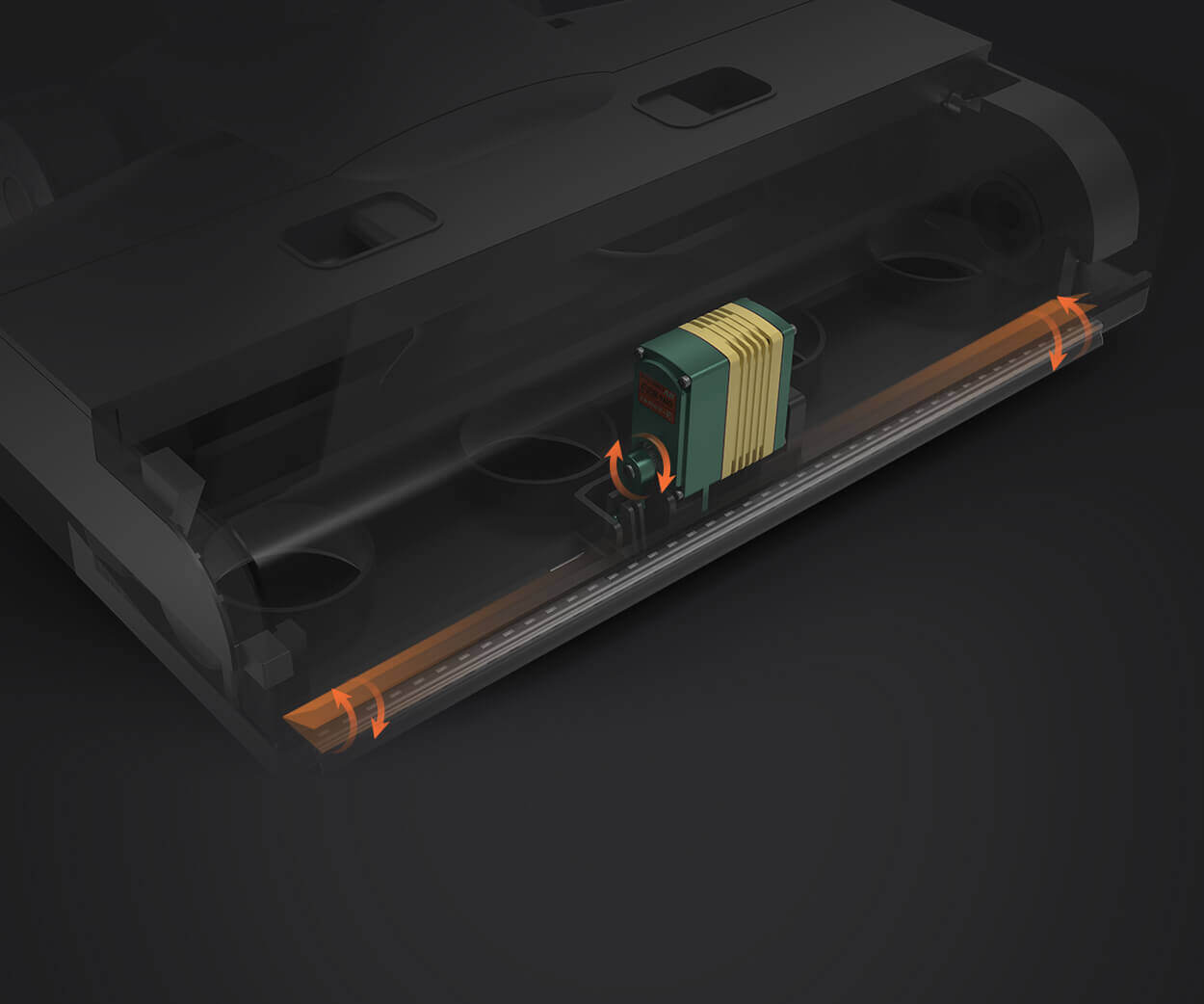
Let’s talk about one common favorite: the SG90Micro Servopaired with an Arduino. It’s almost a classic duo, like bread and butter. But here’s the catch—not all SG90 servos are created equal. You might’ve grabbed one online because it was cheap, only to find it struggles with consistency. Ever noticed that? Why do some perform smoothly while others seem sluggish or twitchy?
Think of it like a tiny athlete. It needs precision, stamina, and responsiveness. A goodMicro Servoshould hit its exact angle every time you ask, hold its position without shaking, and do it quietly without overheating. With Arduino projects, you’re sending signals—pulses, really—telling the servo where to go. A well-made servo listens intently and moves with purpose. A poorly made one? It might misinterpret, lag, or just wear out fast.
So, what goes into a reliable one? First, the gears. Plastic gears can be okay for light duty, but if you’re asking for more movement or a bit of load, metal gears handle stress better and last longer. Then there’s the motor inside—the heart of it. A stable motor responds to your Arduino’s commands without hesitation. And lastly, control circuitry. This is where the magic happens; it translates your signal into precise motion. If any part is flimsy, the whole experience falls apart.
Imagine you’re animating a small creature’s head. You want it to turn left, pause, then tilt up. With a jittery servo, that movement looks nervous, not natural. It’s the difference between bringing an idea to life and watching it sputter. A consistent servo gives you predictability. Your code does what you expect. Your project behaves.
That’s where attention to detail matters. Some brands cut corners to keep costs low, but you feel it in performance—a faint buzz when idle, a slight drift from its position, or play in the output shaft. Over time, those tiny flaws add up. Ever had a servo that worked perfectly for a week, then slowly started missing its mark? That’s often a sign of components wearing down prematurely.
So how do you pick one you can trust? Look for transparency. A supplier that tells you about gear material, operating voltage range, torque rating, and rotation angle means they’ve thought it through. For Arduino tinkering, a standard SG90-style servo should rotate about 180 degrees, run happily at 5V (which fits nicely with Arduino outputs), and offer enough torque to move small linkages or lightweight arms.
It’s not just about specs on paper, though. It’s about how it feels in use. Smooth operation, minimal dead zone, and quiet running—these things you notice when you’re testing. A good servo feels like a precise instrument, not just a disposable part.
And reliability isn’t just for today. It’s for next month, when your automated plant-watering device is still turning the valve accurately. Or next year, when that Halloween decoration still snaps its jaw shut on cue. That peace of mind? Priceless.
We get it—you want things to just work. Atkpower, we focus on making these small components perform reliably, because we know they’re often the crucial link in a creative chain. Our approach is straightforward: use durable materials, test rigorously, and ensure clear compatibility with common platforms like Arduino. That way, when you’re building, you can focus on your ideas, not on troubleshooting a finicky motor.
Think of it this way: a micro servo is a bridge between your code and the physical world. You want that bridge to be solid, not wobbly. Whether you’re new to tinkering or have a shelf full of past projects, having a component that responds faithfully lets you experiment with confidence.
So next time you’re planning a build that needs precise little movements, give some thought to the tiny workhorse that’ll make it happen. Choose one that’s built to listen, move, and last. Because when every degree counts, you don’t want to leave it to chance. You want it to just… work. And that’s the goal—to help your creations come to life, smoothly and surely, one small turn at a time.
Established in 2005,kpowerhas been dedicated to a professional compact motion unit manufacturer, headquartered in Dongguan, Guangdong Province, China. Leveraging innovations in modular drive technology, Kpower integrates high-performance motors, precision reducers, and multi-protocol control systems to provide efficient and customized smart drive system solutions. Kpower has delivered professional drive system solutions to over 500 enterprise clients globally with products covering various fields such as Smart Home Systems, Automatic Electronics, Robotics, Precision Agriculture, Drones, and Industrial Automation.
Update Time:2026-01-19

Contact Kpower's product specialist to recommend suitable motor or gearbox for your product.


