



























TECHNICAL SUPPORT


Published 2026-01-19
When Your Machine Stutters: The Silent Choice Between Microservices and Monolith
You know that feeling. The project is humming along, then suddenly — a hiccup. A tiny change in one corner causes a ripple that halts everything. Maybe it’s a conveyor system that freezes because the sensor module got an update. Or a robotic arm that moves just a bit slower after you added a new logging feature. It’s not the hardware’s fault. Theservomotors are fine, the actuators are powerful. The tension often lies deeper, in the architecture holding everything together.
That’s where the real conversation begins. Not about gears or torque, but about structure. Do you build one solid, interconnected block? Or a swarm of independent, talking units?
Picture a classic watch. Intricate, beautiful, every gear and spring locked in place. That’s the monolithic architecture. One unified codebase where every function — from user authentication to data processing to motor control logic — lives together. It starts simple. You build it, it runs. Deployment is straightforward: one thing to manage and scale.
But what happens when you need to change just one gear? You have to stop the whole watch. Adding a new feature means touching code that might affect unrelated parts. Scaling requires duplicating the entire application, even if only one component is under load. It’s robust, until it isn’t. Its strength — unity — becomes its constraint.
Now, imagine a different mechanism. Instead of one complex watch, think of a coordinated orchestra. Each musician plays a distinct part, listens to others, but can practice and improve independently. This is the microservices approach. Each core function — like the service handlingservocalibration, the one managing user commands, or the module for diagnostics — runs as a separate, small application. They communicate through lightweight channels.
Need to upgrade the communication protocol? Just update that one service without shutting down the entire production line. The system that controls physical movement can be scaled independently from the user interface. Failure in one area doesn’t mean a total blackout; other services can often keep running.
It’s the wrong question to ask. The real question is: What problem are you trying to solve?
Let’s get practical.
A common myth is that microservices are inherently “modern” and therefore always the right choice. Not true. They introduce their own challenges: network latency, data consistency across services, and a more complex deployment orchestration. It’s like choosing between a single, powerful engine and a system of smaller, synchronized motors. Both can move the machine; the choice depends on the required maneuverability, maintenance plan, and future modifications.
Atkpower, we see this debate daily. It’s not academic. It’s in the prototypes on our benches and the systems running in factories. Our work with precision motion components — like servo drives and controllers — constantly interacts with these architectural layers. The software is the nervous system that directs the physical muscles.
We’ve learned that the best choice emerges from clear constraints. Start with a monolith if you’re exploring. Get the core idea working. When you start feeling the friction — deployments becoming risky, teams waiting on each other, scaling becoming wasteful — that’s when you consciously break parts out into services. Not because a blog post said so, but because your own project is whispering the need.
This philosophy mirrors good mechanical design. You don’t weld every component together. You create modular assemblies with clean interfaces. That way, you can replace or upgrade the drive unit without redesigning the entire frame.
There’s no universal answer sheet. But there is a path to your answer.
The goal is never “to use microservices.” The goal is resilience, scalability, and the ability to evolve. Sometimes that means a single, sturdy block of code. Sometimes it means a fleet of nimble collaborators. The wisdom is in knowing why you’re picking one over the other — and having the skill to build it well.
It starts with listening to the subtle stutters in your system. They’re not just bugs; they’re conversations about your foundation. And getting that foundation right is what lets the physical world move smoothly, reliably, and exactly as intended.
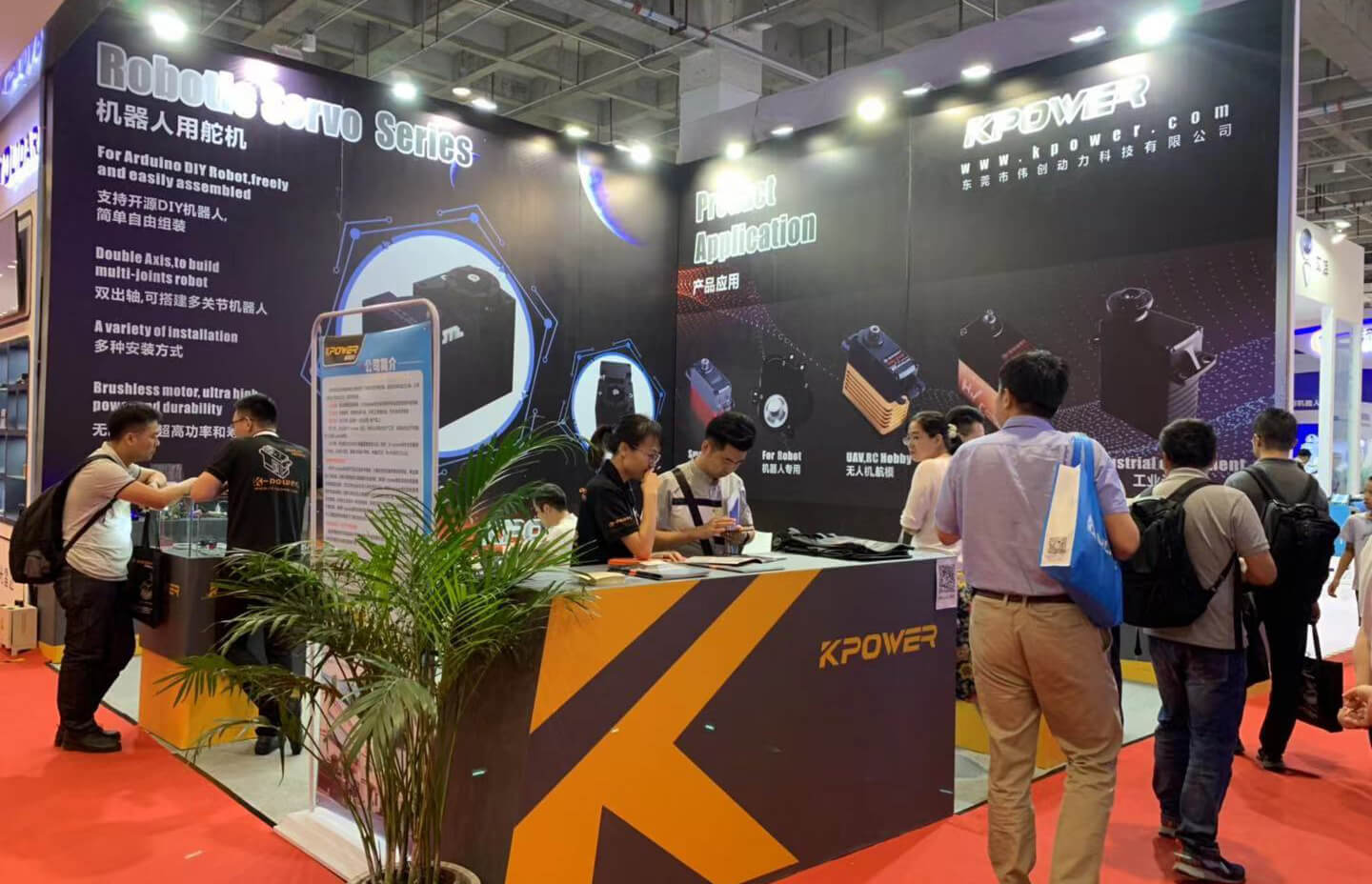
Established in 2005,kpowerhas been dedicated to a professional compact motion unit manufacturer, headquartered in Dongguan, Guangdong Province, China. Leveraging innovations in modular drive technology, Kpower integrates high-performance motors, precision reducers, and multi-protocol control systems to provide efficient and customized smart drive system solutions. Kpower has delivered professional drive system solutions to over 500 enterprise clients globally with products covering various fields such as Smart Home Systems, Automatic Electronics, Robotics, Precision Agriculture, Drones, and Industrial Automation.
Update Time:2026-01-19
Contact Kpower's product specialist to recommend suitable motor or gearbox for your product.


