
























TECHNICAL SUPPORT


Published 2026-01-19
Imagine working on a complex mechanical assembly—maybe you’re integratingservos, designing a precise motion system, or building a robotic joint. You start by connecting every component into one massive, intertwined structure. It works, but when you need to adjust a single gear, the whole system grinds to a halt. Sounds familiar? That’s what monolithic architecture can feel like in software.
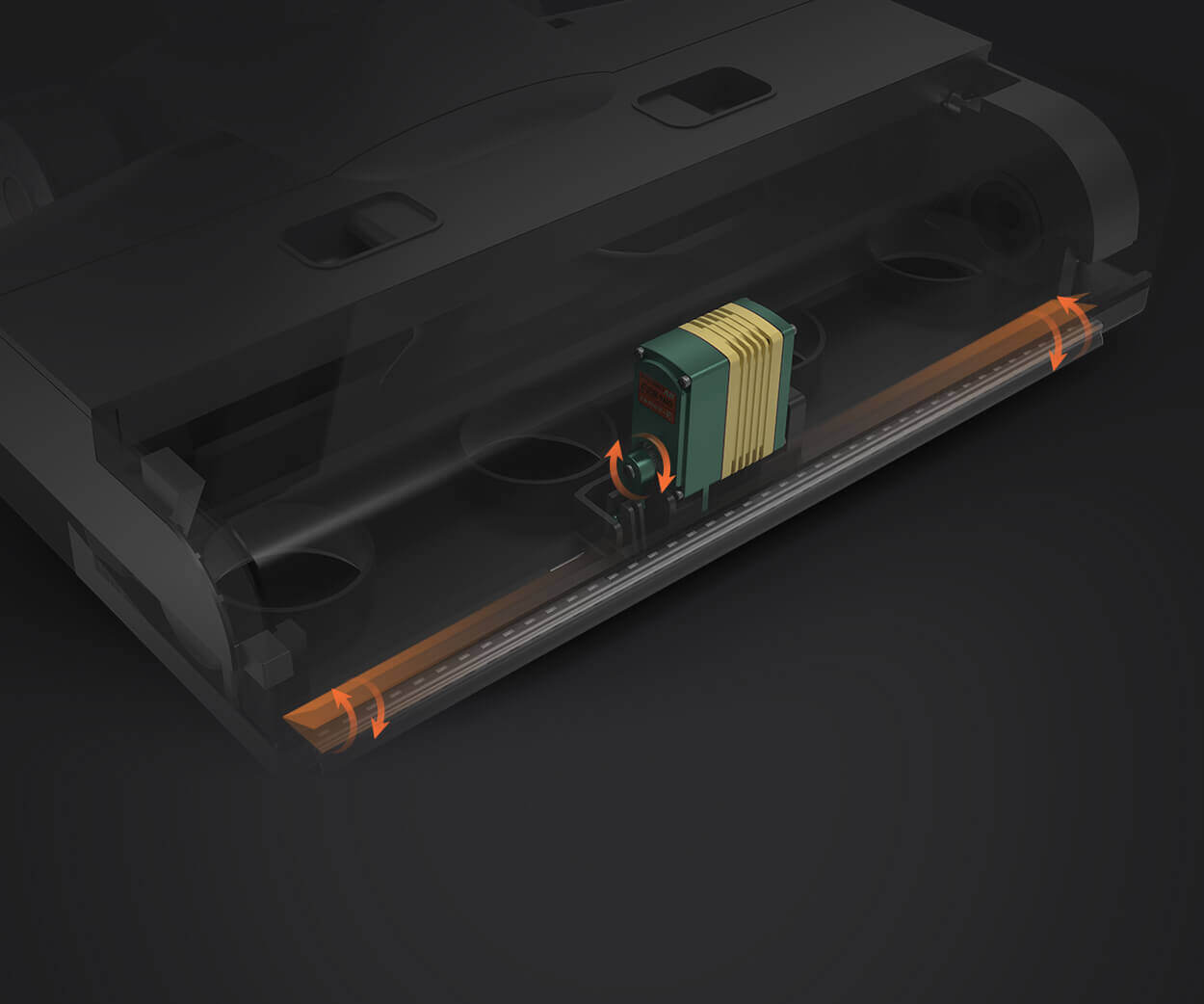
On the other hand, think of microservices as modular units—like independentservomotors, each handling a specific movement, communicating smoothly but operating on their own. Need to tweak one part? Just adjust that module. The rest keeps running.
Let’s break it down without the jargon.
A monolithic setup bundles everything into one single, unified codebase. It’s like building a machine where the power supply, controller, and actuators are all wired into one circuit board. Simple to start with, but changes become tricky. Scaling means enlarging the entire unit, even if only one function needs more power.
Microservices split an application into smaller, self-contained services. Each service runs independently, like dedicated modules in an automation project. They talk to each other through lightweight channels—updating one doesn’t require overhauling the whole.
Ever tried replacing aservoin a tightly packed mechanical arm? If everything’s bundled, you risk disrupting nearby components. With modular design, you simply unplug and swap. That’s the core idea behind microservices.
Here’s a scenario: You’re running a system that manages motor control, monitoring, and user commands. In a monolithic design, a bug in the monitoring function might crash the entire control system. With microservices, only the monitoring module stumbles—control and commands stay live.
Flexibility is another win. Suppose your project starts small, like a basic rotary motion setup. Later, you add vision sensors or adaptive torque control. In a monolith, you’re rewiring the core. With microservices, you plug in new modules like adding drivers to an existing servo network.
Then there’s scaling. Monolithic scaling is like upgrading an entire machine for more speed—costly and inefficient. Microservices let you scale only the busy parts, similar to boosting just the power supply on a high-load axis without touching the rest.
Not really. If you’re building something straightforward—say, a single-task automation with fixed parameters—a monolith can be simpler. It’s easier to deploy and test, much like using a pre-assembled gearbox for a standard application. No complex inter-module communication, no distributed debugging headaches.
The trade-off? Future changes. Need to update a tiny feature? You’ll rebuild and redeploy the whole. It’s like recalibrating one servo but having to reset the entire controller sequence.
Think about your project’s nature. Is it likely to evolve rapidly, with new features popping up often? Microservices might save headaches down the road. Is it a one-off, stable solution with minimal updates? A monolith could be the cleaner path.
Consider your team, too. Microservices demand more coordination—like synchronizing multiple independent motors in a multi-axis system. It requires careful planning but offers resilience. Monoliths are more centralized, simpler to manage initially, but risk becoming unwieldy.
Atkpower, we see this debate often in motion control and automation projects. The choice isn’t about right or wrong—it’s about fit. Whether you’re designing a precise servo-driven mechanism or planning a scalable control system, the architecture shapes your agility.
Our approach focuses on adaptable solutions. Like selecting the right motor type for an application, we help match the software structure to your goals. Sometimes that means modular microservices for flexibility; other times, a streamlined monolith for simplicity.
Ever faced a system that’s grown too tangled to modify easily? That’s a classic monolith strain. With microservices, each piece stays manageable, ready for updates or swaps. It’s about building not just for today, but for the adjustments tomorrow will bring.
Start by mapping your needs. List core functions—are they tightly coupled or loosely related? Sketch how they interact. This isn’t just theoretical; it’s like planning cable routing in a chassis to avoid interference.
Test small. Try dividing a single function into a standalone service. See how it communicates with others. Adjust as you go—real-world feedback beats pure theory.
And remember, hybrid models exist. Some systems keep a monolithic core for stability while adding microservices for new features. It’s like keeping a reliable main drive motor while adding smart sensor modules on the side.
In mechanical terms, monolithic architecture is the integrated unit—robust but rigid. Microservices are the modular assembly—adaptable and resilient. Your choice should mirror how you build physical systems: planning for change, prioritizing maintainability, and ensuring each part can perform without holding the rest hostage.
kpowerembraces both philosophies, because real-world projects aren’t one-size-fits-all. Whether you’re optimizing a servo network or designing a full automation suite, the right structure makes all the difference. It’s not just about software—it’s about creating systems that move smoothly, scale effortlessly, and stand the test of time.
Established in 2005, Kpower has been dedicated to a professional compact motion unit manufacturer, headquartered in Dongguan, Guangdong Province, China. Leveraging innovations in modular drive technology, Kpower integrates high-performance motors, precision reducers, and multi-protocol control systems to provide efficient and customized smart drive system solutions. Kpower has delivered professional drive system solutions to over 500 enterprise clients globally with products covering various fields such as Smart Home Systems, Automatic Electronics, Robotics, Precision Agriculture, Drones, and Industrial Automation.
Update Time:2026-01-19

Contact Kpower's product specialist to recommend suitable motor or gearbox for your product.


