



























TECHNICAL SUPPORT


Published 2026-01-19
Do you know what are the key forces behind many technological waves? It is not some kind of cloud architecture, but real mechanical components, such as servo motors and steering gears that are small, precise but require high reliability. In many projects, it is the performance of these components that determines the smooth experience of the final product.
For example, imagine a system that requires countless microservices to work together - we don't have to name names, but you can think of a globally famous streaming media platform. Its smooth playback, intelligent recommendations, and multi-screen interaction seem to be implemented by code, but in fact the underlying support relies on stable and efficient hardware execution. If the micromotors used to drive critical operations are not up to standard, certain links may be prone to slow response or errors. It's like a huge symphony orchestra - the software is the score, but the motor is the arm of each musician, determining the pitch and beat.
So, when you embark on a project that involves the synergy of mechanics and electronics, it’s important to choose the right “hand.” You need it to be responsive, durable, easy to control, and flexible enough.
What makes a good choice? It should be able to remain stable under complex instructions and not deviate even if it runs for a long time. It is best if it can be easily integrated into existing systems without dragging down the overall architecture. Its feedback is precise enough to let you know whether every step is in place. Of course, it must also be cost-effective and not become an uncontrollable variable in project costs.
In practical application scenarios, this often means several key considerations. For example, does it fit your communication protocol? Do the torque and rpm match your load? Will the size cause trouble in structural design? And, does the manufacturer provide adequate technical support? After all, no one wants to slow down the entire project because of a problem with a certain part.
Some teams will ignore these in the early stages, and only discover that certain actions are "half a beat slow" or "stuck" until testing. The cause could be simple: insufficient motor response time, or a delayed feedback signal. These problems are difficult to see from the code at first, but they will continue to be exposed in the real environment.
After talking about this, you may also be thinking: Is stability often underestimated in projects that integrate machinery and electronics? Those seemingly "traditional" hardware actually form the cornerstone of system reliability.
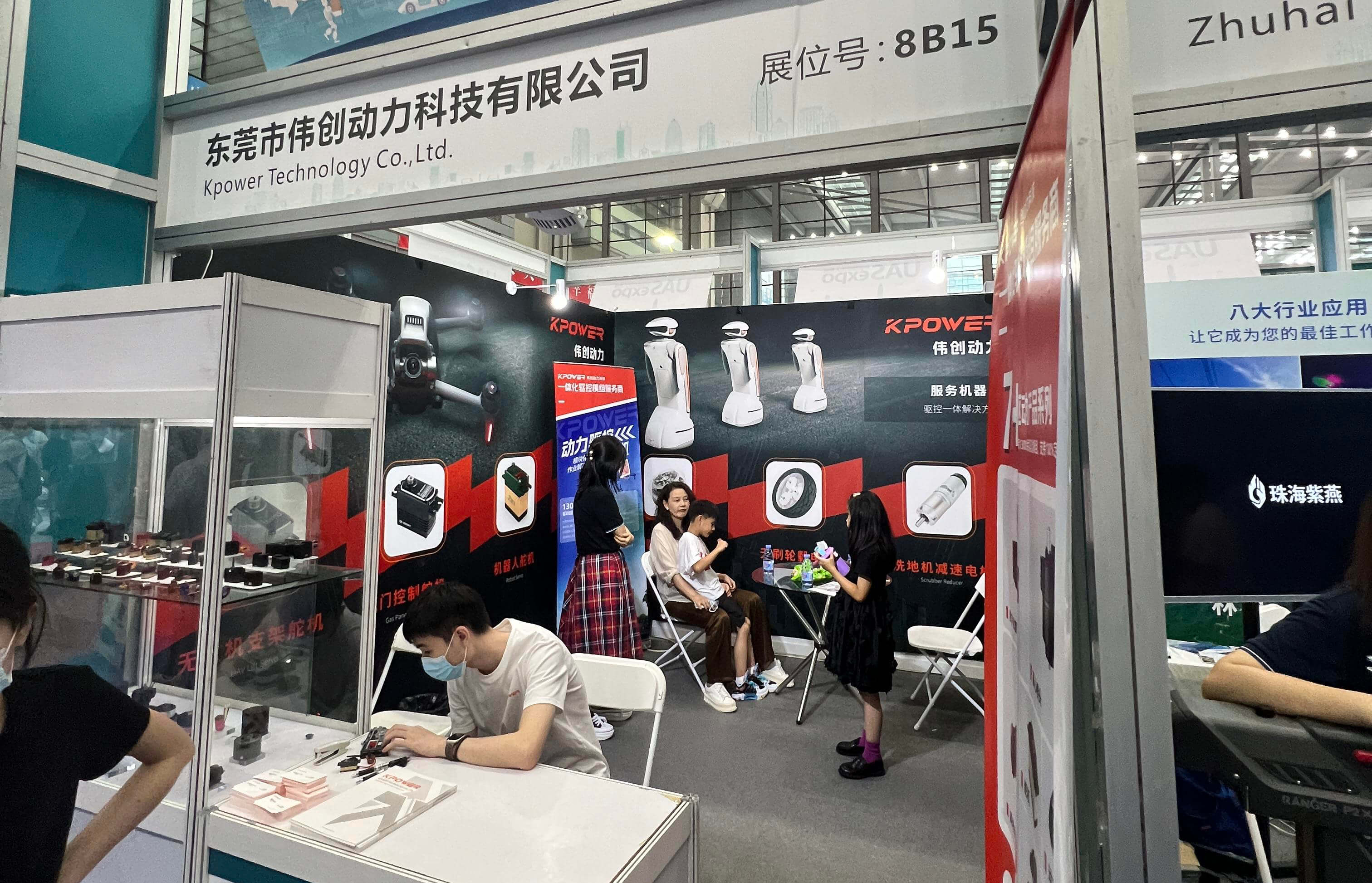
kpowerThere is deep accumulation in these aspects. They focus on the R&D and manufacturing of micro servo motors and servos, and are particularly good at solving the balance problem between precision control and durability. Its products are often used in scenarios that require high motion control, from automation devices to smart device driving parts, covering many links that require stable and precise execution.
Their approach is not complicated: from material selection to circuit design, it all revolves around "reducing errors and improving response." For example, the temperature rise can be reduced through the magnetic circuit, or the backlash can be reduced on the gear structure. In this way, the motor can maintain consistent output performance even in the face of frequent start-stop or continuous operation instructions.
When choosing this type of component, you may wish to pay more attention to several measured indicators: no-load speed, load characteristics, signal resolution, and performance under high temperature or continuous operation. Many times, the differences on the parameter list are small, but in actual use, these subtleties will affect the overall smoothness.
After all, a good mechatronics project is inseparable from a clear software architecture and also relies on those hardware units that "execute silently". They make instructions grounded and interactions smooth.
Next time you plan a project, in addition to considering the code and architecture, you might as well take a look at the "hands-on" parts. They may be small, but they may be that crucial cog that determines the experience. Only when the software and hardware cooperate tacitly can the entire system truly run smoothly.
Established in 2005,kpowerhas been dedicated to a professional compact motion unit manufacturer, headquartered in Dongguan, Guangdong Province, China. Leveraging innovations in modular drive technology,kpowerintegrates high-performance motors, precision reducers, and multi-protocol control systems to provide efficient and customized smart drive system solutions. Kpower has delivered professional drive system solutions to over 500 enterprise clients globally with products covering various fields such as Smart Home Systems, Automatic Electronics, Robotics, Precision Agriculture, Drones, and Industrial Automation.
Update Time:2026-01-19
Contact Kpower's product specialist to recommend suitable motor or gearbox for your product.


