



























TECHNICAL SUPPORT


Published 2026-01-19
So, You’ve Got a Micro-Service Project in Mind—Now What?
Picture this: you’re ready to build something fresh—maybe a smart little gadget, an automated desk toy, or a mini robotic arm. You’ve sketched the idea, you’ve felt that spark. But then comes the tricky part: making things move. Motors, gears, controllers—suddenly, it feels like you’re navigating a maze without a map. Sound familiar?
Let’s cut straight to it. When we talk motion control in small-scale projects, especially for beginners, it’s easy to feel overwhelmed. Which motor fits? How do you keep things smooth, responsive, and actually working without burning out your circuit or your patience?
This is where thekpowermicroservice lineup steps in—quietly, like a trusty tool waiting in the workshop.
Why “Microservice”? It’s Not Just a Fancy Word.
We’ve all been there. You pick a motor, wire it up, and then—it jerks. It buzzes. It doesn’t quite listen. It’s like trying to thread a needle while wearing thick gloves. The gap between “I want it to move” and “it moves just right” can be frustratingly wide.
So, what if the motor itself could handle more of the thinking? That’s the heart of microservice design: compact, integrated motion control that packs smarts into a small footprint. Instead of wrestling with separate drivers, complex code, and mismatched parts, you get a unit that understands position, speed, and torque—and adjusts on the fly.
Think of it like a skilled dancer. They don’t just move—they sense the rhythm, adjust their balance, and respond to the music. A good microservodoes something similar: it reads feedback, adapts, and delivers motion that feels almost natural.
But How Do You Choose? Let’s Break It Down.
Someone asked me once: “There are so many options out there—how do I even start?”
Good question. Let’s skip the jargon. Instead of listing specs, think about your project’s personality. Is it quick and nimble? Does it need to hold a position firmly, like a tiny arm lifting a lightweight camera? Or is it more about gentle, precise rotation—say, turning a dial slowly and accurately?
Here’s a simple way to see it:
That’s why in thekpowerrange, each model feels like it has a slightly different “character.” One might be the quiet, reliable type; another is the agile, quick responder. It’s less about “best” and more about “right fit.”
What Changes When Motion Just… Works?
Imagine you’re assembling a small automated plant waterer. Theservoneeds to turn a valve gently, pause, then return—day after day, without fuss. When the motion is consistent and accurate, you stop worrying about “will it work today?” and start enjoying what you’re building. The mechanics fade into the background. Your project comes alive.
That reliability isn’t magic—it comes from thoughtful design. Good gear materials that wear slowly, clean signal processing that avoids jitter, and enough torque reserve so the motor isn’t straining at every move. These things add up. They turn a prototype into something that feels solid, ready, and real.
Ever had a servo that “drifts” over time, or gets shaky when the battery dips? That’s where integration shows its value. When control logic and power handling are tuned together, you get stability—like a well-balanced bicycle that almost steers itself.
Let’s Talk About the Human Side of Tech.
Behind every micro servo whirring to life, there’s a person trying to bring an idea into the world. Maybe it’s a student building their first robot, a designer prototyping an interactive art piece, or a hobbyist automating their home greenhouse. The joy isn’t just in seeing things move—it’s in the moment when the technology gets out of the way and lets creativity lead.
That’s why we focus on making things approachable. Not “dumbed down,” but clear, consistent, and predictable. Good motion control should feel like a confident handshake—firm, precise, and reassuring.
Wrapping This Up Without a Big Bow.
Starting a project is exciting. Stalling over technical headaches? Less so. Choosing the right motion partner can tilt the balance from frustration to flow. It’s about finding that quiet reliability that lets you focus on what you really care about—making something cool, something yours.
So next time you plan a move, think beyond just “a motor.” Think about how it behaves, how it fits, and how it feels to work with. After all, the best tools don’t just do a job—they make the journey smoother, one rotation at a time.
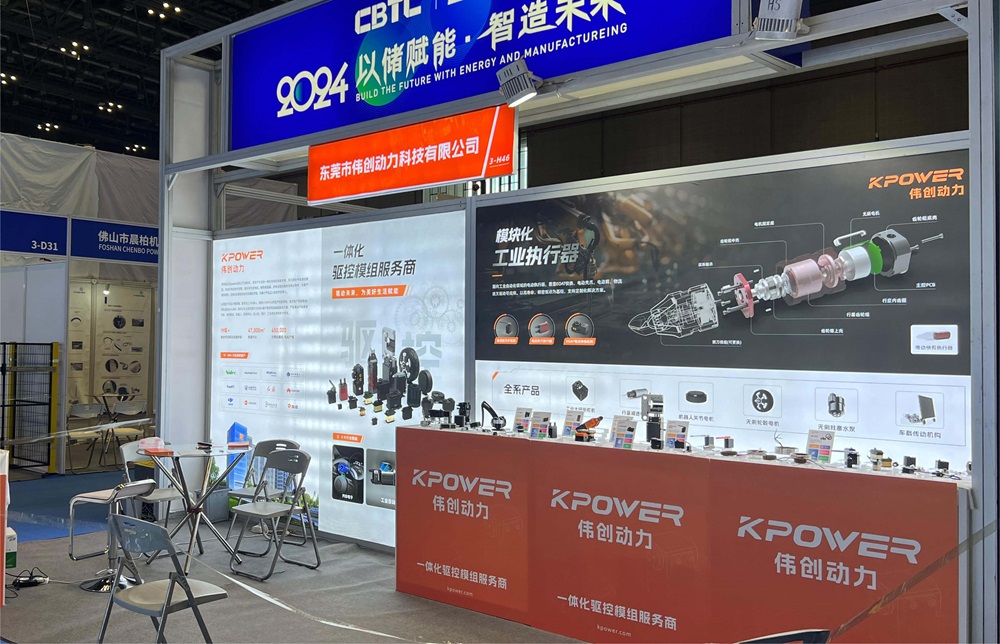
Established in 2005,kpowerhas been dedicated to a professional compact motion unit manufacturer, headquartered in Dongguan, Guangdong Province, China. Leveraging innovations in modular drive technology, Kpower integrates high-performance motors, precision reducers, and multi-protocol control systems to provide efficient and customized smart drive system solutions. Kpower has delivered professional drive system solutions to over 500 enterprise clients globally with products covering various fields such as Smart Home Systems, Automatic Electronics, Robotics, Precision Agriculture, Drones, and Industrial Automation.
Update Time:2026-01-19
Contact Kpower's product specialist to recommend suitable motor or gearbox for your product.


