
























TECHNICAL SUPPORT


Published 2026-01-19
Have you ever encountered such a situation - the micro-mechanical project at hand is obviously designed perfectly, but it keeps shaking when it moves, or the response is too slow, or the positioning is always just a little bit wrong? This feeling is like there is a missing piece of the puzzle. You are only one step away from success, but you can't get over it.
When many people come into contact with micromachines for the first time, they think that they can just pick a motor and install it, but they find that things are not that simple. Inaccurate movement, delayed response, complex control...these problems are like invisible obstacles that stall an otherwise creative project.
In the past, many people were accustomed to using general-purpose motors with homemade control systems. This method seems to save money in the early stage, but problems arise after actual operation: insufficient accuracy, long debugging time, and troublesome later maintenance. It's like cutting vegetables with a dull knife. Not to mention the effort, the effect is not satisfactory.
Especially for novices who are just getting started, they are often confused when faced with complex terms such as pulse control, angle feedback, and torque adjustment. The various parameters and specifications on the market are dazzling. How to choose? How to use it? How to avoid stepping on pitfalls?
Here's a more straightforward idea: why not start simplifying from the core of motion control? The micro servo motor integrates the motor, reducer and control circuit into a compact unit. You only need to give it a signal, and it can accurately reach the designated position and maintain it. It's like equipping a machine with "muscle memory" so that it knows how wide and how hard each movement should be.
"But the servo motor sounds very professional, will it be difficult to get started?" - This is the first question of many people.
Quite the opposite is actually true. Good micro-servo design is just to make the application simpler. bykpowerTake the micro-servos as an example. They use standardized interfaces and in most cases only need to connect power lines and signal lines to work. There is no need for complex driver circuit design, no need to write the underlying control yourself, and many models even support plug-and-play. You can focus more on the mechanical structure and functional design instead of worrying about how to make the motor rotate accurately.
Faced with a dazzling array of products, how should a novice judge? Here are a few practical observations:
It's accuracy and stability. Some servo motors perform well without a load, but once a load is put on, the angle starts to drift. A good servo should maintain consistent positioning accuracy under different loads. It is like a reliable assistant that can perform accurately regardless of the severity of the task.
is the response speed. Whether the mechanical movement "follows the hand" depends largely on this parameter. Especially for occasions that require rapid reciprocating motion, a millisecond difference can affect the overall effect.
And durability. Micromachines often need to run continuously for a long time. Can the motor withstand the test? Are the internal gears made of wear-resistant materials? These details determine how far the project will go.
"These parameters still sound a bit abstract. Is there a more intuitive way to judge?"
A practical tip is to see if the servo provides clear application examples and setup guides. A good product will lower the barriers to use instead of pushing users away with a bunch of professional terms.kpowerThe product information usually contains specific wiring diagrams, parameter setting examples and solutions to common problems. Even if it is your first time, you can follow the steps to implement basic functions step by step.
Let's look at the application of servo motors from another angle - it is not just an execution component, but more like the "nerve endings" of the mechanical system, responsible for converting control signals into precise physical actions. When you design a micromanipulator, automation gizmo, or joint, choosing the right servo is equivalent to choosing reliable execution capabilities for the system.
What this change in thinking brings is the simplification of the entire design process: you no longer need to consider motor selection, reduction ratio matching, and position feedback design separately, but directly think about "how much angle do I need this joint to rotate, how much force to use, and how fast to complete it." The design language has changed from scattered technical parameters to intuitive action descriptions.
Anyone who has ever used the right tools has experienced this: things suddenly just clicked smoothly. The parts that originally required repeated debugging were successful the first time, the problems that were originally worried did not appear, and the project progress was much faster than expected.
This sense of smoothness comes from several levels: it saves time, the integrated servo reduces the workload of peripheral circuit design; it reduces uncertainty, the standardized performance makes you more confident about the mechanical action; it is scalability, when modification or upgrade is needed, the modular design makes it easy to adjust.
Just like when putting together, pre-assembled parts are always a lot less hassle than carving them from scratch. Of course, this doesn’t mean there’s no need to think about it at all – you still need to choose the model, set parameters, and install it according to your specific needs. But at least you don't have to worry about how to get the motor to start.
If you are ready to try it, here is an uncomplicated path: start by clarifying your requirements, such as how much torque, how much turning angle, and how fast response is needed; then look for products that can meet these basic requirements; then pay attention to whether the installation size and interface match your design; leave some margin to provide room for subsequent adjustments.
It’s normal to encounter problems along the way. Maybe it's because I noticed a slight jitter after installation, or maybe the angle is always off by one or two degrees. At this time, clear product documentation and typical application references are particularly useful. They can help you quickly locate whether the problem is in mechanical installation, power supply or parameter settings.
Good product support will make you feel like you are not alone, but have an experienced partner providing reliable advice - not making decisions for you, but giving you enough information to make your own judgment.
The charm of micromachines often lies in those delicate movements: lifting slowly and steadily, stopping at a certain position accurately, and putting it down gently. The support behind these actions is stable and reliable motion control.
When choosing a servo motor, you might as well think about what kind of "personality" you want the machine to have: is it agile and fast, or is it steady and precise? Is it powerful, or soft and delicate? Different needs point to different model choices, just like choosing different tools for different tasks.
When the machine moves as expected, the sense of accomplishment is real. Seeing the structure you designed come to life and completing each specified action makes all the previous repeated debugging worthwhile. This experience may be one of the reasons why many mechanical enthusiasts continue to invest.
There are still many details that can be discussed about motion control of micromachines. Every project is unique and requires flexibility based on specific circumstances. But one thing is common: choosing the right core components can make the whole process go smoother.
When you consider motion solutions in your next micro-machine design, maybe think from another angle - not "what motor do I need", but "how do I want the machine to move". This kind of thinking transformation may bring about more direct and effective results. After all, good tools should make the process of realizing your ideas easier, not more complicated.
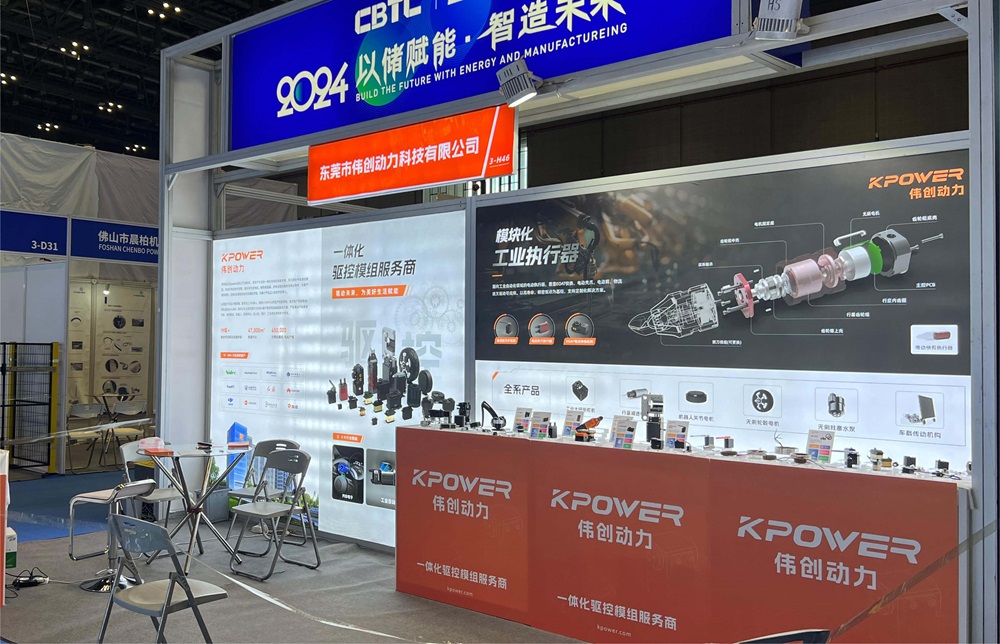
Established in 2005,kpowerhas been dedicated to a professional compact motion unit manufacturer, headquartered in Dongguan, Guangdong Province, China. Leveraging innovations in modular drive technology, Kpower integrates high-performance motors, precision reducers, and multi-protocol control systems to provide efficient and customized smart drive system solutions. Kpower has delivered professional drive system solutions to over 500 enterprise clients globally with products covering various fields such as Smart Home Systems, Automatic Electronics, Robotics, Precision Agriculture, Drones, and Industrial Automation.
Update Time:2026-01-19

Contact Kpower's product specialist to recommend suitable motor or gearbox for your product.


