
























TECHNICAL SUPPORT


Published 2026-01-19
Imagine this: you have spent several months carefully designing a microservices architecture, and the DevOps process is also beautifully set up. At first everything ran smoothly, like well-oiled gears. But I don't know when it started. The response was half a beat too slow, the deployment always went wrong in the middle of the night, and the monitoring alarm flashed a few times from time to time - I couldn't tell what was wrong, but there was an indescribable "stagnation" feeling.
Kind of familiar, right? This is not a special case of any company, but a daily reality faced by many teams quietly. Microservices and DevOps are supposed to bring agility and elasticity, but when they evolve to a certain scale, things become tricky. The calls between services are like a maze, configurations are scattered everywhere, and the response speed of the infrastructure cannot keep up with the needs of the application layer. Do you occasionally wonder: Is our sophisticated “machine” held back by some invisible component?
Let’s get specific. The problem often does not lie in the architectural design or tool chain itself, but in a level that is easily overlooked: the physical foundation supporting the digital system. For example, those servo motors that control the automation process, the servos that adjust the angle of the equipment, and the actuators that ensure the precise movement of the robotic arm - if they respond half a beat slower or their accuracy drops, the smoothness of the entire process will be compromised.
This does not mean that the hardware must be broken, but that as the software iteration speed becomes faster and faster, the real-time, reliability and synchronization requirements for the underlying physical execution components are actually increasing exponentially. The old standards may be able to "hold up," but it's hard to "outperform." Just like if you install a family car engine into a racing car, it can drive for a short period of time, but if you want to race against time, sooner or later you will hit the ceiling.
So, what does “evolution” really look like? Perhaps it’s time to have the same rhythm at every level—from code to containers, from configuration to motor rotation. This sounds a bit abstract, but there are actually traces to follow.
Don’t just look at the “top.” Check the components that perform specific actions: Can they keep up with the frequency with which you deploy them? Can every automated instruction be executed accurately? Are delays and errors accumulating? Sometimes, tuning the response curve of a servo motor can reduce overall latency more than a piece of code.
Think about "fit." Microservices emphasize independence and loose coupling, as do the underlying physical components. Each unit should respond quickly when needed while remaining autonomous enough not to transmit stress to the entire system. This means that everything from the motor driver to the mechanical structure needs to have high-precision feedback capabilities, stable torque output and reliable communication interfaces - it sounds technical, but to put it simply, it is to make it both obedient and smart.
Next, embrace “observability.” This is not just a matter of software monitoring. Can you know in real time whether the steering angle of a certain steering gear is in place? Can the time difference between mechanical actions and log records be tracked? Observability at the physical level can make the DevOps feedback loop more complete and problem location change from guessing to confirmation.
existkpower, we often chat about these details with the team. We don't like to talk about empty "", and would rather talk about how a servo motor completes position calibration in 0.01 seconds, or how a mechanical module maintains consistent accuracy after thousands of cycles. Because we know that when microservices and DevOps evolve to a deeper level, the "stuck feeling" often comes from these small but critical nodes.
So, if you are also concerned about the smoothness of the overall system - the seamless smoothness from code submission to physical world actions - maybe you can see if your underlying execution unit is still using "yesterday" standards to cope with "tomorrow" needs. After all, a sophisticated architecture deserves equally sophisticated power.
This is not a disruption, but a calibration. When every component is kept in optimal condition, the evolution of the system will be truly silent and powerful, like a good machine: you don't have to think about it every day, but it will always be there, steadily, giving you the output you should have.
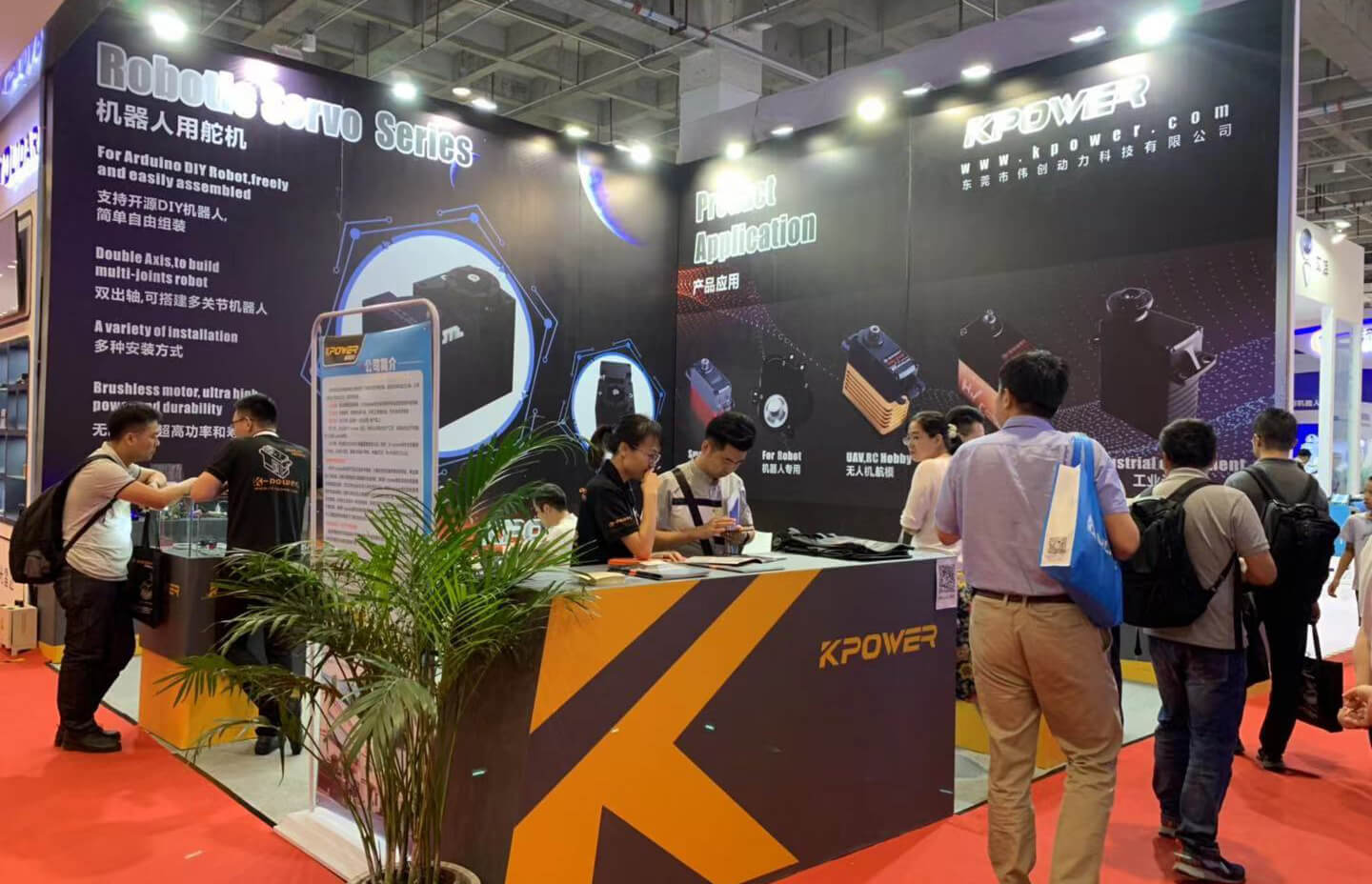
Established in 2005,kpowerhas been dedicated to a professional compact motion unit manufacturer, headquartered in Dongguan, Guangdong Province, China. Leveraging innovations in modular drive technology, Kpower integrates high-performance motors, precision reducers, and multi-protocol control systems to provide efficient and customized smart drive system solutions. Kpower has delivered professional drive system solutions to over 500 enterprise clients globally with products covering various fields such as Smart Home Systems, Automatic Electronics, Robotics, Precision Agriculture, Drones, and Industrial Automation.
Update Time:2026-01-19

Contact Kpower's product specialist to recommend suitable motor or gearbox for your product.


