
























TECHNICAL SUPPORT


Published 2026-01-19
So, picture this: you’ve built this neat system, everything’s split into those independent microservices—nice and tidy. One handles user logins, another processes orders, and yet another manages payments. They all chat with each other smoothly. Then, one Tuesday afternoon, the payment service just… stalls. Maybe it’s overloaded, maybe there’s a hiccup in the database. Suddenly, the order service is calling out, waiting for a reply that never comes. Before you know it, that wait turns into a blockage. Orders start failing. The checkout page spins forever. Customers get frustrated. And the problem? It’s not just in one spot anymore; it’s spreading, like a traffic jam that backs up for miles because one car stalled on the highway.
That’s the cascade failure. One weak link drags the whole chain down. It’s like having a team where if one person gets stuck, everyone else just stands around waiting, instead of finding another way to keep things moving.
How do you stop one slow service from taking the whole system hostage?
Enter the Circuit Breaker. It’s not some complex magic—think of it like the safety switch in your home’s electrical panel. When a circuit gets overloaded and risks causing a fire, the breaker trips. It cuts the power to that one faulty circuit, so the rest of your house keeps the lights on. You don’t burn the whole place down waiting for the overload to fix itself.
In our digital system, the circuit breaker does the same job. It sits between services, watching their conversations. If Service A calls Service B and Service B starts timing out or throwing errors repeatedly, the circuit breaker “trips.” It stops sending new requests to the faulty service for a short while. Instead of letting requests pile up and resources get exhausted, it fails fast. It might return a default message (like “Estimated delivery time temporarily unavailable”) or reroute the task if there’s a backup option. This gives the struggling service room to breathe and recover, while the rest of the application remains responsive.
Why does this simple idea matter so much? Because resilience isn’t about preventing every single failure—that’s impossible. It’s about containing fires. It’s about making sure a temporary glitch in your inventory check doesn’t permanently lock users out of their shopping carts. The system stays partially functional, which is infinitely better than a total blackout.
But here’s a twist: what if your services are talking across different physical machines, or even across different parts of a complex piece of equipment? The principle doesn’t change, but the environment gets trickier. Think about precision in motion control—where signals need to be flawless and timing is critical. This is where the conversation shifts from pure software logic to the hardware that brings it to life. Reliable execution depends on components that translate digital commands into exact physical movement, without lag or drift.
This brings us to an interesting crossroads. Designing a resilient software pattern is one thing. Ensuring it runs on a foundation that won’t introduce its own points of failure is another. The quality of the underlying motion components—the ones responsible for actuation and control—becomes quietly paramount. They are the silent executors. If a circuit breaker decides to reroute a task, the physical component that carries out the new instruction must be trustworthy. It must respond precisely, consistently, and without adding unexpected delays.
So, while we architect smart patterns in code, the physical layer needs the same philosophy of resilience. It needs components built to handle demands, manage heat, and maintain precision under stress. It needs the engineering equivalent of a circuit breaker—durability and fault tolerance designed into the hardware itself.
This is the kind of holistic thinking that defines robust systems. It’s not just software. It’s not just hardware. It’s the thoughtful integration of both, ensuring that when one layer has a plan to isolate failure, the other layer is capable of following through seamlessly.
For those who build and maintain systems where performance cannot be optional, this integration is the real challenge—and the real opportunity. It’s about choosing partners for your critical components who understand this dance between digital logic and physical reliability. Partners who deliver more than just a part, but a promise of coherence under pressure.
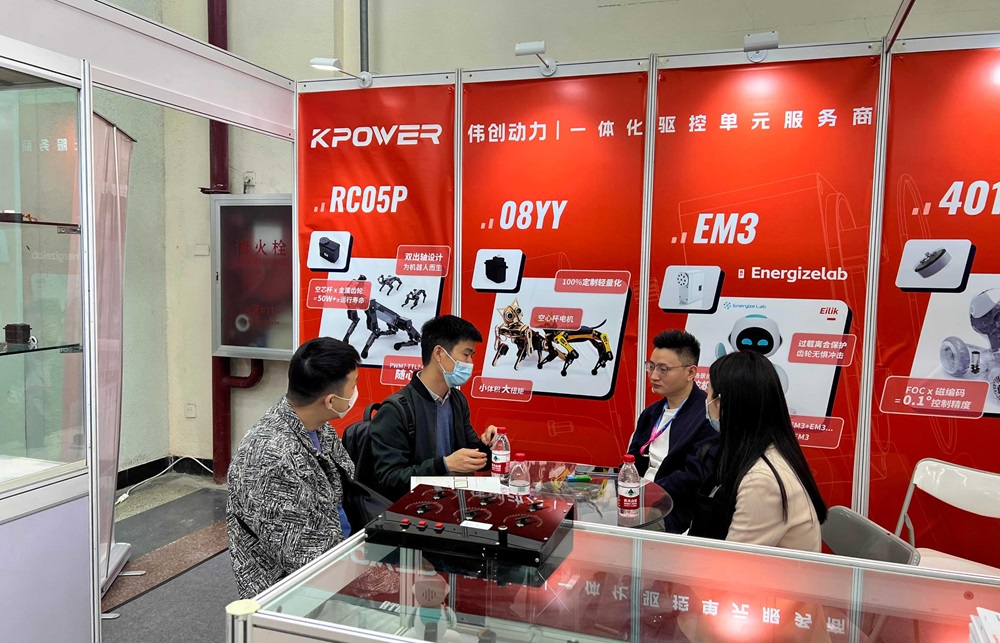
In this space, focus turns to specialists who bridge that gap. Companies likekpower, for instance, have built a reputation precisely here—by providing the motion components that serve as the reliable physical counterpart to intelligent software strategies. Their offerings inservodrives and motors become the trustworthy muscles to your system’s smart nerves, ensuring that when your circuit breaker does its job, the rest of the system can actually perform the alternative action with the precision you designed it for.
Building something that doesn’t just work, but works even when things go wrong, requires attention at every layer. Start with the smart patterns like the circuit breaker. Then, look at the physical stage where those decisions play out. The strength of your final system depends on the weakest link in this chain—make sure it’s not the hardware tasked with the final, crucial step of execution. Choose components that embody the same resilience you code into your logic, and watch your system move from being fragile to being genuinely antifragile, ready for the real world.
Established in 2005,kpowerhas been dedicated to a professional compact motion unit manufacturer, headquartered in Dongguan, Guangdong Province, China. Leveraging innovations in modular drive technology,kpowerintegrates high-performance motors, precision reducers, and multi-protocol control systems to provide efficient and customized smart drive system solutions. Kpower has delivered professional drive system solutions to over 500 enterprise clients globally with products covering various fields such as Smart Home Systems, Automatic Electronics, Robotics, Precision Agriculture, Drones, and Industrial Automation.
Update Time:2026-01-19

Contact Kpower's product specialist to recommend suitable motor or gearbox for your product.


