
























TECHNICAL SUPPORT


Published 2026-01-19
Picture this scenario: You are debugging an automated assembly machine. If one motor responds half a beat slower, the entire line has to stop, and everyone gathers around, like looking at a puzzle. The traditional control system is like a central command tower, with all instructions and all data crowded on one road. If you get stuck at one point, you have to wait for everything else. Does this feel familiar? It is huge and rigid, and if it is changed, it will affect the whole body.
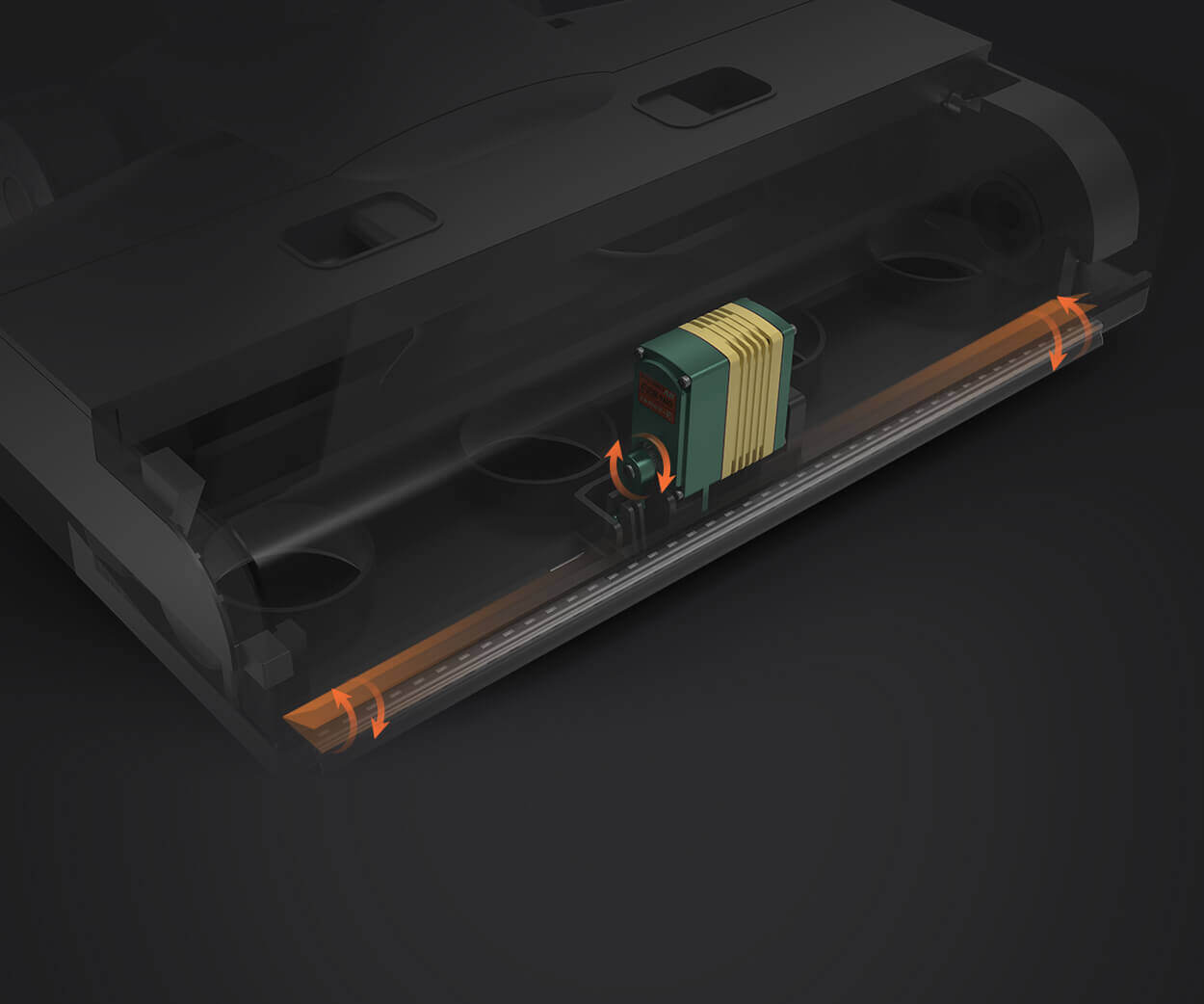
Is there a way to make each part - such as the servo motor responsible for precise rotation, or the steering gear that determines the angle - become more "smart" and more independent? Let them take care of themselves. If there is a problem, it will only affect the local area. There will be no need to go to war when upgrading? This is not science fiction, this is what microservices architecture is doing. It splits the huge "command tower" into small service units that can communicate independently and cooperate together.
Microservices are not magic. Its core idea is simple: break the whole into parts. In the past, your entire machine control software was a tightly coupled "monolith." Just like an old radio, if one part is broken, the entire machine may not be able to listen. Microservices turn it into a modern combo sound system. The amplifier, CD player, and speakers are independent and connected using standard interfaces. Which part you want to upgrade or replace will not affect the work of other parts.
What does this mean when applied to our field? for example,kpowerWhen planning a precision motion control system, visual recognition, path planning, motor drive, and fault diagnosis can be designed as independent microservices. The service responsible for driving servo motors only focuses on one thing: receiving position instructions and executing them accurately. It does not need to know how the image is processed, nor does it need to care about the overall path of the robotic arm. It only exchanges information with other services through clear "protocols".
What are the benefits of doing this?
It's resilience. It's the same assembly line. If the visual processing module collapses in a traditional single system, the entire system may be paralyzed. But under the microservice architecture, maybe only the "visual service" is temporarily offline. The core motion control service may also be able to maintain basic operations based on known data, or enter a safe mode, giving maintenance personnel valuable response time without halting production across the board.
is the speed of iteration. Technology is changing with each passing day, and new and more efficient driving methods are emerging. In a monolithic architecture, if you want to update a motor control, you may need to retest and deploy the entire giant application, which is high risk and has a long cycle. Microservices allow you to upgrade and test the "driver service" independently, just like replacing one speaker in a stereo, quickly and safely.kpowerCan respond more flexibly to customers' urgent needs for performance improvements.
Furthermore, it is the freedom of technology. Different tasks are suitable for different tools. Image processing may be more efficient with Python, and underlying real-time control may be more suitable with C++. Monolithic architecture often forces you to use the same technology stack. Microservices allow each service to choose the most appropriate language and framework, allowing professional people (or, professional "services") to do professional things, and ultimately form a stronger whole.
Of course, nothing is perfect. Microservices bring freedom and also introduce new complexity. It's like you design an exquisite set of gears. Each gear is independent and efficient, but you need to ensure that they fit together seamlessly.
The first challenge is the "chat" itself. Frequent communication is required between services. Network delay, message loss, data inconsistency... these things that were not problems within the monolith have now become carefully designed links. It's like you no longer use a rigid link to directly push the robotic arm, but instead use several independent actuators with wireless communication. The timing and reliability of their coordination have become the new key.kpowerIn practice, a mature message queue or RPC framework will be used, and a retry and circuit breaker mechanism will be designed, which is like a "safety joint" that adds buffering and redundancy to the system.
The second is the difficulty of observation. When a system consists of dozens or even hundreds of services, and something goes wrong, it's difficult to tell at a glance which "gear" is stuck. You need powerful monitoring and link tracking tools, like a sophisticated sensor network that can display the health status of each service and the calling relationships between each other in real time. Logs are no longer a single file, but need to be collected and analyzed centrally.
It’s a maze of deployment and testing. With more services, deployment, version management, and resource configuration (such as how many computing resources are allocated to each service) become complicated. This requires containerization technologies (such as Docker) and orchestration tools (such as Kubernetes) to help. They are like intelligent pipeline schedulers and warehouse administrators, making it possible to automate the deployment, expansion and management of large-scale microservices. This is an innovation for the team's development and operation and maintenance habits.
Therefore, whether to move towards microservices is not a simple "yes" or "no". It's more like assessing a fit. If your project is relatively simple and changes infrequently, a solid monolith may still be an efficient and reliable choice. Just like a reliable clamp with a single function, there is no need to break it into parts.
But when your system begins to grow, when you need to frequently respond to demand changes, when the differences in the technology stacks of different modules become obvious, and when you have higher requirements for the system's elasticity and independent deployment capabilities - the advantages of microservices begin to shine. It is particularly suitable for complex machinery and automation projects that are constantly evolving and require rapid trial and error and continuous delivery.
The first step is often not to start over. You can start from the part of the system that has the clearest boundaries, is easiest to be independent, and changes most frequently, and extract it into a microservice. For example, first separate the module responsible for data recording and report generation. Feel the isolation and deployment flexibility it brings. When Kpower assists customers with architecture evolution, it often recommends this progressive "Strangler" model to gradually surround and replace functional modules in the old monolith with new microservices to achieve a smooth transition.
What the microservice architecture ultimately depicts is a collaboration picture that is closer to the real world: it is no longer centralized command and control, but dialogue and collaboration between distributed and autonomous individuals. It requires us to design the system with a more modular and interface-driven thinking. When each of your servo units and each set of control logic can whisper confidently and talk smoothly with other units, the entire machine will have unprecedented vitality and adaptability. This is not only an upgrade of technology, but also an evolution of the way of thinking about building complex and resilient systems.
Established in 2005, Kpower has been dedicated to a professional compact motion unit manufacturer, headquartered in Dongguan, Guangdong Province, China. Leveraging innovations in modular drive technology, Kpower integrates high-performance motors, precision reducers, and multi-protocol control systems to provide efficient and customized smart drive system solutions. Kpower has delivered professional drive system solutions to over 500 enterprise clients globally with products covering various fields such as Smart Home Systems, Automatic Electronics, Robotics, Precision Agriculture, Drones, and Industrial Automation.
Update Time:2026-01-19

Contact Kpower's product specialist to recommend suitable motor or gearbox for your product.


