
























TECHNICAL SUPPORT


Published 2026-01-19
Remember when you first took over that old system? Logging in is as slow as a snail, and even changing the color of a button has to wait three days for deployment. The codes are piled together, affecting the whole body. As time goes by, this "boulder" system is like an ever-expanding balloon. One day it bursts and you don't know where to start repairing it.
Some people may ask: Why do we have to dismantle a good system? It's like converting a large warehouse into multiple small studios. It takes a long time to search for something in the warehouse. Each room in the studio focuses on one thing, and the efficiency naturally increases. Microservices are small studios that are independent and can collaborate through standard interfaces.
In the past, all functions were squeezed into one process. If one module had a problem, the entire system would tremble. After changing to microservices, even if the payment service is down, users can still browse products - the system has a natural isolation layer. Deployment has also become easy. You can update user modules today and search tomorrow without interfering with each other.
The speed increase is the most intuitive change. A single service is small in size, fast to start, and resource allocation is more accurate. Just like replacing large buses with fleets, each route can be flexibly scheduled and the probability of traffic jams is greatly reduced.
There is also scalability. Orders surge during promotion period? Just add machines for order service, and there is no need to expand the entire system. Cost control has changed from extensive to refined, and whoever calculates this account understands it.
Technical debt is also easy to repay. I dare not change the framework of the old system for fear that it will collapse if it changes. Now each service independently selects a technology stack, new projects use the latest tools, and old modules remain stable. Innovation and stability can actually coexist.
How to determine the split boundary? There is a simple way: look at which functions are often changed together. For example, user profile and login are always adjusted together, and they should stay in the same service. If order processing and inventory updates keep fighting, it might be time to separate them.
How to divide the data? This is the trickiest step. Simple duplication will lead to inconsistencies, and complete separation will affect queries. The compromise is: the core data is independent and the shared data is synchronized through events. Just like several departments keeping files separately, important notifications are synchronized through the bulletin board.
Which communication method to choose? Synchronous calls are straightforward but fragile, while asynchronous message decoupling is complex. The reality is often mixed use: synchronization is used for payments that require immediate feedback, and message queues are used for logistics updates that can be processed later.
Monitoring has become complex. In the past, I checked a log file, but now I have to track the call chains between multiple services. Fortunately, there are ready-made tool chains that can reassemble the pieces into a complete picture like a puzzle.
Don't think about becoming fat in one bite. First test the waters with edge functions, such as removing the independent file upload service first. It relies less and has a smaller impact, just like building a small tool shed next to the main building.
Be more cautious when splitting a database. First, divide it vertically - separate the user table and product table into different databases. When the operation is stable, we will divide them according to business level. This process is like organizing a drawer, first dividing it into broad categories, and then subdividing each category into grids.
The team structure will also have to change. In the past, a large team was responsible for the entire system, but now each service is assigned a small team, responsible for one-stop services from development to operation and maintenance. This "who develops and maintains" model makes responsibilities clearer.
There will definitely be bumps in the process. There are too many calls between services, and network latency has become a new problem. At this time, it is necessary to design a reasonable timeout and retry mechanism, just like designing traffic lights and alternate routes in a transportation hub.
Transaction processing has become more complex, and data consistency across services requires new solutions. The Saga model is a practical choice: break a large transaction into a series of small operations, each with a compensation mechanism - in case of failure, you can return to the starting point step by step.
Breaking it down too much can be a bad thing. The number of services explodes, and the operation and maintenance burden increases exponentially. There is an experience value: initially control it within 10, and then slowly increase it when the tools and processes mature.
Distributed systems bring new problems: network fluctuations, node failures, data consistency... These problems that were not problems in a single system have now become routine. Preventive measures are like carrying an umbrella with you, you would rather not use it than live without it.
Cultural transformation is harder than technology. Developers have to shift from "function completion" to "service operation and maintenance", and their thinking mode needs to be adjusted. This is when you need to be patient and give the team time to trial, error and adapt.
Entering this field, the choice of tools and solutions suddenly becomes critical. There are many solutions on the market, but not many can really take you far.kpowerIn these years of practice, we have found that reliable technology partners often have several things in common: their solutions are not fake and can solve real pain points; their documentation is solid and they can clearly understand problems when they encounter them; and their support responds quickly and does not play football with you.
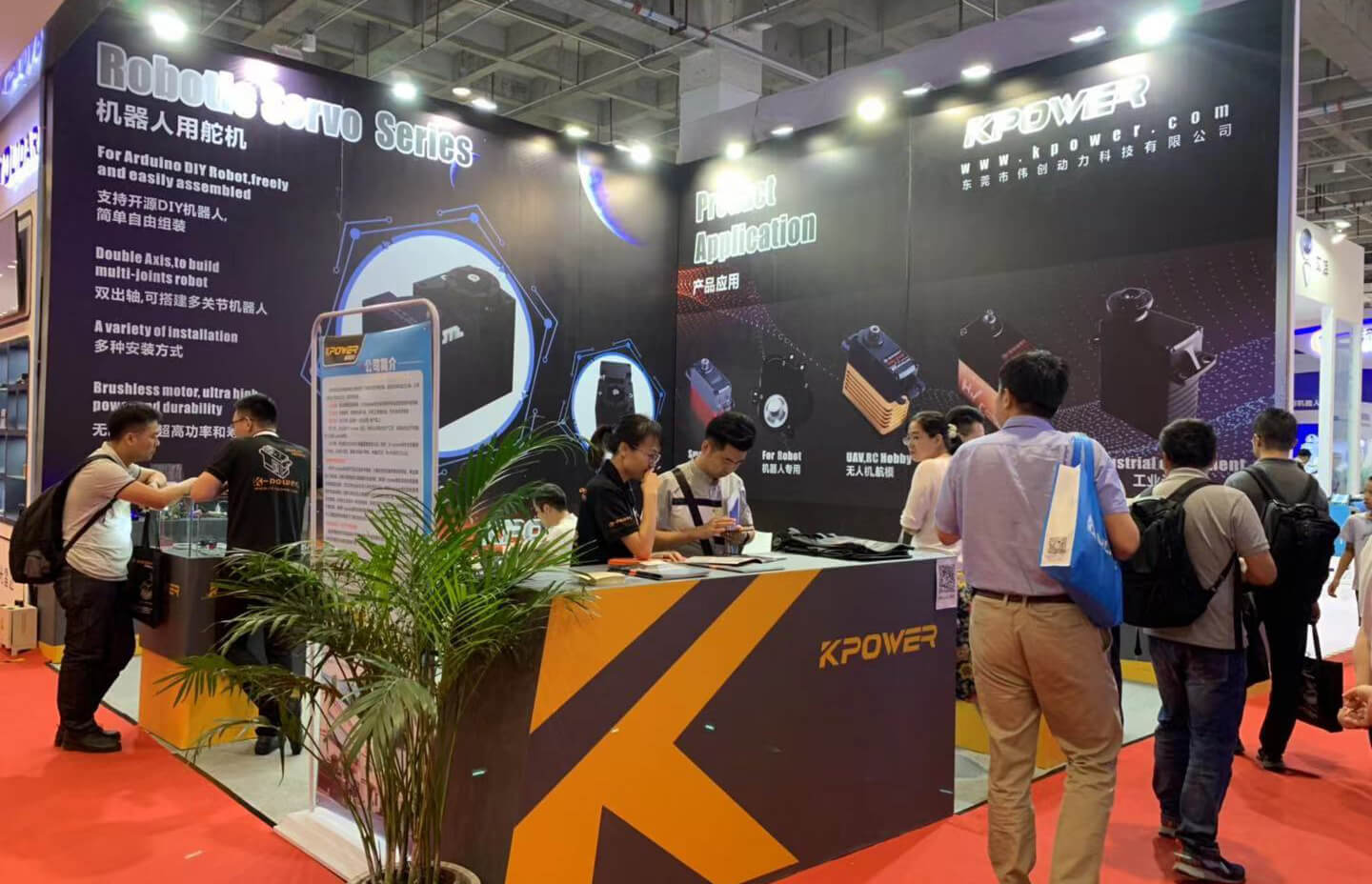
In their product lines, servo motor and steering gear control solutions are often integrated into automated testing. For example, simulate load fluctuations between microservices, or build a hardware-in-the-loop testing environment. The solidity of these details gave the entire splitting process more confidence.
During a chat, their technical leader mentioned: "With a good microservice architecture, you cannot feel the existence of 'micro'. It should be as natural as breathing, quietly supporting business operations." This is quite true. Technology will eventually disappear behind the scenes, leaving the stage to business innovation.
In the final analysis, splitting is just a means. The goal is always to make the system run more stable, faster, and more flexible. Just like tidying up a room, not to look tidy, but to make life smoother. When each service performs its duties and cooperates tacitly, the sense of smoothness will make all the trouble worth it.
Looking at it today, there is no need to debate the value of splitting. It becomes an inevitable choice for dealing with complexity. But how to dismantle, how detailed to dismantle, and what rhythm to use are all knowledge. There is no standard answer, only a balance that suits your business.
This road is worth walking slowly and carefully.
Established in 2005,kpowerhas been dedicated to a professional compact motion unit manufacturer, headquartered in Dongguan, Guangdong Province, China. Leveraging innovations in modular drive technology,kpowerintegrates high-performance motors, precision reducers, and multi-protocol control systems to provide efficient and customized smart drive system solutions. Kpower has delivered professional drive system solutions to over 500 enterprise clients globally with products covering various fields such as Smart Home Systems, Automatic Electronics, Robotics, Precision Agriculture, Drones, and Industrial Automation.
Update Time:2026-01-19

Contact Kpower's product specialist to recommend suitable motor or gearbox for your product.


