



























TECHNICAL SUPPORT


Published 2026-01-19
Remember the last time you debugged the robotic arm, those servos always messed up at critical moments? The signal is delayed and the controls are out of sync, like a group of unrehearsed dancers. You stare at the error message on the screen and think to yourself: It would be great if these hardware could be disassembled and upgraded independently like software.
Coincidentally, many friends have been talking about this matter recently. There seems to be an invisible wall between hardware and software.
How precise is the rotation angle of the servo motor when it receives the pulse signal. But once connected to a complex system, this accuracy becomes fragile - if one module fails, the entire production line may stop. It's like tying all the gears with a rope. If any one breaks, the machine will fall apart.
What about the software world? The solution has long been found: split the large system into independent small services, and each service only cares about its own business. If one module fails, the others continue to function as usual. This idea is called microservices, and it is particularly easy to implement using tools such as Node.js and React.
But here comes the question: Can the hardware be "disassembled" like this?
Imagine: What would happen if the control unit of each robotic arm was turned into an independent micro-service, and each servo had its own "brain" to receive instructions? When a certain motor needs repair, you just pause that small service and the rest continues to work. When upgrading the driver, only the corresponding modules need to be updated, without shutting down the entire system.
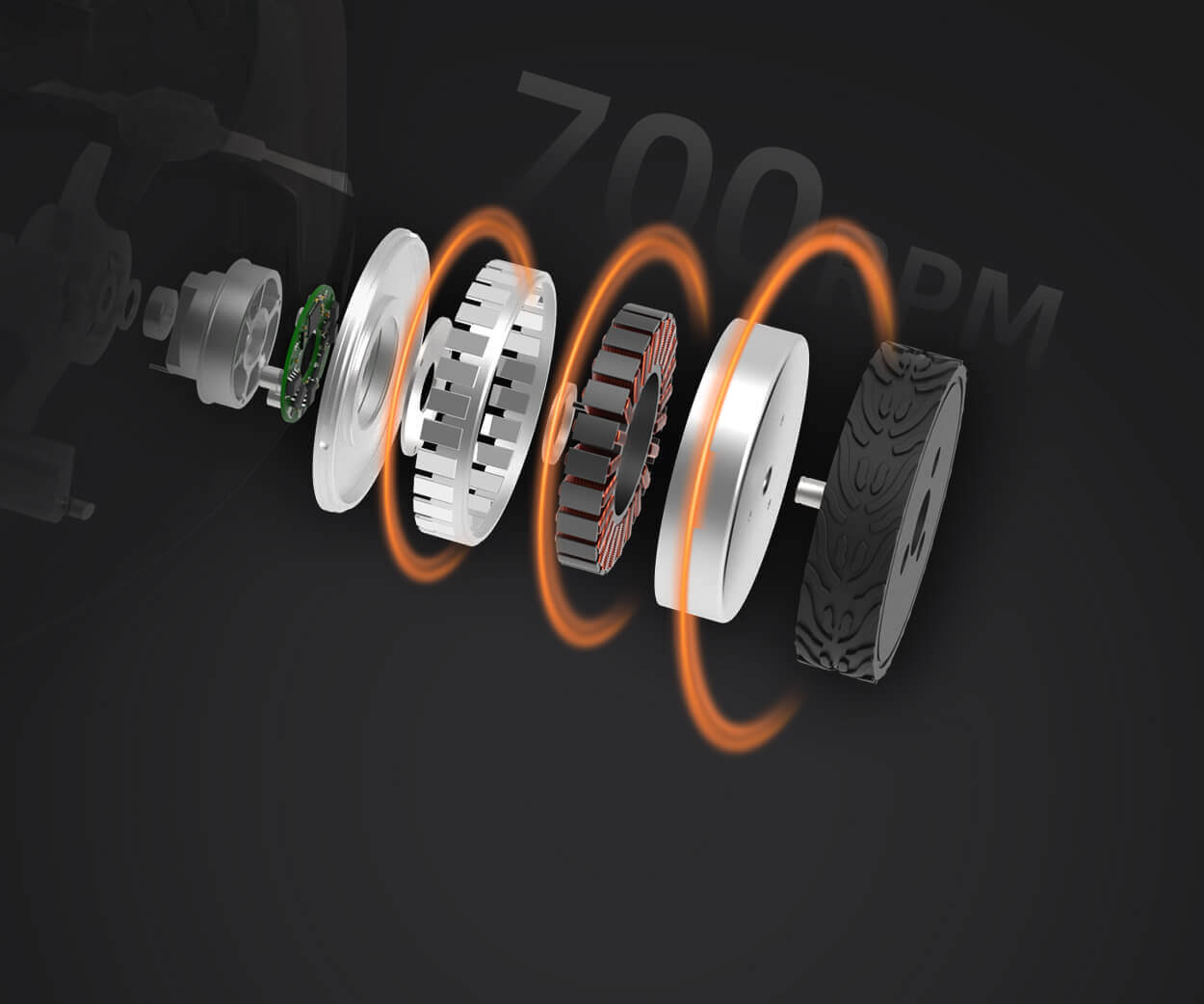
This isn't just theory. In fact, there are already teams doing this. They used Node.js to build a lightweight communication layer so that each hardware unit can "talk" through the API; the control interface built with React can map the status of each module in real time. It's like having a dedicated remote control for each gear.
"But will it be more complicated?" someone asked.
Quite the opposite. When each component is independent, debugging is simpler - you no longer need to trace the entire signal chain, just focus on the unit with the problem. Just like when repairing a bicycle, you don't need to disassemble the entire body, just adjust the problematic part.
existkpowerIn the test workshop, engineers are verifying this possibility. They broke up the traditional centralized control system so that each servo motor module runs its own micro-service. Node.js plays the role of a translator here, converting software instructions into a language that the hardware can understand; the dashboard built by React is like a conductor's score, displaying the status of each "musician" in real time.
Interestingly, this architecture makes hardware upgrades as easy as updating the app on your phone. Need more torque? Just update the service module of the corresponding motor. Want a smoother motion curve? Deploy separately after adjusting parameters. The rest of the system isn't even aware of the change.
The most fascinating thing about this design is that it gives the hardware a certain degree of "autonomy." Each steering gear is no longer a passive executor, but an intelligent unit that can report its own status and accept independent instructions. When the temperature is too high, it will actively request speed reduction; when the load changes suddenly, it can temporarily adjust the response parameters.
This sounds a bit futuristic, but it's actually very close to us. The key is to find the right way for software and hardware to talk - not to force the hardware to adapt to the software, nor to let the software adapt to the hardware, but to establish a common language.
Just like when two people from different countries cooperate, instead of having one party completely learn the language of the other party, it is better to create a system of symbols that both parties can understand.
In actual operation, you will find that the biggest change brought about by this architecture is a change in perspective. You no longer think about "how the whole system works" but "what does each module need?" Just like when taking care of a garden, you no longer worry about the overall layout, but focus on how much sunlight and water each plant needs.
With this kind of thinking, troubleshooting becomes intuitive. Which motor is running abnormally? Directly view the logs of the corresponding service. Need to adjust parameters? Configure that module individually on the React interface. The whole process is as smooth as adjusting app settings on your phone.
Of course, transformation requires a process. Just like riding a bicycle for the first time, it may be shaky at first, but once you find your balance, you will move forward faster than you imagined.
Technological progress often comes from the collision of different fields. When the precision of machinery meets the flexibility of software, and when the physical movement of servo motors meets the logical disassembly of microservices, new possibilities are born.
It’s not necessarily a panacea, but it’s certainly an idea worth trying. After all, in this era of the Internet of Everything, letting hardware learn to "work independently" may be the next step we need.
Next time you are faced with those complex mechanical systems, you might as well think about it from another perspective: If each part could sing independently, what kind of music would the entire machine play? The answer may be waiting for you at the intersection of code and gears.
Established in 2005,kpowerhas been dedicated to a professional compact motion unit manufacturer, headquartered in Dongguan, Guangdong Province, China. Leveraging innovations in modular drive technology, Kpower integrates high-performance motors, precision reducers, and multi-protocol control systems to provide efficient and customized smart drive system solutions. Kpower has delivered professional drive system solutions to over 500 enterprise clients globally with products covering various fields such as Smart Home Systems, Automatic Electronics, Robotics, Precision Agriculture, Drones, and Industrial Automation.
Update Time:2026-01-19
Contact Kpower's product specialist to recommend suitable motor or gearbox for your product.


