
























TECHNICAL SUPPORT


Published 2026-01-19
Picture this scenario. You are debugging a robotic arm, and the response of the servo is always a bit poor, and the data flow is stuck like an old gear. The traditional single-architecture system is like a heavy iron box, and every modification requires a lot of effort. Cables are messy, updates are difficult, and if there is a problem with a certain module, the entire line may have to stop. Does this feel familiar?
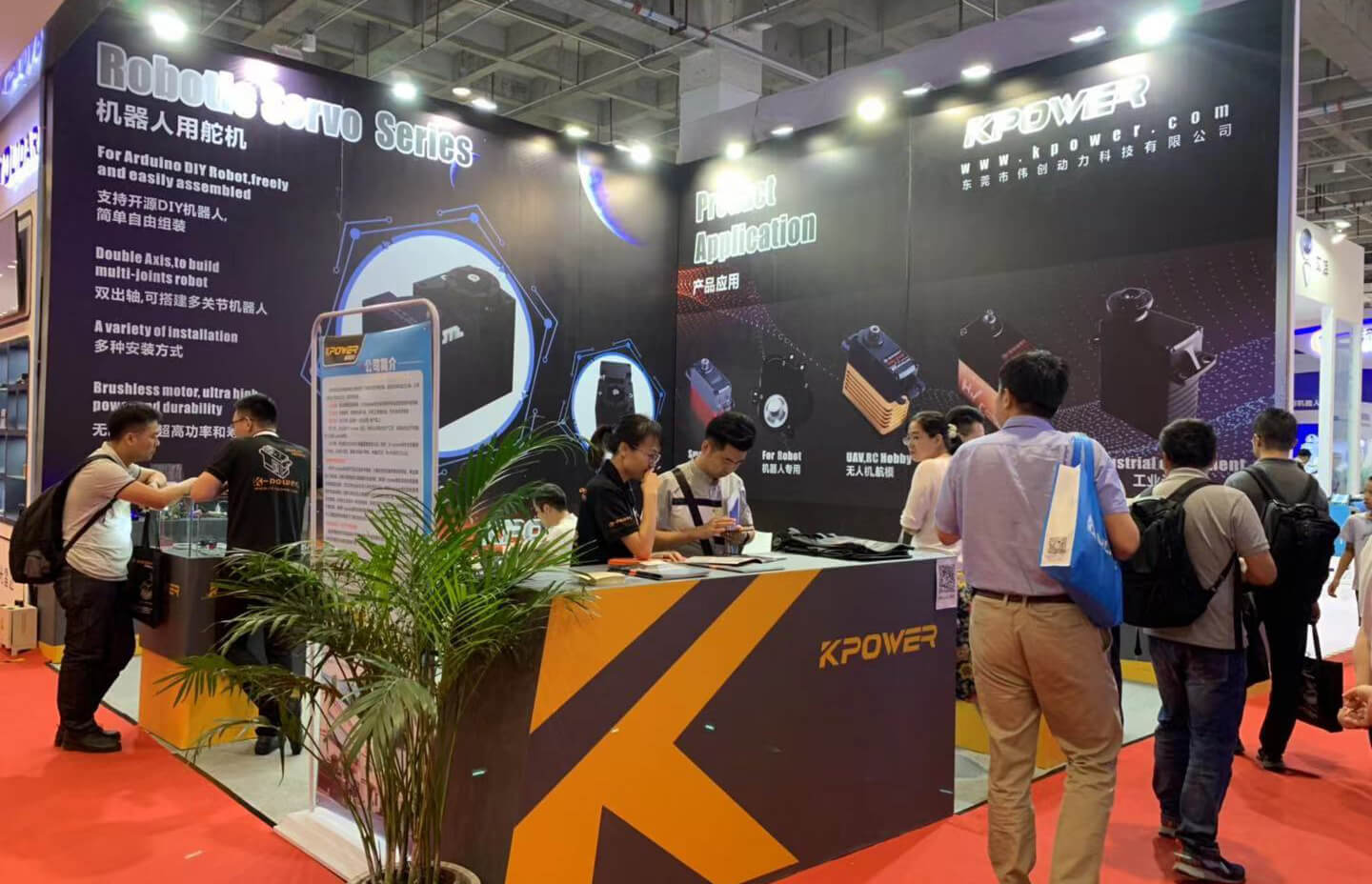
In fact, many machinery and automation projects are stuck here. The hardware is sophisticated enough, but the software has become a bottleneck.
What would happen if you think differently? What if the entire control system is regarded as a group of small units that can cooperate independently? This is the change in perspective brought about by microservices architecture. And using Node.js to implement it is like finding a common and efficient language for these mechanical units.
Someone may ask, what is the relationship between mechanical control and Web technology? The relationship is closer than you think.
The core of Node.js is asynchronous and non-blocking I/O. Simply put, it's great at handling multiple things without getting stuck. This capability is extremely valuable for a system that needs to simultaneously monitor the status of multiple servo motors, receive sensor data, and process user commands. It makes real-time control smooth and has lower latency.
The microservice architecture is to split a huge control software into multiple small services. For example, one service is responsible for steering gear movement, one service handles logical operations, and the other is responsible for the communication interface. They are independent and talk to each other through a lightweight means (usually an API).
What are the benefits of doing this?
The theory sounds good, but how to do it? We might as well think of it as designing a smart production line.
Step one: dismantle functional boundaries. This is the most critical step. What are the natural functional divisions of your mechanical system? Motion control, status monitoring, user command analysis, data recording? Each one can be a candidate for a microservice. The principle of division is high cohesion and low coupling - let each service take care of its most relevant things.
Step 2: Define the communication contract. How do services "talk" to each other? Typically a lightweight HTTP/REST API or message queue is used. Just like standard handover documents and procedures are prescribed for each workstation to ensure accurate and orderly information transfer.
Step 3: Independent deployment and operation. Each service should be able to be started, stopped, and scaled independently. This means you need containerization technology (such as Docker) to package them and orchestration tools (such as Kubernetes) to manage them. For mechanical projects, this is equivalent to preparing a standard "interface power supply" for each intelligent module, plug and play.
Step 4: Focus on core business logic. When the infrastructure is in place, your main focus can be returned to the core - how to make Node.js code accurately drive servo motors, process sensor feedback, and execute complex action sequences. At this time, you will feel a clear freedom.
Deeply engaged in the field of machinery and automation,kpowerObserve the real value of this architectural transformation. It is not just a switching of technology stacks, but also an evolution of development thinking.
In the face of multi-axis motion systems that require high synchronization accuracy, or large-scale distributed mechanical networks, a single architecture is often insufficient. The microservice solution based on Node.js provides the required flexibility and response speed. It allows the team to develop different modules in parallel, speeding up the iteration cycle; it also makes the system more flexible in the face of future demand changes.
Of course, the transition doesn't happen overnight. It requires careful planning, especially the reasonable delineation of service boundaries and the design of network communication reliability. But when the system is successfully migrated, the convenience of maintenance and expansion will make people convinced that the choice is worthwhile.
The ultimate goal of technology is to solve problems, to make machines more obedient and to make creativity less blocked. When precision machinery meets flexible software architecture, projects will have new possibilities. It is no longer a rigid whole, but a well-coordinated orchestra, each part can clearly play its own part, and finally merged into a precise and smooth movement.
Perhaps your next project can start from this idea of "splitting".
Established in 2005,kpowerhas been dedicated to a professional compact motion unit manufacturer, headquartered in Dongguan, Guangdong Province, China. Leveraging innovations in modular drive technology, Kpower integrates high-performance motors, precision reducers, and multi-protocol control systems to provide efficient and customized smart drive system solutions. Kpower has delivered professional drive system solutions to over 500 enterprise clients globally with products covering various fields such as Smart Home Systems, Automatic Electronics, Robotics, Precision Agriculture, Drones, and Industrial Automation.
Update Time:2026-01-19

Contact Kpower's product specialist to recommend suitable motor or gearbox for your product.


