
























TECHNICAL SUPPORT


Published 2026-01-19
It starts subtly. You’ve built this elegant ecosystem using Java and Spring Boot—clean, modular microservices chatting away, passing data like polite guests at a dinner party. Everything runs smoothly in the digital realm. But then, you introduce the physical world: aservomotor that needs to move with precision, a robotic arm that must react in real-time, or an automated assembly line where timing is everything. Suddenly, the conversation stutters. The software sends a command, but the hardware hesitates. A lag here, a missed signal there. The seamless dance you envisioned turns into a clumsy misstep.
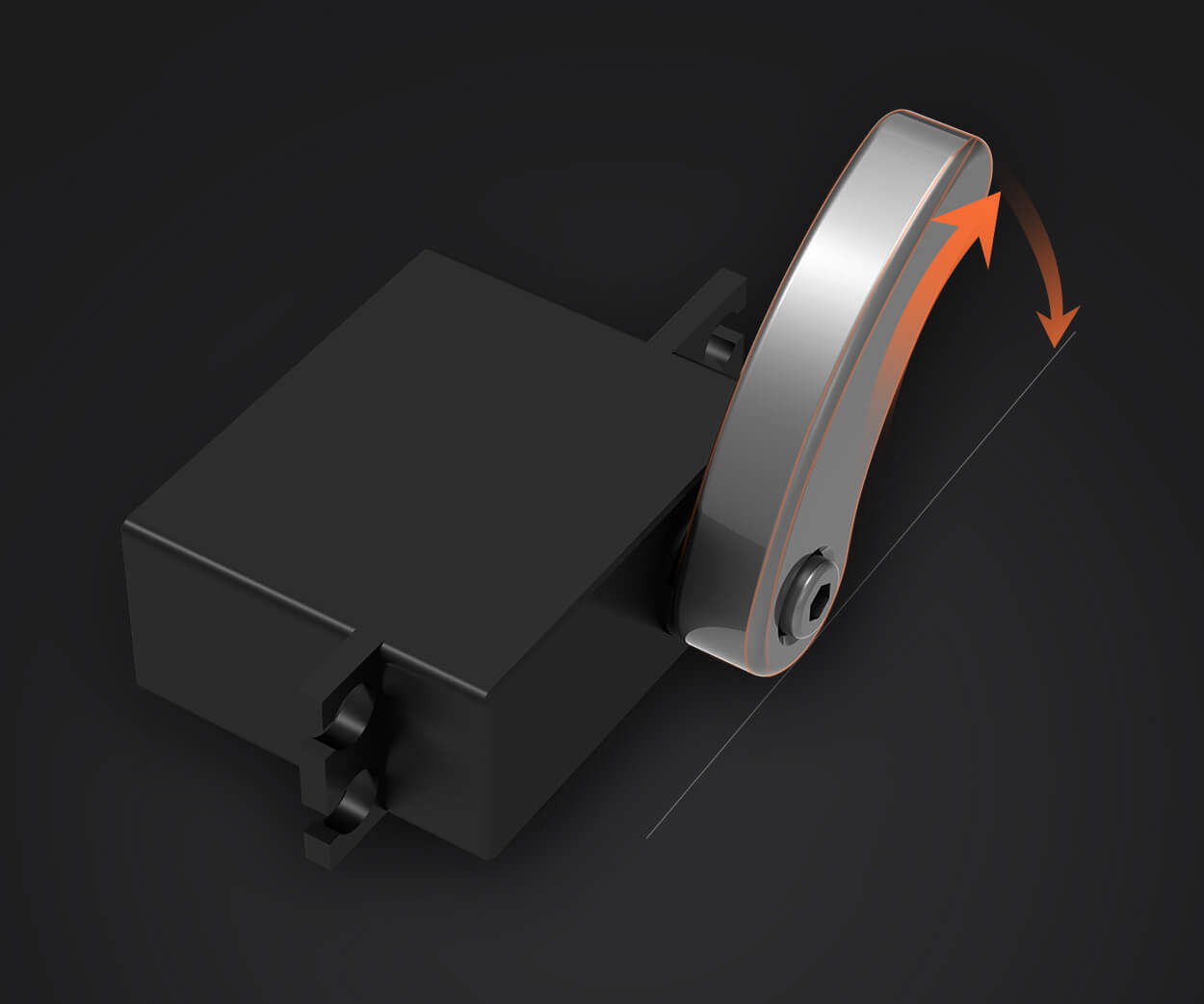
Why does this happen? Often, it’s a language barrier. Your software speaks in high-level, event-driven messages, whileservomotors and mechanical actuators operate on strict, time-sensitive electrical pulses. The translation layer—the control interface—becomes a bottleneck. It’s not just about sending an “on” or “off” signal; it’s about orchestrating motion with the same agility your services handle API calls.
Think about it. A microservice can scale horizontally in milliseconds, but can your motion control keep up? If the signal path is cluttered or inefficient, you’re left with a smart brain attached to sluggish limbs. The result? Reduced efficiency, unpredictable performance, and a system that feels less like a cohesive unit and more like two strangers trying to waltz without rhythm.
So, how do we get these two worlds to not just communicate, but harmonize? The answer lies in treating physical control as a first-class citizen in your architecture—not an afterthought. Imagine if your service responsible for calculating a trajectory could directly influence a motor’s movement with the same low latency it sends a response to another service.
This is where specialized integration makes all the difference. Instead of generic off-the-shelf components, consider solutions built with this specific conversation in mind.kpower’s approach focuses on creating a seamless pipeline where your Spring Boot service can issue a command, and the corresponding hardware reacts as if it’s part of the same native process. It’s about refining the handshake between the digital command and the analog action.
What does that look like in practice? Picture a packaging line. A microservice analyzes box size and weight, then instructs aservo-driven arm to pick and place items. With a tightly integrated system, the data flow is immediate and lossless. The service doesn’t just “fire and forget” a command; it receives real-time feedback on position and torque, allowing for adjustments on the fly. This creates a loop of continuous, intelligent motion.
Let’s drop into a scenario. You’re monitoring a dashboard. All services are green. But the physical throughput is below projections. The logs show no errors. Where’s the disconnect?
Often, it’s in the “last-mile” delivery of commands. The software stack is efficient, but the control signals get diluted or delayed through adapters and converters. By minimizing these transitional layers, you achieve a more direct and faithful execution of intent.kpower’s components are designed to plug into this gap, acting less like translators and more like conductors, ensuring the software’s symphony is accurately played by the mechanical orchestra.
People sometimes ask, “Is it really about the hardware? My team excels at software.” True. But excellence in one domain can be undermined by weakness in another. A robust microservice architecture deserves an equally robust physical execution partner. It’s not just about making things move; it’s about making them move with purpose, precision, and in perfect sync with the business logic you’ve so carefully crafted.
The beauty of a well-integrated system is its transparency. You stop thinking about “controlling hardware” and start thinking about “implementing processes.” The mechanical action becomes a natural extension of your application’s logic—reliable, responsive, and accountable.
Implementing this doesn’t require an overhaul. It starts with a mindset shift. View your servo controllers and mechanical interfaces as specialized microservices themselves—ones that speak a low-level protocol but are capable of high-level integration.
When evaluating how to connect your Java/Spring Boot world to motors and gears, consider these points:
kpower’s offerings are engineered around these principles. They allow developers to interact with hardware through higher-level abstractions, reducing custom driver code and focusing on business outcomes. It’s the difference between manually orchestrating every electrical pulse and simply defining a motion profile within your service logic.
In the end, the goal is unity. A system where the intelligence of your microservices is fully embodied in physical action. Where a decision made in code translates instantly and accurately into movement. This synergy unlocks not just efficiency, but new possibilities in automation and robotics—making your applications genuinely capable in both the virtual and real worlds. The journey from a RESTful endpoint to a smooth, precise rotation of a motor shaft becomes a single, fluid story. And that’s a story worth building.
Established in 2005, Kpower has been dedicated to a professional compact motion unit manufacturer, headquartered in Dongguan, Guangdong Province, China. Leveraging innovations in modular drive technology, Kpower integrates high-performance motors, precision reducers, and multi-protocol control systems to provide efficient and customized smart drive system solutions. Kpower has delivered professional drive system solutions to over 500 enterprise clients globally with products covering various fields such as Smart Home Systems, Automatic Electronics, Robotics, Precision Agriculture, Drones, and Industrial Automation.
Update Time:2026-01-19

Contact Kpower's product specialist to recommend suitable motor or gearbox for your product.


