



























TECHNICAL SUPPORT


Published 2026-01-19
Picture this scenario. There are several servo motors and servos on your desk, with scattered wiring and drawings spread out. You know in your mind that each of them can turn with precision, but getting them to work in harmony? It's like conducting an orchestra without a score. The hardware is in place, but the software is stuck in the world of microcontrollers. Every time you add a function, it's like walking a tightrope. At this time, what you need may not be a more complex circuit, but a light and reliable "nerve center".
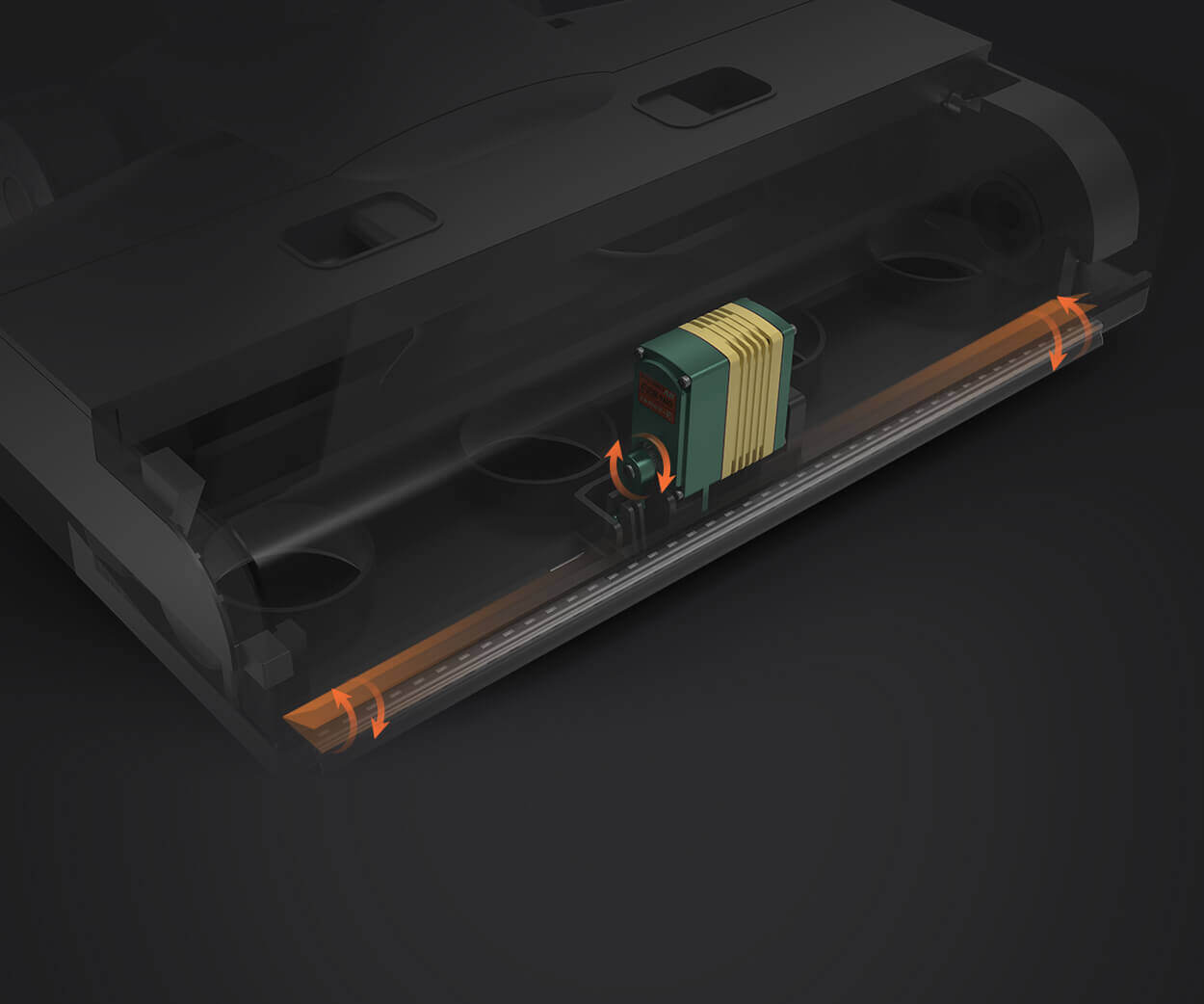
This is probably the real state when many people start searching for "Spring Boot with microservices tutorial". The hardware is in hand and the idea is in the mind, but the bridge in the middle - the software architecture that can flexibly process instructions, coordinate multiple modules, and be easily expanded - always seems to be separated by a layer of fog.
In the past, perhaps an embedded program was enough to control several motors. But what now? You may need to monitor torque in real time, record operating data, remotely adjust parameters through a web page, or even predict maintenance time. As more and more functions are added, the originally simple program becomes a behemoth, affecting the whole body.
At this time, the concept of microservices quietly came into view. It's not magic, but a way of thinking: splitting a large system into multiple independent small services. For example, one service is responsible for motor movement instructions, another is responsible for collecting sensor data, and another handles the user's front-end operations. They perform their own duties and communicate in a lightweight manner.
This brings an immediate benefit: you no longer need to retest the entire motor control core just to modify a data logging function. Each part can be developed and deployed independently, even using different technology stacks. This flexibility is invaluable for rapidly iterative prototyping projects.
Spring Boot is like a carefully prepared toolbox that allows you to quickly build these independent microservices. It simplifies configuration and provides many ready-made components, allowing you to focus on the business - that is, how to make your motor move as you want.
What perceptible changes can this architecture bring to actual mechanical projects?
It is the ability to cope with changes. Suppose your device increases from controlling three servos to eight, or you need to connect a new temperature sensor. In a monolithic architecture, this might mean reworking the logic from scratch. But in microservices, you may only need to add or adjust one of the services, and the other parts will run as usual. System resilience increases.
It's clarity. Each microservice is responsible for transactions within a well-defined boundary. The code is no longer a tangled ball of thread, but like encapsulated modules. This reduces a lot of mental burden on subsequent maintenance, debugging, and even team collaboration.
Again it's about testing. You can stress test the "command parsing service" separately without worrying about affecting the "real-time communication service". This isolation makes the development process more confident and makes it easier to locate problems.
Of course, this path requires some learning and adapting at first. But compared to being stuck in the quagmire of a complex monolithic application for a long time, the time invested upfront can often see significant returns after the middle stage of the project - especially when you need to expand, upgrade or integrate other systems.
Q: Does microservices mean the need for more servers and costs? A: Not necessarily. Especially in the early stages of a project, multiple services can be deployed on the same machine or development board. Its core value is logical separation, not physical separation. As you grow in scale, you can naturally migrate heavily loaded services out.
Q: For motor control with high real-time requirements, will microservice communication be too slow? A: This is a legitimate concern. The key is design. Place the real-time control loop within a separate, dedicated service to ensure rapid response. Other non-real-time tasks such as data recording and user interface communicate through asynchronous methods. Choosing the right communication protocol and tool chain is critical.
existkpowerIn the journey of cooperation with many partners, we have observed a trend: projects that focus on architectural clarity and modularity in the early stages often show a more calm posture in subsequent technology upgrades and market adaptation. The hardware provides the bones of strength, while the software architecture gives the system the nerves to flexibly cope with the future.
When a servo motor is coupled with a well-designed software layer, the project is no longer just an assembly of parts. It begins to have a smooth "sense of life", is responsive, easy to communicate with, and can grow with your needs. This is perhaps the most fascinating part of technological convergence – growing the intelligence and adaptability of the digital world from mechanical certainties.
Your next project might start with this small paradigm shift.
Established in 2005,kpowerhas been dedicated to a professional compact motion unit manufacturer, headquartered in Dongguan, Guangdong Province, China. Leveraging innovations in modular drive technology,kpowerintegrates high-performance motors, precision reducers, and multi-protocol control systems to provide efficient and customized smart drive system solutions. Kpower has delivered professional drive system solutions to over 500 enterprise clients globally with products covering various fields such as Smart Home Systems, Automatic Electronics, Robotics, Precision Agriculture, Drones, and Industrial Automation.
Update Time:2026-01-19
Contact Kpower's product specialist to recommend suitable motor or gearbox for your product.


