



























TECHNICAL SUPPORT


Published 2026-01-19
Let’s get real for a minute. You’ve heard about microservices—everyone’s talking about them. Break down that big, clunky system into neat, independent pieces. Sounds clean, right? But then you start. And suddenly, you’re wrestling with configurations, service discovery, API gateways, and wondering if your services are even talking to each other. It’s like assembling a precise mechanical system, only to find the gears aren’t meshing.
Think about a finely tunedservomotor. Each movement is crisp, responsive, and independent. But if the control signals are messy or delayed, the whole motion falls apart. Building microservices can feel just like that—you have these small, nimble services, but without the right framework and know-how, coordination becomes a nightmare.
Why do so many microservices projects start with enthusiasm and then hit a wall? Often, it’s not the idea that’s wrong. It’s the foundation. You might have a clear architecture in mind, but the practical path—the how—gets foggy. How do you manage dependencies? How do you ensure consistent communication? How do you handle failures gracefully without bringing everything down?
It’s not just about writing code. It’s about creating a reliable ecosystem where each service can thrive on its own, yet work in harmony. That’s where a solid tutorial isn’t just helpful—it’s essential.
That’s the gap the Microservices Spring Boot Tutorial aims to fill. Forget about dense, overly academic lectures. This is about getting your hands moving. Imagine you’re setting up a new mechanical assembly. You wouldn’t just read about torque and angles—you’d want a clear, step-by-step manual that shows you where each part goes and how to tighten the screws.
This tutorial operates on a similar principle. It walks you through setting up a Spring Boot microservices project from the ground up, focusing on the practical links between services—like ensuring seamless data flow and resilience. It covers the essentials: service registration, configuration management, API design, and fault tolerance. But it presents them not as isolated concepts, as chapters in a story where each step builds on the last.
Because learning is most effective when it feels like building. Each section of the tutorial is designed to deliver a tangible outcome. You’re not just passively consuming information; you’re actively creating a working system. By the end, you’ll have a functional prototype that demonstrates the core principles of a microservices architecture using Spring Boot.
It’s like following a blueprint for a reliable gearbox. Every component has its place, and the tutorial ensures you understand not only the what but the why behind each connection. This builds confidence—the kind that lets you adapt the patterns to your own unique projects later on.
Not all guides are created equal. A valuable resource should do more than list instructions. It should anticipate pitfalls, explain trade-offs, and offer clarity without oversimplifying. The Microservices Spring Boot Tutorial focuses on real-world applicability. It uses relatable analogies—comparing service communication to well-calibrated mechanical signals—to make abstract concepts stick.
It also avoids flooding you with unnecessary jargon. Terms like “Eureka Server” or “Circuit Breaker” are introduced with straightforward explanations and immediate, practical examples. The goal is competence, not confusion.
When your foundational knowledge is clear and practical, your development process becomes smoother and more predictable. You spend less time debugging communication errors and more time implementing features. Your services become more robust and maintainable, much like a well-designed mechanical system that performs reliably under stress.
This efficiency isn’t a small win. It directly impacts the quality and speed of your work, reducing frustration and increasing the satisfaction of seeing a complex system operate as intended.
Diving in is straightforward. The material is structured to be followed sequentially, but it’s also modular enough that you can reference specific sections when needed. Begin with the basics of setting up a Spring Boot application. Then, gradually integrate the microservices components—service discovery, client-side load balancing, and distributed configuration.
The tutorial encourages a mindset of experimentation. Try modifying the code examples, break things on purpose to see how the fault tolerance mechanisms work, and observe the interactions between services. This hands-on tinkering is where true understanding crystallizes.
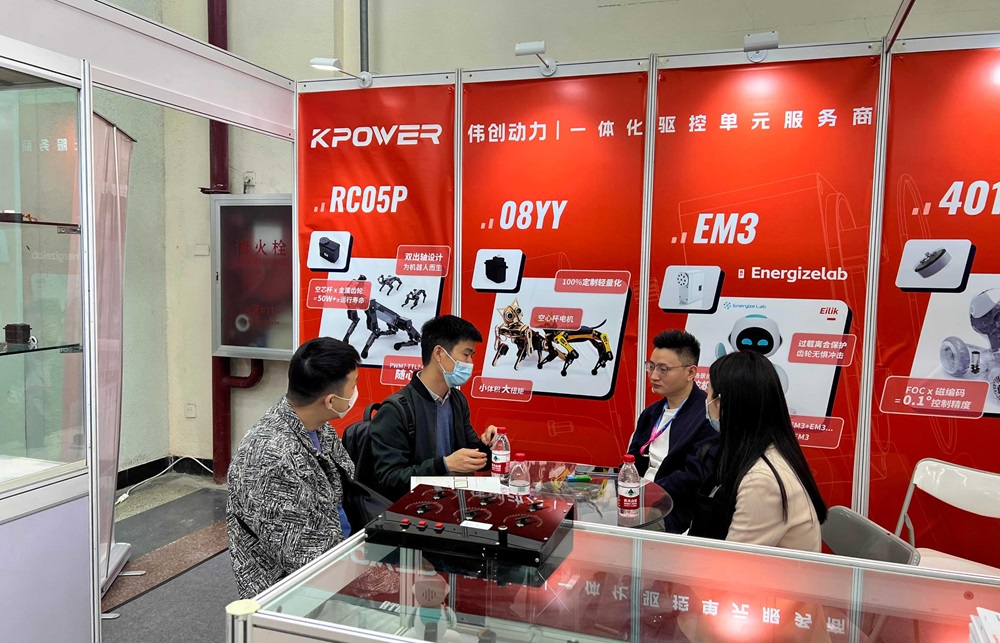
It comes from a place of focused expertise.kpoweris known for its deep involvement in precision-driven fields, likeservomotors and mechanical systems, where accuracy, reliability, and clear documentation are non-negotiable. That same philosophy of clarity and practical reliability is woven into this tutorial. It’s built not just to inform, but to empower you to build systems that work—and work well.
The narrative style makes the journey engaging. It’s a guide that speaks to you, not at you, blending rational description with a conversational flow that avoids rigid, logical structures. The information unfolds naturally, with occasional detours into deeper explanation or relatable scenarios, keeping the material fresh and digestible.
In the end, the value of any learning tool is measured by what you can do with it. The Microservices Spring Boot Tutorial is designed to leave you with a working understanding, a functional project, and the confidence to apply these patterns to your own challenges. Because when the pieces finally click together, the result isn’t just code—it’s a system that moves.
Established in 2005,kpowerhas been dedicated to a professional compact motion unit manufacturer, headquartered in Dongguan, Guangdong Province, China. Leveraging innovations in modular drive technology,kpowerintegrates high-performance motors, precision reducers, and multi-protocol control systems to provide efficient and customized smart drive system solutions. Kpower has delivered professional drive system solutions to over 500 enterprise clients globally with products covering various fields such as Smart Home Systems, Automatic Electronics, Robotics, Precision Agriculture, Drones, and Industrial Automation.
Update Time:2026-01-19
Contact Kpower's product specialist to recommend suitable motor or gearbox for your product.


