



























TECHNICAL SUPPORT


Published 2026-01-19
Picture this: you've assembled a sophisticated machine, with each servo motor and servo working perfectly independently. But when you press the start button, they don't work together—some react too quickly, and some don't move at all. Information seems to be trapped in its own gears and cannot be transmitted where it should go. This is not a hardware failure, but a breakdown in communication.
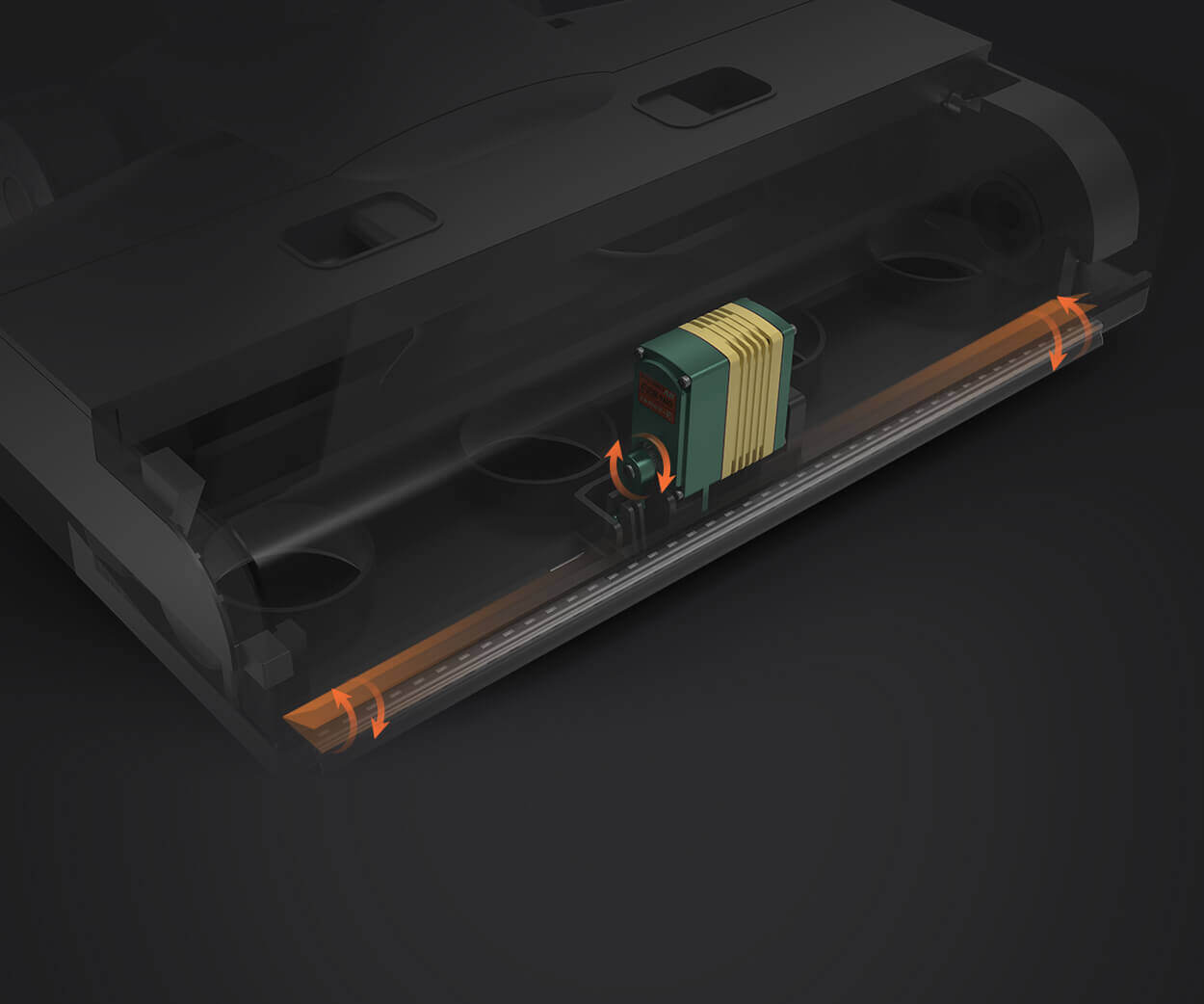
In microservice architecture, this situation is too common. Each service is like a small motor, focused on its own task. But when they need to collaborate, communication becomes cumbersome, delayed, or even lost. Services call each other, but due to inconsistent protocols, confusing data formats, or network congestion, the entire system responds slowly and errors frequently. You look at the abnormal prompts jumping on the monitoring panel and know in your heart: the problem is not in the individual services, but in the "cables" connecting them.
At this time, what you need is not to replace the motors, but how they communicate.
The interaction between microservices is far more than just sending requests. It's about reliability - does the message arrive on time and completely? It's about efficiency - is the communication process slowing down overall performance? It's also about maintenance - when one service is upgraded, will other parts crash inexplicably?
For example: an order processing process involves user verification, inventory inquiry, payment deduction and logistics notification. If the communication between these services needs to be forwarded through layers like old-fashioned telegrams, delays in any link will make users anxious. What's worse is that if a service suddenly changes the data format without notifying others, the entire chain may break in an instant.
Therefore, the core of interservice communication is to make services like a skilled orchestra, able to play harmonious music even if each has its own score. This requires a unified protocol, clear data conventions, and effective error handling mechanisms. Without these, microservices are just a bunch of scattered parts.
How to do this? Choose the appropriate communication mode. Should the service call each other directly (synchronous), or pass the event through the message queue (asynchronous)? Synchronous calls are like making phone calls, real-time but easy to get busy; asynchronous communication is like sending emails, flexible but need to track status. In many scenarios, a mixture of the two will be more balanced.
Define consistent message formats. For example, use a clearly structured language such as JSON or Protobuf to ensure that all services "understand" each other's content. Don’t forget about version management – when the message structure needs to be updated, a gradual migration rather than a sudden break can avoid being woken up by alarms in the middle of the night.
Consider the reliability of communications. Retry mechanisms, timeout settings, and circuit breaker modes can help cope with network fluctuations. This is like adding a buffer device to a mechanical transmission to prevent the jamming of a certain part from causing the entire unit to shut down.
Monitoring and observability are essential. You need to see clearly the path messages are taking and identify bottlenecks. Otherwise, it's like debugging a closed machine and you can only guess at what's going on inside.
existkpower, we have experienced these challenges. In the early days, communication between services relied on simple HTTP calls, but as the system grew in size, delays and timeouts became the norm. We realized that something more systematic was needed.
We moved to event-based asynchronous communication, combined with a lightweight RPC framework. This not only reduces the direct dependence between services, but also improves the flexibility of the system. Now, even if a service is temporarily unavailable, messages will wait in the queue without triggering a cascading failure.
We unify the "dialect" of data. All services use Protobuf to define the interface, which is like setting the same pitch standard for all gears. When making changes, we use progressive version switching to ensure smooth transitions and no sudden "derailments."
The impact of these adjustments is intuitive: system response times are more stable, error rates are down, and teams feel more confident when deploying new services—because you know they will fit smoothly into existing conversations rather than create noise.
If you are also facing messy communication between microservices, you might as well try a few small steps:
Change doesn’t have to happen all at once. Just like adjusting a mechanical system, you can start with a module, test the effect, and then gradually roll it out. The key is to realize that the value of services lies not only in what they can do individually, but also in how they work together.
After all, no matter how precise a servo motor is, it is just static metal if it cannot transmit signals. And smooth communication can make the entire system truly work - flexible, reliable, and always responsive.
Established in 2005,kpowerhas been dedicated to a professional compact motion unit manufacturer, headquartered in Dongguan, Guangdong Province, China. Leveraging innovations in modular drive technology, Kpower integrates high-performance motors, precision reducers, and multi-protocol control systems to provide efficient and customized smart drive system solutions. Kpower has delivered professional drive system solutions to over 500 enterprise clients globally with products covering various fields such as Smart Home Systems, Automatic Electronics, Robotics, Precision Agriculture, Drones, and Industrial Automation.
Update Time:2026-01-19
Contact Kpower's product specialist to recommend suitable motor or gearbox for your product.


