



























TECHNICAL SUPPORT


Published 2026-01-19
Imagine that two servo motors are busy in a precision machine - one is responsible for the rotation angle, and the other handles the speed feedback. Each of them does a good job, but it always feels like something is missing. Just like two people working back to back, occasionally bumping elbows, the efficiency is compromised, and sometimes there are even small errors. Have you ever encountered this situation?
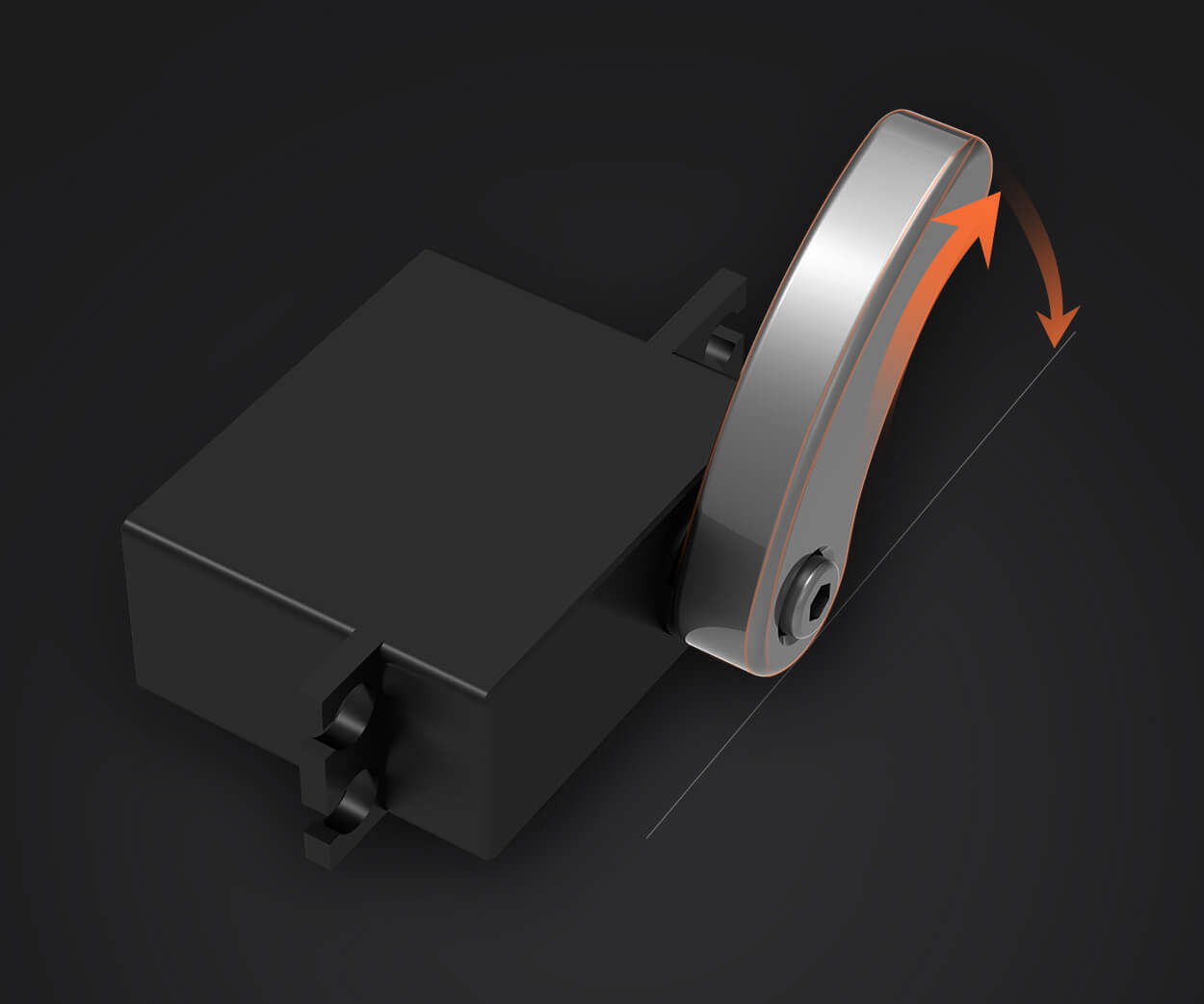
This is actually a communication issue. In a complex system, each part "speaks," but if they don't speak the same language, or are always slow to deliver information, things can easily get confusing. Communication between microservices is sometimes like having two craftsmen with different habits collaborate: one thinks in millimeters, the other counts in seconds, without the key translator in the middle.
Let me describe a few common scenarios. When a certain device is running, the main controller issues an instruction, but the execution unit has to wait a few milliseconds to respond. In a high-speed production line, these few milliseconds may be the accuracy error of a batch of products. Or, when the feedback signal is transmitted back, the data format does not match, and the system has to work hard to convert, heat quietly accumulates, and lifespan is quietly shortened.
These problems are not always earth-shattering, but they are like fine sand getting into gears. Over time, wear and tear will appear. Some people think "as long as it works", until one day it suddenly shuts down for maintenance, they find that the communication cost has already been secretly marked.
How to make two microservices communicate smoothly? The key is protocol and real-time. Just like when two people are chatting, they need to understand each other's accent and respond promptly so that their words don't fall to the floor. In the mechanical field, this often means choosing an adapted communication protocol, unifying the data format, and ensuring stable and low-latency signal transmission.
kpowerIn practice, it has been noticed that many communication problems stem from "everyone speaks his own words." For example, some systems use CAN bus to transmit instructions, but use Modbus to return status, which requires an additional conversion layer in between. It's like having an English speaker and a French speaker discuss technical details through translation software - the message may get through, but the subtleties are easily lost and the speed isn't fast.
What happens when two microservices truly understand each other? Imagine servo motor A telling motor B: "I am accelerating and expected to reach position
The benefits are concrete: response times are shortened, error rates are reduced, and energy consumption curves become smoother. In an automated test, the continuous operation stability of the system after communication increased by about 40%, not because individual components became stronger, but because the cooperation became tacit.
A colleague who participated in the project once compared it: "It is like installing a real-time intercom for two people who originally communicated by paper. The paper may be blown away by the wind and misunderstood, but the intercom allows them to discuss and adjust in real time."
If you are facing a similar challenge, you might as well look at it from these perspectives: Is there any visible delay in signal transmission? Is the data format uniform? Is error feedback clear? Sometimes, it is not necessarily necessary to completely replace the hardware, but to find the "translation layer" that can open up the language.
kpowerOne of the exploration directions is to enable different components to exchange information in a more natural way. For example, lightweight middleware can be used to handle protocol conversion, or "conversation templates" between services can be pre-defined. It's like providing two craftsmen with a common drawing marked with symbols that both understand.
Of course, every system has its own personality. Some require extremely high real-time performance, while others value data integrity more. Finding the balance often requires a bit of patience and experimentation.
The world of mechanical systems is becoming more and more like a sophisticated social interaction. Each unit is no longer just an island that executes commands, but an intelligent agent that can speak, respond, and collaborate. Allowing them to communicate well may be the key to unlocking their potential.
Next time you're watching your equipment in action, listen to the "conversations" - are they smooth? Is it timely? Do they understand each other? The answer may lie in the details. Details often determine how far and stable a collaborative relationship can go.
Established in 2005,kpowerhas been dedicated to a professional compact motion unit manufacturer, headquartered in Dongguan, Guangdong Province, China. Leveraging innovations in modular drive technology, Kpower integrates high-performance motors, precision reducers, and multi-protocol control systems to provide efficient and customized smart drive system solutions. Kpower has delivered professional drive system solutions to over 500 enterprise clients globally with products covering various fields such as Smart Home Systems, Automatic Electronics, Robotics, Precision Agriculture, Drones, and Industrial Automation.
Update Time:2026-01-19

Contact Kpower's product specialist to recommend suitable motor or gearbox for your product.


