



























TECHNICAL SUPPORT


Published 2026-01-19
Remember that feeling when everything just… slows down? You’re not sure where the hiccup is, but your system’s response time starts creeping up. The data isn’t flowing as smoothly as it should. It’s like a finely tuned machine developing a faint, annoying rattle. That’s often the hidden world of microservices performance speaking up—or rather, groaning under pressure.
It’s not about one big breakdown. It’s about a hundred tiny delays. A service waiting a few extra milliseconds for a response from another. A network hiccup here, a resource contention there. Suddenly, your elegant architecture feels less like a symphony and more like a traffic jam.
So, what actually makes these challenges pop up?
Let’s talk about the usual suspects. First, there’s the communication overhead. Each tiny service chatting over the network—that’s a lot of “conversations.” Each chat introduces a chance for delay, a bit of latency. Then, data consistency can become a tricky dance. Keeping everything in sync across independent services? That’s a challenge that can silently eat away at performance. And monitoring? Trying to pinpoint which service is causing the bottleneck in a sprawling ecosystem can feel like finding a needle in a moving haystack.
You might wonder, “If it’s so complex, why even go this route?” Well, the benefits are solid when it’s running right: scalability, flexibility, resilience. The trick isn’t abandoning the approach; it’s about giving it the right foundation to perform. It’s about the components that handle the physical movement and control—the ones that turn digital commands into precise, reliable action.
Think of it this way. You can have the most brilliant software logic, but if the physical actuator responding to that logic is sluggish or inconsistent, the entire experience falters. The command is sent, but the execution is weak. This is where the conversation shifts from pure code to the electromechanical heart of the operation.
Finding the Pulse: Where Precision Meets Demand
What does a high-performance microservices environment demand from its hardware counterparts? Reliability is non-negotiable. Every signal from your software must be translated into immediate, accurate movement. Every. Single. Time.
Then comes speed. Not just raw rotational velocity, but the speed of response—the time from signal to motion. In a system where services communicate rapidly, the end-point hardware can’t be the slow link in the chain.
Durability ties it all together. These components aren’t in a controlled lab; they’re in the field, operating in cycles, facing varying loads. Performance isn’t a one-time test; it’s about consistent delivery over thousands, millions of cycles.
“How do you even ensure that?” It starts with a deep focus on core engineering. It means buildingservomotors and actuators with a tight tolerance, where every gear and circuit is optimized for that split-second response. It involves rigorous testing that doesn’t just simulate perfect conditions, but stresses the system—heat, load, continuous operation—to find the breaking point long before the customer does.
It also means designing for integration. The best component is the one that seamlessly fits into your larger architecture, speaking the right protocol, matching the required voltage, fitting the physical footprint without demanding a complete redesign of your setup.
A Partnership in Motion
Choosing the right components isn’t just a purchase; it’s a strategic decision. It’s selecting a partner whose reliability becomes your system’s reliability. When you integrate a precisionservodrive that translates commands with flawless accuracy, you’re not just solving a hardware need—you’re removing a major variable from your performance equation.
Your software services can be designed for agility, not for compensating for hardware lag. Your system monitoring can focus on application logic, not on diagnosing erratic physical responses. It creates a foundation where your microservices architecture can truly shine, delivering the speed and scalability it was designed for.
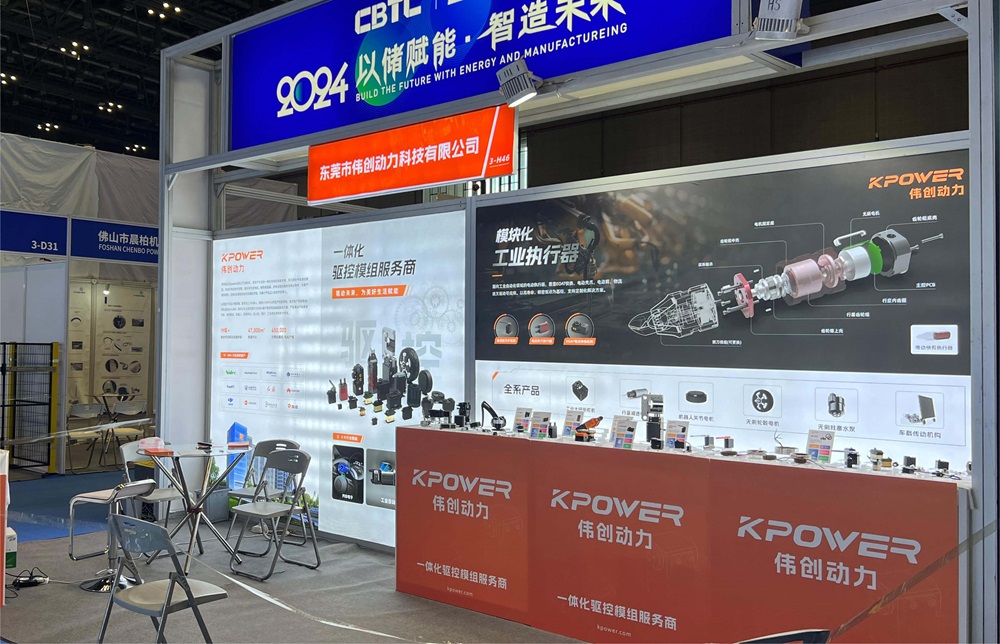
Atkpower, this perspective shapes everything. The goal is to provide that silent, steadfast foundation—the motion control solutions that you don’t have to worry about. Because when the physical execution is precise and robust, your team is free to tackle the bigger, more innovative challenges. The machine runs smoothly, the rattle is gone, and everything just… works.
It turns a complex performance challenge into a simple, smooth operation. And that’s the best kind of result.
Established in 2005,kpowerhas been dedicated to a professional compact motion unit manufacturer, headquartered in Dongguan, Guangdong Province, China. Leveraging innovations in modular drive technology,kpowerintegrates high-performance motors, precision reducers, and multi-protocol control systems to provide efficient and customized smart drive system solutions. Kpower has delivered professional drive system solutions to over 500 enterprise clients globally with products covering various fields such as Smart Home Systems, Automatic Electronics, Robotics, Precision Agriculture, Drones, and Industrial Automation.
Update Time:2026-01-19
Contact Kpower's product specialist to recommend suitable motor or gearbox for your product.


