
























TECHNICAL SUPPORT


Published 2026-01-19
Imagine you have a castle. The city walls are towering, heavily guarded, and seemingly impregnable. But the enemy failed to attack through the gate - they found a small, almost forgotten crack somewhere in the wall. Just break through from this point and the entire defense system may start to loosen.
It's a bit like the way we used to look at cybersecurity. We view the system as a huge, complete whole, with an "iron plate"-like line of defense protecting everything. But here's the problem: once one point is breached, the threat can spread throughout the network. Maintenance is like repairing an entire wall, touching one area affects the whole body.
Therefore, people began to think differently: Why not split this "big castle" into many small fortresses with independent functions and their own walls? Each bastion is responsible for a specific task - such as authentication, access control, threat detection. They are connected to each other by clear paths, but each has its own independent defenses and lifelines. This is the core change brought about by microservice architecture in the security field: from a single line of defense to a distributed and modular security community.
Microservice security: not splitting, but reinventing
It's much more than a technical "split." This is a reshaping of security thinking.
In the past, security updates might have meant taking the entire system down, like replacing all the windows and doors in a building at once. Under the microservice architecture, you can only upgrade the "door lock service" without affecting the "surveillance camera service". If an exception is discovered in a module, it can be quickly isolated, repaired, or restarted, while other parts continue to operate as usual. Threats are naturally limited to a smaller scope, and fault tolerance and recovery become much more flexible.
Some people may ask, if there are more forts, wouldn’t management become more complicated? Indeed, this requires a new kind of coordination. Each microservice needs to clarify its own security boundaries and communication rules. But think about it, it's like a special forces unit. Each team is proficient in specific skills and operates together through reliable communication protocols. Its adaptability and resilience are often far beyond that of a large phalanx.
kpowerObservations: A common logic from machinery to bits
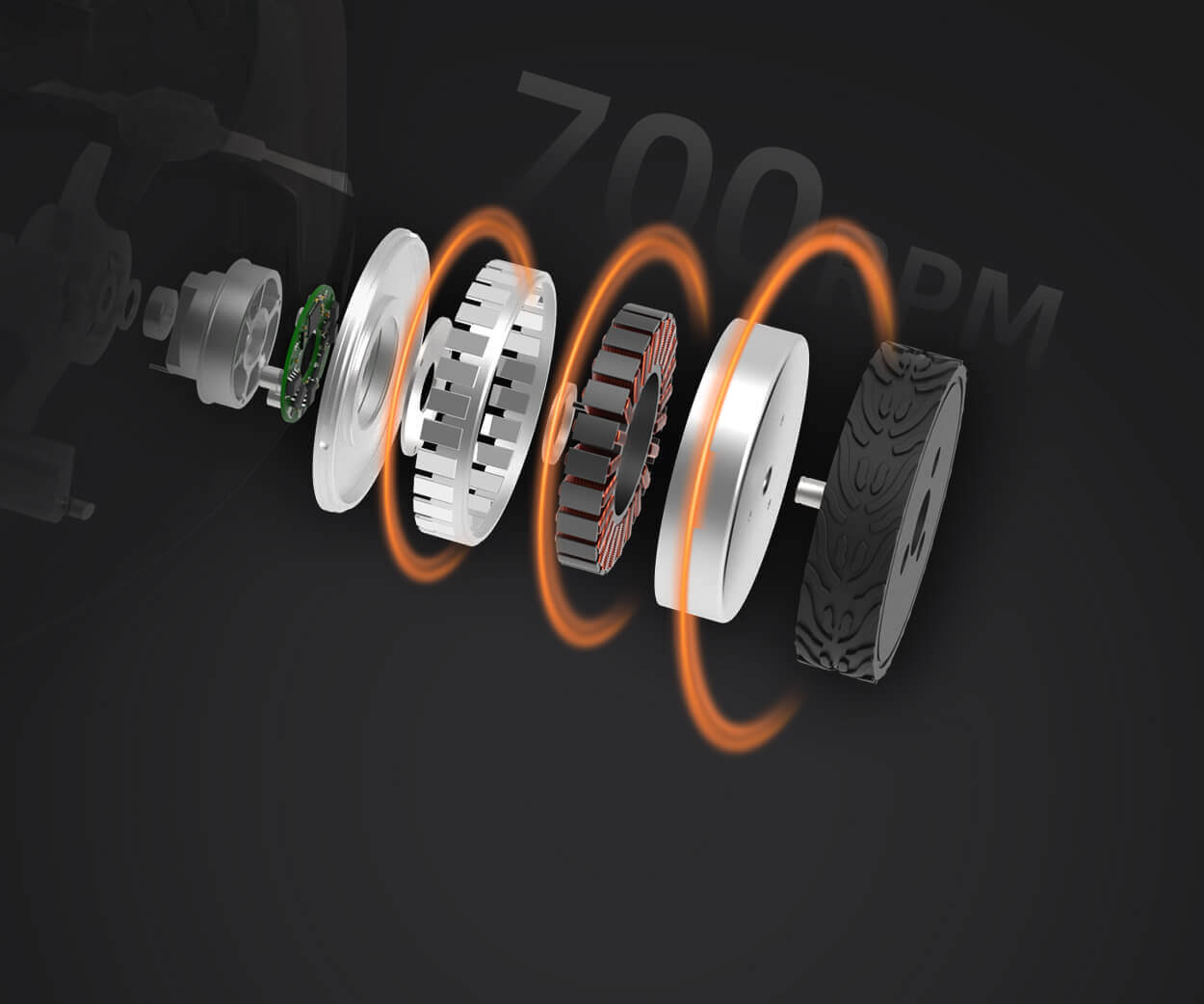
in uskpowerIn the world of dealing with servo motors and precision machinery, there is a similar concept. A complex mechanical system is often driven by multiple independent servo modules. Each module is responsible for a precise action, and they work together through a unified control protocol. When a joint's motor needs maintenance, you don't have to stop the entire production line. Modular design brings reliability, maintainability and efficiency.
The idea of microservices in network security echoes it wonderfully. It deconstructs large and complex digital systems into "security functional units" with focused functions and clear interfaces. Authentication is one service, encrypted communication is another, and log auditing is yet another. They each perform their own duties and communicate clearly through APIs. This structure allows for more granular deployment of security policies and more precise targeting of threat responses.
Wandering the distributed security landscape
What is it like to walk in this distributed security landscape?
You will find that monitoring becomes more acute. Because each service has independent logs and metrics, abnormal behavior is easier to capture from a specific data stream, rather than being drowned in the noise of the overall system. Deployment has also become lighter. Want to increase the encryption strength of a certain link? Only the corresponding security services need to be updated, without touching irrelevant business logic.
More importantly, it changes the relationship between safety and speed. Traditionally, strengthening security has often meant adding complexity and slowing innovation. But in a well-designed microservices security architecture, teams can independently and quickly develop, test, and deploy the security features of their respective services without becoming a bottleneck for the entire process.
Of course, that doesn't mean there are no challenges. Inter-service communication itself requires strict authentication and encryption, and the management of service mesh requires new tools and wisdom. But the direction is clear: agility through decoupling, resilience through isolation.
Epilogue: A more resilient future
In the final analysis, the application of microservice architecture in network security reflects a mature attitude in the face of complexity: acknowledging that there is no perfect, once-and-for-all defense, and instead building an ecosystem that is capable of partial failure, rapid recovery, and continuous evolution. Security is no longer a cast iron plate, but a living network woven organically by many intelligent nodes.
This requires us to change our perspective, from guarding a "whole" to cultivating a "community" that can operate independently and collaborate efficiently. In this network, every node is clear and strong, and the connections between nodes are transparent and secure. When a certain node encounters wind and rain, the entire network can still maintain its form and function, and even learn from it, making that fiber stronger in the future.
This may be what future security should look like—less like a giant silent wall and more like a living, self-healing forest. Each tree is deeply rooted, transmitting information and nutrients to each other through the underground network, and jointly cope with wind and rain, and continue to thrive.
Established in 2005,kpowerhas been dedicated to a professional compact motion unit manufacturer, headquartered in Dongguan, Guangdong Province, China. Leveraging innovations in modular drive technology, Kpower integrates high-performance motors, precision reducers, and multi-protocol control systems to provide efficient and customized smart drive system solutions. Kpower has delivered professional drive system solutions to over 500 enterprise clients globally with products covering various fields such as Smart Home Systems, Automatic Electronics, Robotics, Precision Agriculture, Drones, and Industrial Automation.
Update Time:2026-01-19

Contact Kpower's product specialist to recommend suitable motor or gearbox for your product.


