
























TECHNICAL SUPPORT


Published 2026-01-19
Ever had one of those moments where everything in your system seems fine on paper, but in action, it just… stutters? You know, like aservothat’s supposed to move smoothly but instead jerks or hesitates at the worst possible time. Maybe it’s a delay in response, or a sudden performance drop when you scale up. It’s frustrating, right? You built it to work perfectly, but under real conditions, something feels off.
That’s where testing comes in—or rather, where it often falls short. Standard checks might catch obvious bugs, but do they really tell you how your microservices will behave when pushed? Think about it: microservices are like a team of precision actuators in a complex machine. If one lags or overheats, the whole operation can wobble. So how do you make sure they won’t buckle under pressure?
Let’s be honest: most testing setups focus on whether things function, not how they perform. It’s like checking if aservorotates, without seeing how it handles load changes or temperature swings. You might get a green light on basic tests, but miss the subtle latency that builds up over time. Or worse, discover bottlenecks only when users are already complaining.
Performance isn’t just about speed—it’s about reliability under stress. Can your services talk to each other smoothly during peak times? Do they recover quickly from a glitch? Without digging deeper, you’re essentially hoping things hold up. And hope isn’t a strategy.
Here’s a different approach: treat testing like tuning a mechanical assembly. You don’t just verify parts; you listen to how they interact. You simulate real-world scenarios—sudden traffic spikes, partial failures, mixed workloads—and watch how each service responds. It’s less about pass/fail and more about understanding behavior.
Imagine you’re adjusting a gear train. You tweak one component and see how it affects the others. Similarly, with microservices, a delay in one can ripple across the system. Good testing reveals those connections. It shows you where to reinforce, where to simplify, and where to add resilience.
First, it’s realistic. Test environments should mirror actual use as closely as possible. Think varying loads, network hiccups, and concurrent requests. Second, it’s continuous. Performance isn’t a one-time check; it’s something you monitor as your system evolves. Third, it’s actionable. Results should point clearly to what needs fixing—whether it’s code, configuration, or infrastructure.
Some teams focus only on response times. But have you considered throughput under stress? Or how failure in one service impacts others? A robust testing approach covers multiple angles: latency, resource usage, error rates, and recovery time. It’s like testing aservofor smooth rotation, heat tolerance, and durability all at once.
You don’t need endless tools or overly complex setups. Start with clear goals: What performance matters most to your users? Identify key scenarios—like high-load periods or integration points—and test those deeply. Use gradual scaling to see when things start to strain. Observe, adjust, and repeat.
And remember, consistency matters. A service that performs well today might degrade after an update. Regular testing keeps surprises to a minimum. It’s preventive maintenance for your system’s health.
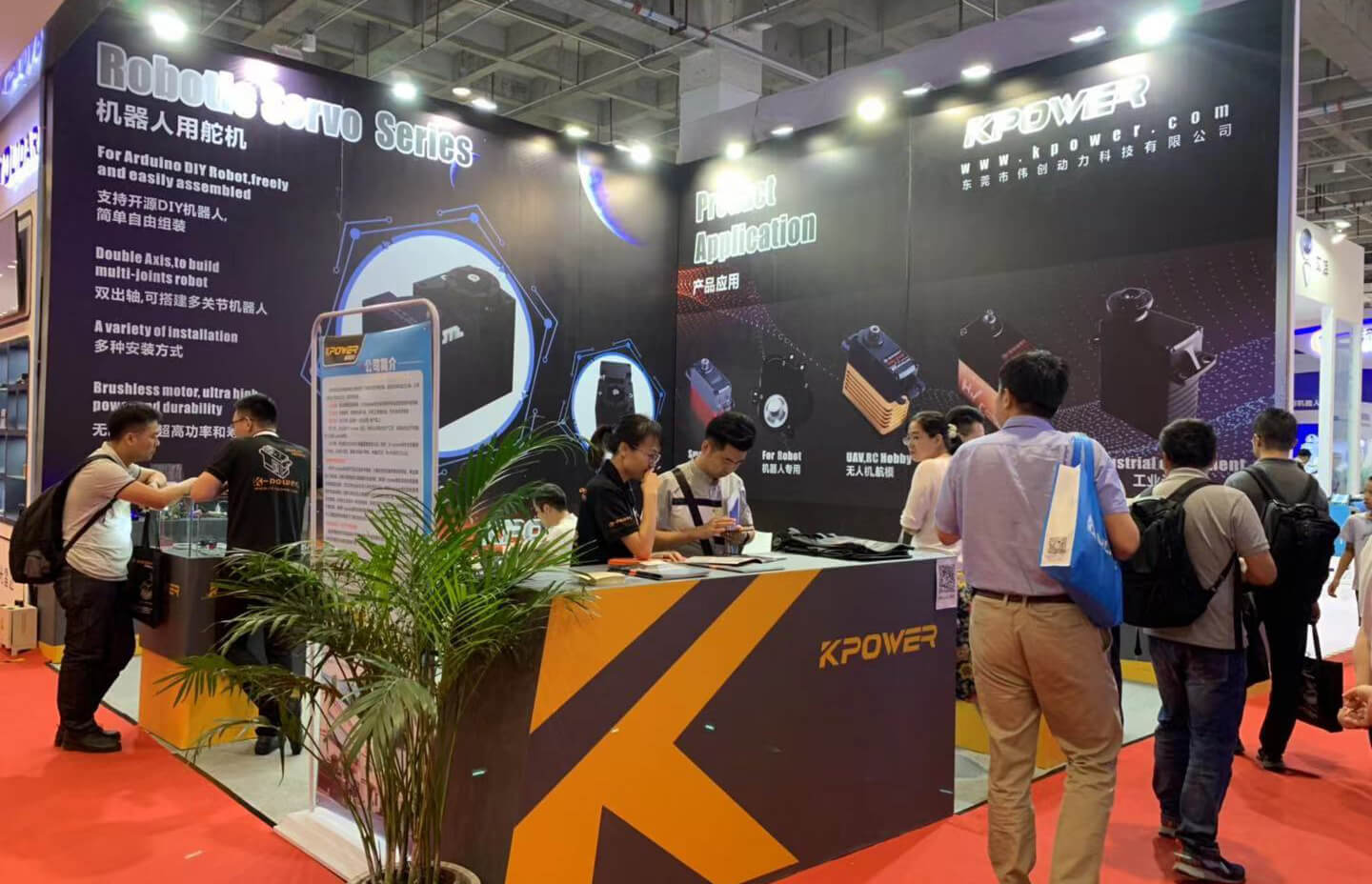
Atkpower, we see performance testing as integral to building reliable systems. Our approach blends methodical observation with practical tuning, helping ensure services don’t just work—they work well under pressure. Whether it’s fine-tuning communication between components or stress-testing critical pathways, the focus is on delivering smooth, dependable operation.
Because in the end, performance is what users experience. It’s the difference between a system that feels seamless and one that frustrates. Getting it right means looking beyond basic checks—and that’s where real reliability begins.
So next time you think about testing, ask yourself: Are you just checking boxes, or are you truly listening to how your system performs? The answer might change how you build everything.
Established in 2005,kpowerhas been dedicated to a professional compact motion unit manufacturer, headquartered in Dongguan, Guangdong Province, China. Leveraging innovations in modular drive technology, Kpower integrates high-performance motors, precision reducers, and multi-protocol control systems to provide efficient and customized smart drive system solutions. Kpower has delivered professional drive system solutions to over 500 enterprise clients globally with products covering various fields such as Smart Home Systems, Automatic Electronics, Robotics, Precision Agriculture, Drones, and Industrial Automation.
Update Time:2026-01-19

Contact Kpower's product specialist to recommend suitable motor or gearbox for your product.


