



























TECHNICAL SUPPORT


Published 2026-01-19
Picture this: you have just assembled a device, each motor is adjusted just right, and the movements of the robotic arm are as smooth as a dance. You press the start button and everything works perfectly. Then what? You just let it run on its own until one day it suddenly stops and the production line also stops?
This situation is all too common. Many people put a lot of thought into design, procurement and assembly, but forget to put eyes and ears on these "work guys". As a result, small problems turn into big problems, and downtime for maintenance becomes routine. What is lost is not only time, but also the trust of the entire system.
Some people get confused when they hear "microservice monitoring" and think it's just another complicated thing from the IT department. It's actually not that mysterious. Simply put, it is to equip each running unit—whether it is a servo motor, a steering gear, or an entire mechanical module—with a system that continuously reports its status. Is there any abnormality in temperature? Did the vibration suddenly increase? Does the load current exceed the safe range? These data no longer require you to measure manually, but are pushed to you in real time.
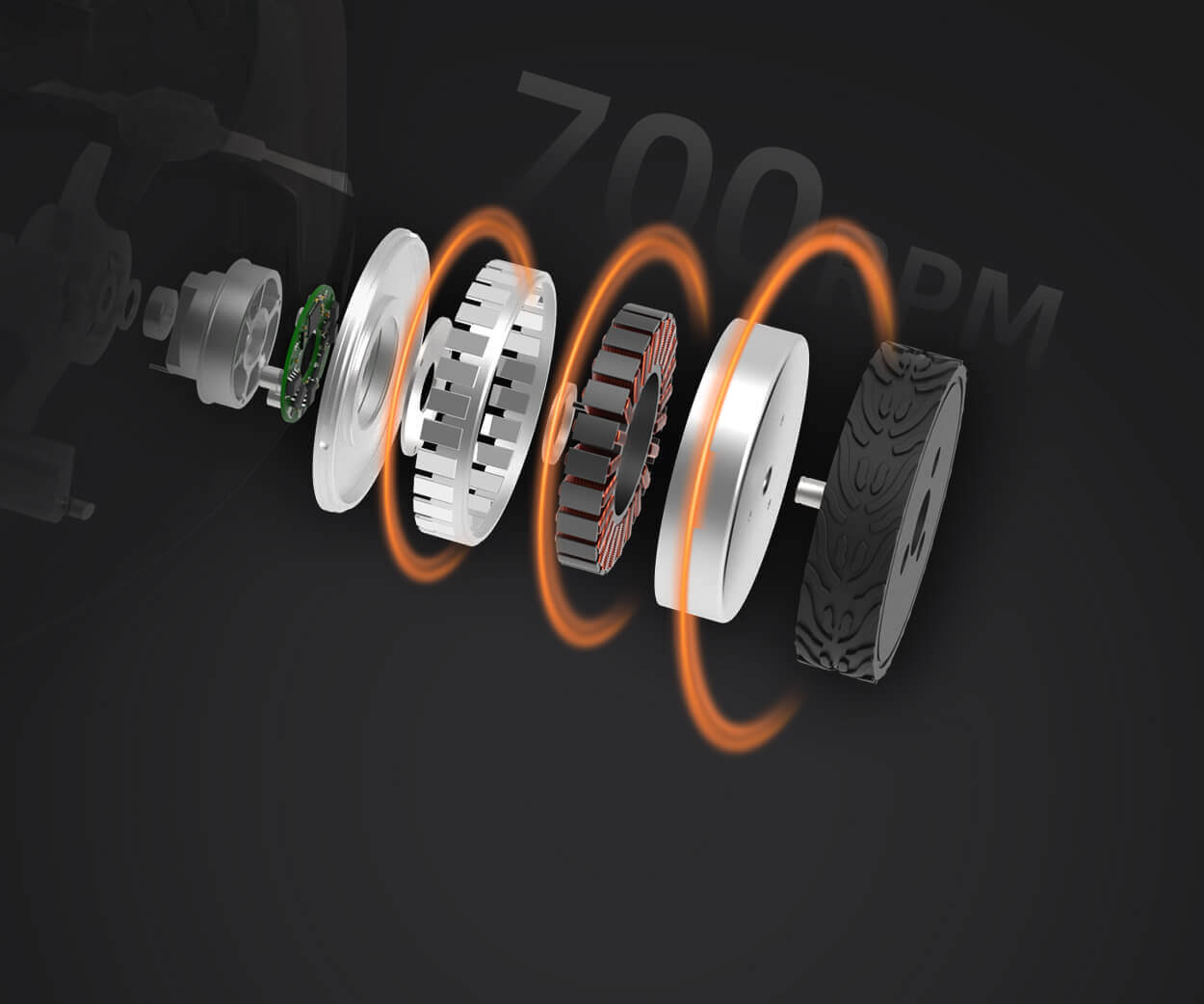
In the past, we relied on experience and regular inspections. Now, the data speaks for itself.
The truth is actually very straightforward: prevention is always cheaper than remedy. A bearing wear, from initial abnormality to complete failure, often has a sufficient time window to be discovered. But if you don't know, it will quietly get worse until one day it completely breaks down. The loss at that time was not as simple as replacing parts.
Furthermore, the current production pace is too fast. The device doesn't just sit there waiting for you to check it, it's always moving. Relying on manpower to keep an eye on every point is unrealistic and easy to miss. A good set of monitoring microservices is like hiring a tireless night watchman for each key component.
It has to be lightweight. You can't burden the system too much for monitoring purposes. It should work silently in the background, not grabbing resources from the main process, and not slowing down normal operations.
Data must be accurate and timely. A delayed report equals no report. What you need is not what went wrong yesterday, but what is happening now.
There is another point that is often overlooked: the information must be understandable. Throwing a bunch of professional code and complex diagrams over there only makes people more confused. A good presentation method allows you to catch the key points at a glance - what is normal, what needs attention, and where the red light is on.
It has to be stable and reliable. The monitoring system itself cannot lie down first. It needs to be tough enough to continue to operate in the same working environment without making mistakes.
Collecting data is only the first step. The more critical step is to turn this data into insights you can use. For example, monitoring shows that the starting current of a certain servo motor has increased slowly recently. What does this mean? It could be insufficient lubrication or slight internal wear. If the system could prompt "It is recommended to check the lubrication condition of the gearbox", wouldn't it be more useful than simply giving a number?
This is the value of intelligent analysis. It translates raw information into actionable maintenance language so you know what to do next instead of guessing at a screen.
When you decide to introduce such a system, you're buying more than just a set of software or a few sensors. You are actually choosing a long-term partner. This partner needs to understand your industry, your equipment, and more importantly, what you really care about—reducing unplanned downtime? Is it to extend the life of the equipment? Or overall energy efficiency?
A good partner will take the time to understand your specific scenario instead of applying a cookie-cutter solution. Because workshops that produce precision parts and assembly lines that do rapid packaging may have completely different requirements for monitoring.
Many people are stuck at the step of "thinking implementation is complicated". In fact, you can start small. It is not necessary to cover the entire production line from the beginning. Start with the two or three most critical and expensive pieces of equipment. See the effect first, accumulate experience, and then gradually promote it.
The implementation process is more like an in-depth physical examination of the existing equipment. You may discover some small hidden dangers that you didn't notice before and deal with them easily. You also establish a baseline of data—knowing what the device “looks like” in a healthy state makes any deviations easier to catch in the future.
As data continues to accumulate, you will find that its uses go beyond simple failure warnings. You can analyze the differences in equipment status and operation specifications under different team operations. The wear rate of different batches of parts can be tracked, in turn improving purchasing criteria. Data flow will become the cornerstone of your entire operational process.
This is no longer a passive model of "fix it if it breaks", but an active management of "know why it breaks and make it break slower". Equipment life is extended, maintenance costs are reduced, and production schedules become more predictable. These add up to real competitiveness.
After all, equipping complex mechanical systems with monitoring microservices has changed from a "plus point" to a "must-have". It is no longer just a patent for big manufacturers, but an essential tool for any team that wants stable and efficient production. On this road, choosing a dedicated, knowledgeable and reliable partner will make the whole thing much easier.
After all, when your equipment is still running smoothly late at night when no one is around, and you know that a pair of eyes are always awake, that peace of mind is value in itself.
Established in 2005,kpowerhas been dedicated to a professional compact motion unit manufacturer, headquartered in Dongguan, Guangdong Province, China. Leveraging innovations in modular drive technology,kpowerintegrates high-performance motors, precision reducers, and multi-protocol control systems to provide efficient and customized smart drive system solutions.kpowerhas delivered professional drive system solutions to over 500 enterprise clients globally with products covering various fields such as Smart Home Systems, Automatic Electronics, Robotics, Precision Agriculture, Drones, and Industrial Automation.
Update Time:2026-01-19
Contact Kpower's product specialist to recommend suitable motor or gearbox for your product.


