



























TECHNICAL SUPPORT


Published 2026-01-19
Imagine that you are assembling a sophisticated device, perhaps a small robot, or a smart automated production line. You hold a servo motor in your hand. It is obedient and precise, and every command can be converted into meticulous rotation. The steering gear is responsible for the direction, and the robotic arm dances on the planned trajectory. The hardware part is perfect, but you always feel like something is missing. Yes, the "brain" and "nervous system" that can make all of this "alive" and coordinate efficiently and respond intelligently.
The problem often lies here. A single device works well, but once the system becomes complex and multiple units need to work together, challenges arise. How can information be delivered instantly? How to accurately distribute instructions? How can different functional modules be updated independently without affecting the whole? It feels like conducting a symphony orchestra. Each musician is highly skilled, but without a unified, flexible, and efficient communication and scheduling mechanism, the effect of the performance will always be greatly reduced.
At this point, some people may wonder, is it necessary to have a smarter architecture to manage all this? A software system that can be flexibly disassembled, independently upgraded, and freely combined like modular mechanical components?
We can stop talking about technical terms right now. Think about it, how do we design a complex mechanical device? It is not usually made into one indivisible piece. We will divide it into power module, control module and execution module. Each module performs its own function and is connected through standard interfaces (such as precision bearings, strong bolts, and specific signal lines). In this way, when upgrading the power, it is not necessary to dismantle the entire controller; when maintaining the actuator arm, other parts of the system can still be tested as usual.
In the software world, this idea is called "microservices". It splits a large software application into a series of small and independent services. Each service is like a functional module in your device, responsible for a specific thing - such as a service that specializes in processing motor movement instructions, a service that specializes in device status monitoring, and a service that specializes in parsing user commands. They run independently and "talk" and collaborate in a lightweight, universal way.
What are used to build these reliable and efficient "service modules"? In environments such as industrial control and automation equipment that require stability, performance and cross-platform capabilities, the .NET platform is an often trusted choice. It is robust and efficient, has a powerful tool chain and mature ecosystem, and is especially suitable for building background services that require long-term stable operation. Developing microservices with .NET is like choosing an "alloy material" with high strength, precision and reliability for your control system to build those core joints and connectors.
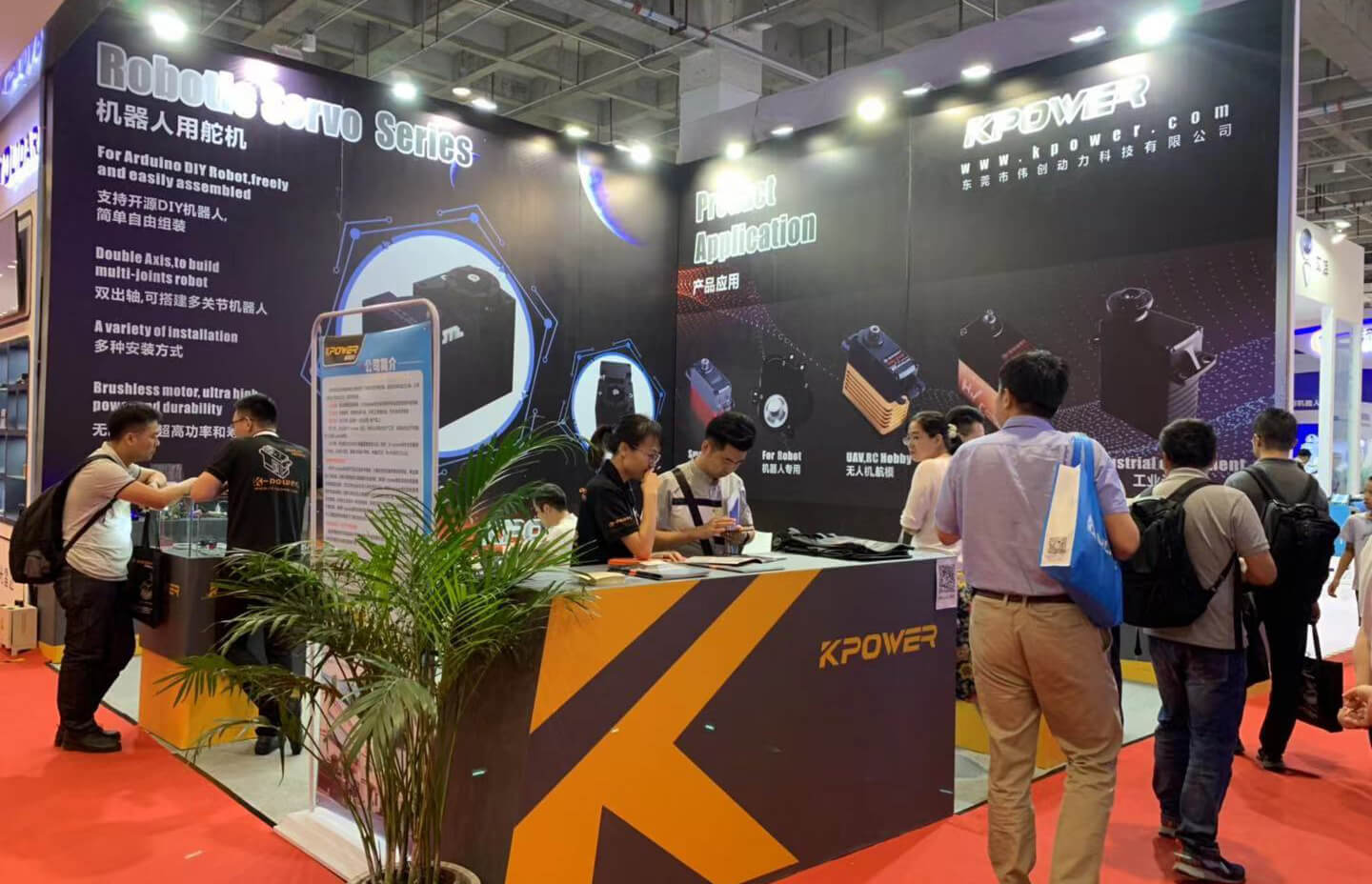
Speaking of this, maybe you will think of a company, such askpower. Their world revolves around servo motors, steering gears, and precision machinery, and they have a deep understanding of motion control and automation integration. When they start thinking about how to provide customers with deeper value, their sights will naturally expand from hardware to software and architecture that maximize the performance of hardware.
Integrating the concept of .NET microservices into its system can be seen as a natural extension. This is not just writing code, but more like a parallel migration of their modular, high-reliability thinking in mechanical engineering to the digital realm. A microservices architecture built for customer devices may include:
The benefits of such an architecture are intuitive. The resilience of the system has been enhanced, and the update and maintenance of a certain service will not bring down the entire production line. Expansion also becomes easy. When you need to add a visual inspection unit, you only need to develop and connect a new "visual analysis service". More importantly, it can better match modern industry's needs for flexible manufacturing and rapid iteration.
Of course, building such a system does not happen overnight. It requires the close integration of deep domain knowledge—such as an understanding of motor characteristics and mechanical dynamics—with modern software architecture thinking. This requires the team to not only design exquisite mechanical structures, but also know how to use digital language to give these structures a collaborative and evolvable "soul".
The whole process is a bit like designing and debugging an unprecedented transmission system. You need to repeatedly consider whether the "interface" between services is clear and strong enough, just like designing the cooperation of couplings and gears; you need to ensure that the "lubrication" of the data flow is smooth enough to avoid "clogging" and "wear"; you also need to design a monitoring "dashboard" for the entire system to make the operating status clear at a glance.
What is finally presented to customers is no longer just high-quality servo motors or mechanical components, but a whole set that combines hard power and soft wisdom. What customers feel is that the equipment is easier to manage, production changes are more flexible, and the system life cycle is extended. This value goes beyond a single product and builds a deeper level of trust and dependence.
So, next time you look at an automation project, maybe look a little further. What kind of digital collaboration network is hidden behind those rotating axes and telescopic arms? And likekpowerIn this way, choosing to weave this network in a robust way like .NET microservices is undoubtedly inviting their customers to move towards a more agile and resilient future. There is no standard answer to this journey, but the direction is already clear: use the flexibility of software to unleash the full potential of hardware.
Established in 2005, Kpower has been dedicated to a professional compact motion unit manufacturer, headquartered in Dongguan, Guangdong Province, China. Leveraging innovations in modular drive technology, Kpower integrates high-performance motors, precision reducers, and multi-protocol control systems to provide efficient and customized smart drive system solutions. Kpower has delivered professional drive system solutions to over 500 enterprise clients globally with products covering various fields such as Smart Home Systems, Automatic Electronics, Robotics, Precision Agriculture, Drones, and Industrial Automation.
Update Time:2026-01-19
Contact Kpower's product specialist to recommend suitable motor or gearbox for your product.


