



























TECHNICAL SUPPORT


Published 2026-01-19
Imagine: you have a set of servo motors in your hand, the steering gear is ready, and the mechanical structure drawings are spread all over the table. All parts seem to be whispering, waiting to be awakened. But when you try to get these hardware to talk to software, the code seems to become a wall - response delays, confusing instructions, and even the occasional loss of control make you frown. Is this scene familiar?
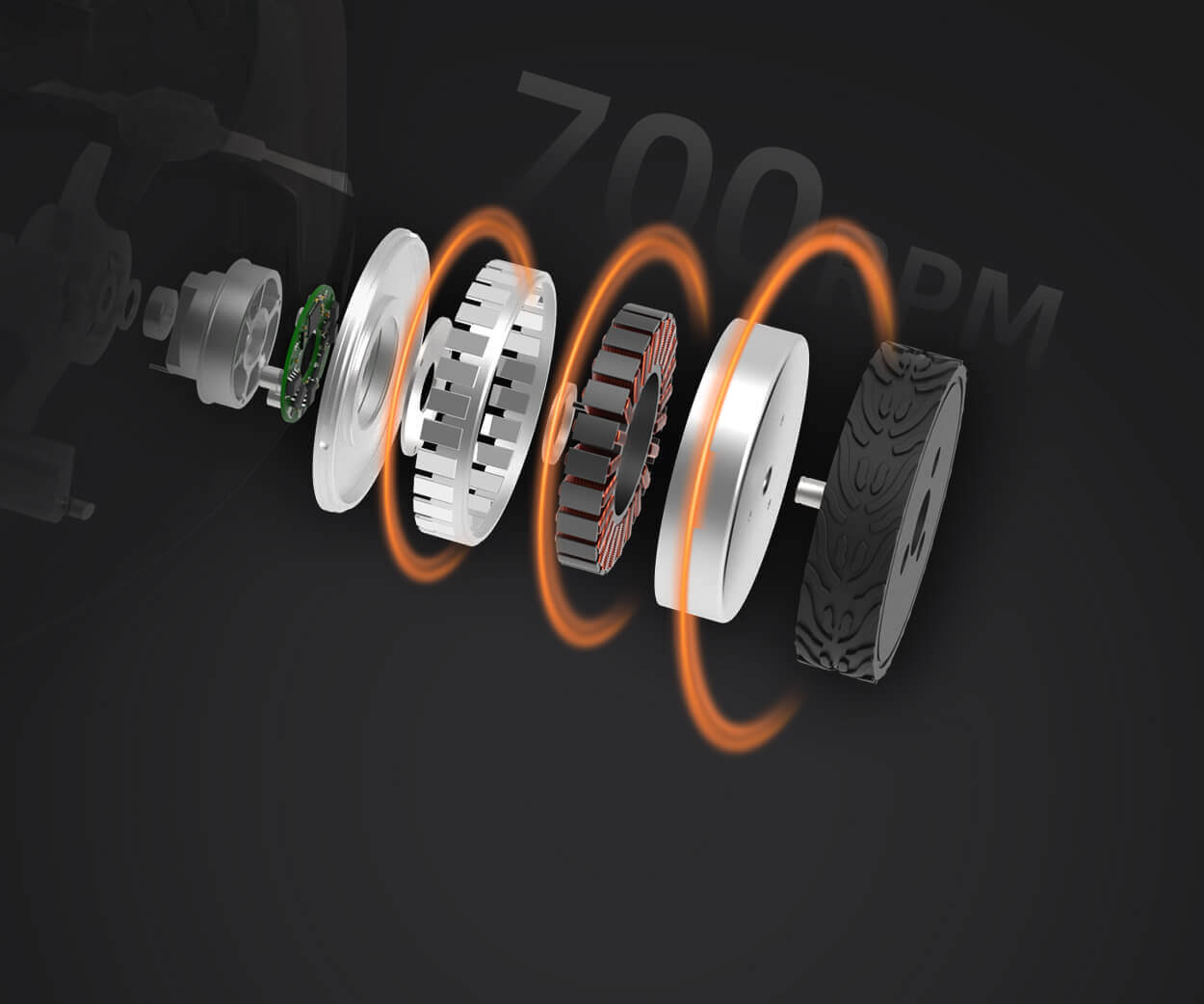
Hardware projects, especially those involving precision controls, often get stuck at software integration. Traditional monolithic applications are like a tangled thread, and every change may cause unexpected vibrations. Today, we talk about how to use .NET Core microservices to untie this knot.
Microservice architecture sounds a bit technical, but it is actually very close to our mechanical design thinking. Think about how you assemble a complex device: instead of casting the motor, gears, and sensors all into one piece of iron, each component works independently and is connected through standard interfaces.
The same goes for software. A microservice is a small and specialized software module that is only responsible for one thing, such as processing steering gear angle instructions or reading servo motor feedback signals. They operate independently and collaborate through lightweight communication. This architecture brings several benefits that you may immediately care about:
One might ask: "Sounds great, but does it make development more complicated?" Good question. In fact, it's like using a servo motor for the first time - you need to follow the manual for wiring at the beginning, but once you understand the relationship between pulse width and angle, subsequent repeated work becomes muscle memory.
How to do this? Let’s skip the abstract theory and go straight to a few practical steps.
You need a clear "border delineation". Suppose you are working on a robotic arm project, which can be broken down into: motion planning services, motor drive services, and status monitoring services. Each service corresponds to an independent .NET Core project.
Then, consider communication methods. In mechanical control scenarios, real-time performance is often important. You can choose the lightweight HTTP API or the more efficient gRPC. Just like choosing the PWM signal frequency for the servo - the right one is the best.
Next is data management. Each microservice should have its own database or storage method to avoid sharing data tables directly. This is like not letting the motor's power cord pass directly through the controller motherboard, but connecting it through a standardized interface.
During the development process, you will notice that some details are critical. For example, service discovery - how to let the motion planning service find the motor drive service? Or fault tolerance processing - when the network occasionally jitters, how to prevent the robot arm from suddenly malfunctioning? There are proven patterns to follow, like safety redundancies in mechanical design.
"Will it be difficult to debug?" This is a natural worry. Indeed, debugging distributed systems is different from monolithic applications. But the tool chain has matured. From log aggregation to link tracing, you can clearly see how an instruction passes through various services and finally makes the motor rotate at the corresponding angle. This kind of transparency makes problem location more precise.
When we introduce microservice architecture into hardware projects, the changes are visible. Systems that once required a complete shutdown to update can now be upgraded module by module. You can control the servo logic first, and then update the path plan after testing it to be stable, just like gradually adjusting the matching clearance of mechanical parts.
The performance improvements are also real. Because services are deployed independently, you can place computationally intensive kinematics calculations on higher-configuration nodes and deploy real-time control logic on edge devices close to the hardware. This allocation makes resource utilization smarter.
More importantly, this structure makes team collaboration smoother. Hardware engineers can focus on drivers, and software developers can focus on services. Both parties cooperate through clearly defined interface contracts to reduce the time of waiting for each other.
Of course, any technology choice has its applicable scenarios. If your project is very simple, for example, you only need to control two or three servos to perform fixed actions, then a single application may be more straightforward. But when you are faced with a complex mechanical system that requires multi-axis collaboration and real-time response, the modularity and flexibility provided by microservices can often save a lot of pain in later reconstruction.
Technology is, after all, a tool. Just like when choosing a servo motor, you will consider torque, speed and accuracy; when choosing a software architecture, you should also weigh complexity, maintainability and future expansion. .NET Core microservices isn't a silver bullet, but it does provide a clear, sustainable evolutionary path for many growing mechanical projects.
When the bridge between code and hardware is strong, creativity can flow more freely. Ideas that were once limited by software may become a reality that runs smoothly on the shop floor. And this is the most exciting part of every project.
Established in 2005,kpowerhas been dedicated to a professional compact motion unit manufacturer, headquartered in Dongguan, Guangdong Province, China. Leveraging innovations in modular drive technology,kpowerintegrates high-performance motors, precision reducers, and multi-protocol control systems to provide efficient and customized smart drive system solutions.kpowerhas delivered professional drive system solutions to over 500 enterprise clients globally with products covering various fields such as Smart Home Systems, Automatic Electronics, Robotics, Precision Agriculture, Drones, and Industrial Automation.
Update Time:2026-01-19
Contact Kpower's product specialist to recommend suitable motor or gearbox for your product.


