



























TECHNICAL SUPPORT


Published 2026-01-19
So you’re working on something that moves. Maybe it’s a robotic arm, a smart conveyor belt, or an intricate piece of automation. You’ve got theservomotors humming, the mechanics aligned, but there’s this other part of the puzzle: the brains behind the operation. You’re building the backend, using Spring Boot and microservices because, let’s face it, that’s where the real control happens. It’s what makes everything talk to each other, from the command to the final, precise movement.
But here’s the catch. You’re deep in gears and code, and suddenly, you need to bring new folks up to speed, or maybe you just want to test your own understanding. You need to know if the team really gets how a REST client works in a microservice, or how to handle configuration, or where a circuit breaker should fit. That’s where finding good Spring Boot microservices MCQ questions becomes a project all by itself. You search, you find some lists, but they feel… disconnected. Too simple, or weirdly complex, or just not asking the right things. It’s like having a high-torqueservobut missing the calibration steps—things might move, but not with the precision you need.
That was exactly the kind of friction we kept seeing, and honestly, it bugged us. Why should something meant to build knowledge feel so clunky? So, atkpower, we decided to approach this like we would any mechanical integration: not just by providing parts, but by understanding the entire motion.
We didn’t just want another quiz. We wanted a tool that felt like a companion during the build process.
Think of it this way: When you choose aservo, you’re not just buying a component that spins. You’re considering its response time, its holding torque, how it communicates with your controller. The best questions for Spring Boot and microservices should do the same—they should probe not just memory, but comprehension and application.
So, how did we build it? We started by mapping the common pain points in a microservices architecture: service discovery, inter-service communication, data management, resilience. Then, we crafted questions that mirror real decisions.
Instead of just asking, “What is Spring Cloud Config?” we might frame a scenario: “If Service A’s response time slows down and starts affecting Service B, which pattern is most relevant for preventing a cascade failure?” This shifts the focus from definition to decision-making, which is what you actually do at your workstation.
We also made sure the answers weren’t just right or wrong. Each one comes with a brief, clear rationale. It’s like getting a quick diagnostic readout—explaining why the circuit breaker pattern is the answer in that scenario, not just that it is. This turns a simple test into a learning loop, reinforcing concepts in the context of solving problems.
You know that feeling when a mechanical assembly just snaps together perfectly? There’s no forced fit, no extra vibration. That’s the smoothness we aimed for.
The first benefit is efficiency. You’re not wasting time sifting through poorly written or irrelevant questions. The content is curated to be directly applicable to building and maintaining Spring Boot microservices. It’s targeted, like using the right driver for a specific bolt.
The second is depth. By using situational questions, the material builds a more intuitive understanding. People start to see the architecture as a dynamic system, not just a collection of annotations. It prepares them not just to answer questions, but to anticipate issues in their own projects. It builds confidence, the kind that lets you focus on innovating the physical design, knowing the software logic is on solid ground.
Finally, it’s about cohesion. Good software and good mechanics share a principle: everything must work in harmony. Disjointed learning materials create gaps, just like a misaligned shaft creates wear. Our goal was to create a resource that feels cohesive and progressive, helping bridge knowledge gaps smoothly so your team’s skills are as integrated as the systems they’re building.
You might be wondering, “Okay, but where do I even start with this?” It’s a fair question.
Think about your project’s current phase. Is your team just starting to break a monolith into services? Then focusing on questions about service boundaries, independent deployment, and basic communication (like REST with Feign clients) is key. It’s the foundation, like ensuring your motor mounts are secure before worrying about speed.
If you’re further along, dealing with a live system, then diving into questions on resilience patterns (circuit breakers, fallbacks), distributed tracing, and configuration management becomes crucial. This is the fine-tuning stage, analogous to calibrating PID values on a servo for optimal performance under load.
Thekpowercollection is structured to support this journey. You’re not presented with a massive, daunting list. You can find sets aligned with specific themes or complexity levels. This lets you integrate knowledge-building directly into your sprint planning or onboarding, making it a natural part of the development rhythm, not a disruptive chore.
In the end, whether it’s the silent precision of a servo or the seamless flow of data between microservices, excellence lies in the details. It’s in choosing resources that don’t just fill a slot, but actively make the entire system smarter and more robust. For the builders, creators, and integrators who are shaping how things move and work, having the right tools for both hardware and software isn’t just convenient—it’s what separates a functional prototype from a masterpiece of integration. And that’s the kind of support we strive to build into everything we do.
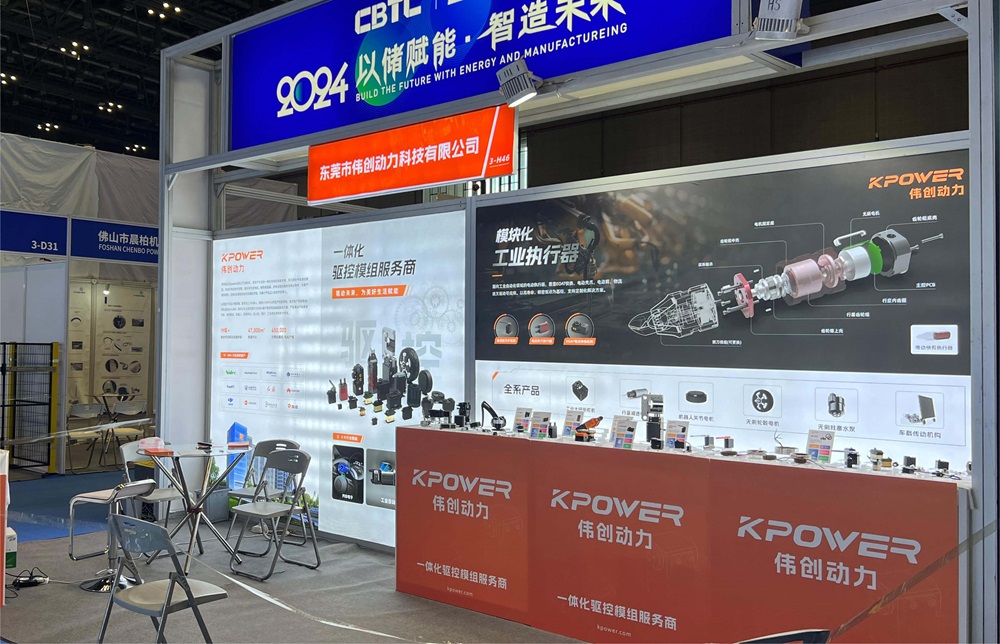
Established in 2005,kpowerhas been dedicated to a professional compact motion unit manufacturer, headquartered in Dongguan, Guangdong Province, China. Leveraging innovations in modular drive technology, Kpower integrates high-performance motors, precision reducers, and multi-protocol control systems to provide efficient and customized smart drive system solutions. Kpower has delivered professional drive system solutions to over 500 enterprise clients globally with products covering various fields such as Smart Home Systems, Automatic Electronics, Robotics, Precision Agriculture, Drones, and Industrial Automation.
Update Time:2026-01-19
Contact Kpower's product specialist to recommend suitable motor or gearbox for your product.


