



























TECHNICAL SUPPORT


Published 2026-01-19
Why Your Spring Boot Microservices Feel Like a Mess of Wires
Ever built something that’s supposed to be sleek, only to end up with a tangle? You start with a clean Spring Boot microservices plan—modular, scalable, the future looks bright. Then, a few months in, it hits. Services talk in circles. One hiccup ripples everywhere. Updates feel like open-heart surgery. Your neat architecture now resembles a box ofservos without a control board: each part might move, but not together, and certainly not gracefully.
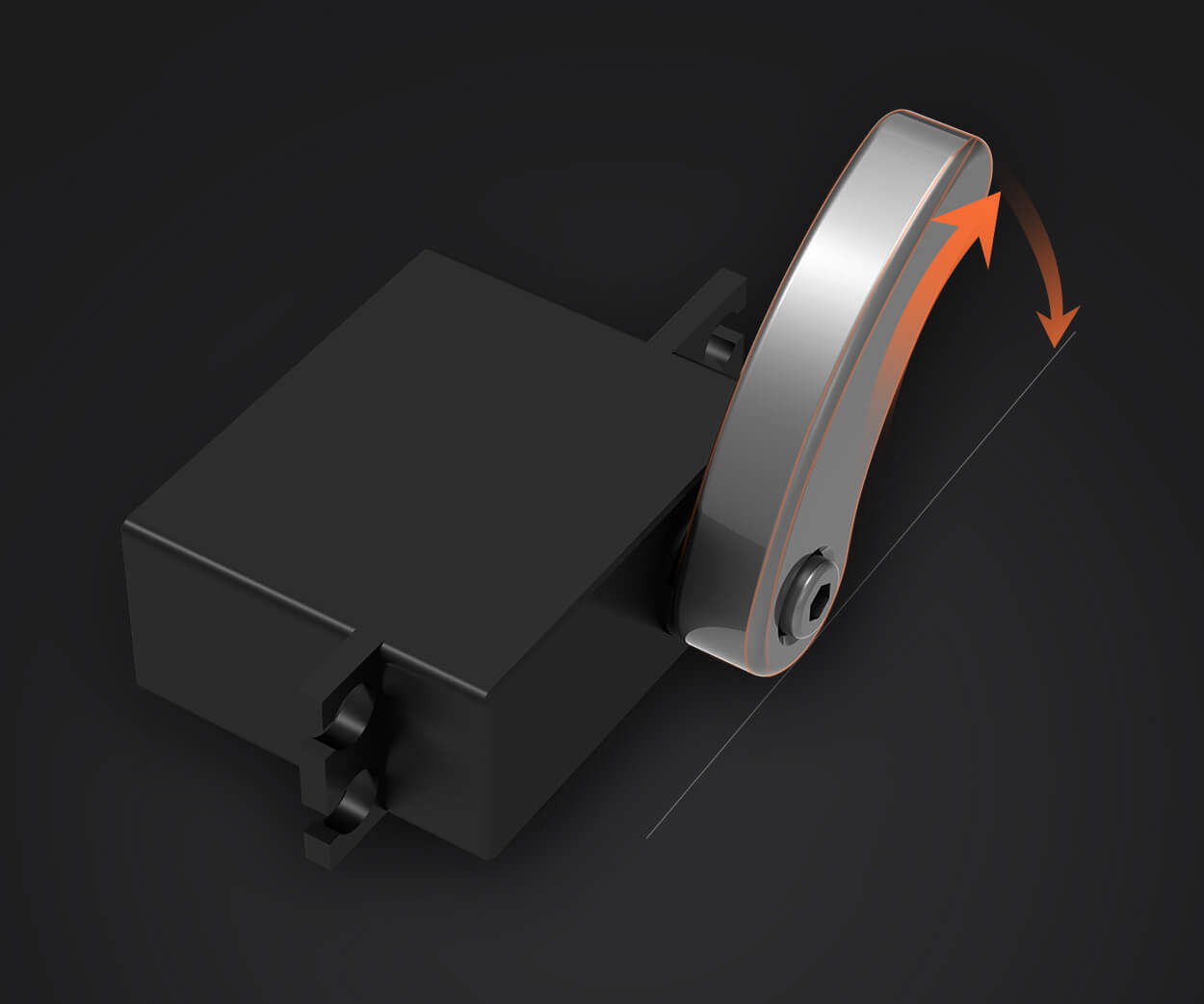
It’s a familiar scene. You’re not building toys; you’re engineering systems that need precision. In mechanics, if a gear skips or aservojitters, the whole assembly fails. Software isn't so different. Microservices promise agility, but without the right underlying “motion control”—the governance, the tracing, the resilient communication—they just become noisy, disconnected parts.
So, what’s the fix? It’s not more code. It’s about the blueprint.
Think of a well-tuned mechanical project. You don’t just throw components into a case and hope. You follow a plan—a sequence that ensures each piece integrates with torque, timing, and feedback. That’s what a structured syllabus does for your team. It’s the difference between hacking and engineering.
A Spring Boot and Microservices syllabus isn’t just a course list. It’s a design document for your team’s competency. It asks questions like:
Without this, learning is scatter-shot. Teams patch gaps reactively, leading to inconsistent patterns and fragile deployments. With it, knowledge builds like a calibrated assembly—each lesson fitting into the next, creating cumulative strength.
A stack of topics is easy to copy. A living, breathing learning path is harder. It needs a few key traits:
It Mirrors Real Workflows. A good syllabus doesn’t teach “Spring Boot” in a vacuum. It introduces how Spring Boot fits into a service that must register itself, fetch its config, talk to a database, and handle failures—just like aservomust receive signals, move to a position, and report back. The learning is contextual, not theoretical.
It Prioritizes Integration Over Isolation. Anyone can write a standalone microservice. The magic (and the headache) is in making them work as a system. The syllabus must weave in integration topics—API gateways, message queues, distributed tracing—at the right moments, so the “why” is always clear.
It’s Built on Proven Patterns, Not Just Tools. Tools change. Principles of resilient communication, bounded contexts, and observability endure. A robust syllabus anchors on these concepts, using Spring Boot and its ecosystem as the practical workshop, not the final destination.
This is where the engineering mindset kicks in. You’re not just looking for training; you’re looking for a reliability protocol for your team’s skillset.
Implementing a thoughtful syllabus changes the game. You feel it in the daily rhythm.
First, onboarding new members stops being a firehose experience. They follow a clear path, from basics to complexities, building confidence and production-ready code in tandem. The team’s vernacular aligns—everyone understands what “circuit breaker” or “event-driven” means in practice, not just in a slide deck.
Then, development velocity stabilizes. Fewer meetings are spent debating foundational approaches because the syllabus has established a shared playbook. Troubleshooting becomes more methodical; with structured learning on observability tools, teams don’t just see errors, they diagnose systemic behaviors.
Finally, the architecture itself becomes more maintainable. When teams are educated on principles like loose coupling and high cohesion from the start, their natural output aligns with these goals. Your services begin to resemble a well-oiled machine, where each part performs its function, communicates clearly, and allows for smooth upgrades or replacements.
So, where do you begin? Start by auditing your current pain points. Is it deployment chaos? Is it broken communication between services? Let those gaps dictate the early modules of your learning path.
Next, sequence for momentum. Place foundational, “quick win” concepts upfront to build engagement. Gradually layer in complexity, always linking back to how it solves a real problem the team has faced.
Most importantly, treat the syllabus as a living document. The tech landscape shifts. Incorporate feedback from each cohort. What felt confusing? What topic unlocked the most understanding? This iterative refinement is the core of any good engineering process.
In the end, building with microservices is an exercise in coordinated control. The code is just one part. The people writing it need the same careful calibration as the services they run. A deliberate, thoughtful Spring Boot and Microservices syllabus provides that calibration. It transforms a potential snarl of independent efforts into a synchronized, powerful, and resilient system.
It’s about moving from simply having moving parts to having a machine that works.
Established in 2005,kpowerhas been dedicated to a professional compact motion unit manufacturer, headquartered in Dongguan, Guangdong Province, China. Leveraging innovations in modular drive technology,kpowerintegrates high-performance motors, precision reducers, and multi-protocol control systems to provide efficient and customized smart drive system solutions.kpowerhas delivered professional drive system solutions to over 500 enterprise clients globally with products covering various fields such as Smart Home Systems, Automatic Electronics, Robotics, Precision Agriculture, Drones, and Industrial Automation.
Update Time:2026-01-19
Contact Kpower's product specialist to recommend suitable motor or gearbox for your product.


