



























TECHNICAL SUPPORT


Published 2026-01-19
When Your Machines Talk, Can Your Code Listen?
Picture this: you’ve got aservowhirring, a stepper motor clicking into position, and a conveyor belt humming along. Everything’s moving, but something feels… off. The data from your sensors is lagging, commands get lost in translation, and tweaking one part of the system makes another throw a fit. Sound familiar? It’s like your machines are speaking different dialects, and your main application is struggling to be the interpreter.
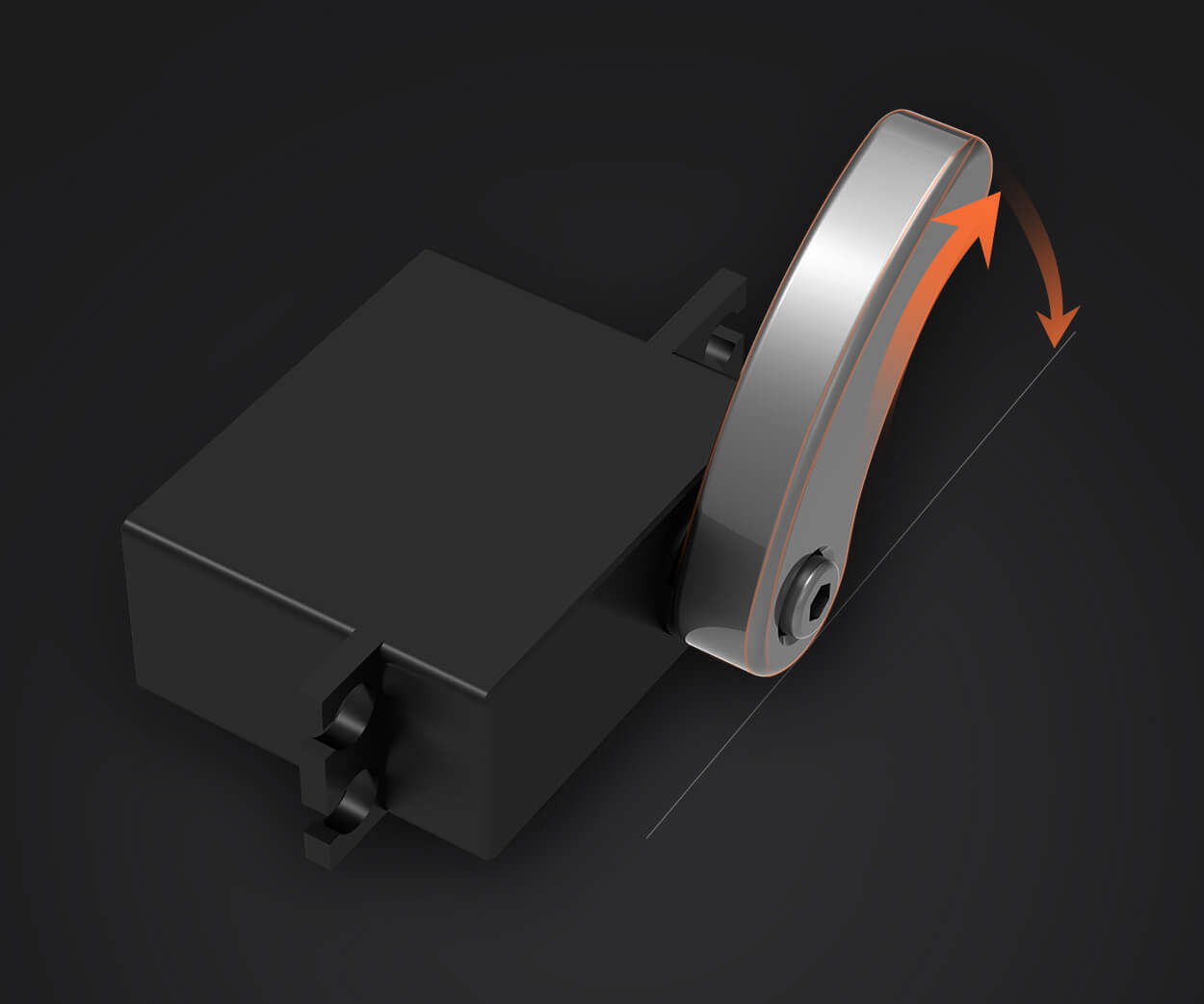
That’s the daily grind for many projects involvingservos, actuators, and mechanical assemblies. You’re not just building a product; you’re orchestrating a physical ballet. And when the central controller gets overloaded, the whole performance stutters.
So, what if each mechanical component could have its own dedicated, lightweight brain? A brain that handles just its own tasks, talks clearly to others, and doesn’t collapse under pressure? This isn’t a futuristic dream—it’s the practical magic of structuring your application with microservices in Node.js.
From Monolithic Mayhem to Modular Harmony
Think of your old setup as a single, giant control box. Need to adjust the PID values for aservo? You’re digging into a massive, tangled codebase. Want to update the logic for the end-effector? You risk breaking the homing sequence for the导轨. It’s rigid and risky.
Now, imagine replacing that one box with a cluster of small, smart modules. One microservice is solely devoted to managing the servo motors—handling pulse signals, monitoring feedback, and ensuring precise angular movement. Another service takes care of communication with the driver modules, another logs all positional data, and yet another manages the safety interlocks. Each runs independently in its own Node.js environment. They talk to each other through simple, well-defined channels—like workers on an assembly line passing notes.
One developer put it this way: “It was a shift from constantly firefighting in a monolithic mess to actually supervising a cooperative system. The servo control service might crash and restart itself without bringing the entire vision system to its knees. That resilience changed everything.”
Why Node.js for the Mechanical World?
You might wonder, “Why Node.js? Isn’t that for web apps?” Here’s the thing: the mechanical world is now full of real-time, event-driven conversations. A limit switch triggers an event. A temperature sensor sends a data stream. A command from a UI is an I/O request. Node.js is built on an event-driven, non-blocking architecture. It’s exceptionally good at handling lots of these small messages and I/O operations simultaneously without getting bogged down.
It’s lightweight. You can run these microservices on modest hardware—think single-board computers right on the machine itself. It’s also fluent in the language of the web (JSON, RESTful APIs, WebSockets), which makes integrating with modern dashboards, mobile controls, or cloud analytics almost effortless. You’re not just building a controller; you’re building a bridge between your moving hardware and the digital tools you already use.
Stitching the Fabric: How It Feels in Practice
Adopting this isn’t about a grand, overnight rewrite. It often starts with a pain point. Maybe you begin by extracting the most problematic, frequently updated logic—say, the complex sequence for a multi-axis servo pick-and-place arm—into its own Node.js microservice. You containerize it. Suddenly, testing that sequence becomes a matter of running one small container. You can refine it, version it, and deploy it without touching the core system.
Then you tackle the data collection module. Then the alarm handler. Bit by bit, the system becomes a collection of replaceable parts, much like the mechanical components they control. Need a new motor with a different protocol? Wrap its driver in a new microservice and plug it into the network. The rest of the system barely notices.
Someone once described the before-and-after as the difference between steering a cargo ship and guiding a flock of birds. The ship is slow to turn; one rudder failure spells trouble. The flock is agile; if one bird adjusts course, the others adapt fluidly around it.
Your Toolkit for the Shift
Where do you start if this resonates? The philosophy is simple: isolate what changes. Look for the parts of your code that are most volatile—the experimental control algorithm, the brand-specific driver, the user-facing API. Give each its own home.
Use simple HTTP or lightweight message queues (think MQTT, perfect for machine telemetry) for communication. Keep the interfaces between services stupidly simple. Document just enough so that the team knows what “message” to send to get a servo to move to position 150 degrees.
And this is where a thoughtful partner can make the journey smoother. Atkpower, we’ve walked this path with teams who are deep in the world of gears, shafts, and servo feedback loops. The focus isn’t on selling you a ready-made universe, but on providing the reliable, consistent components—the high-precision servo motors and drivers—that become the dependable physical layer. When your hardware foundation is predictable and robust, the freedom to innovate in your software architecture truly flourishes. You can trust the mechanics to respond faithfully, so your code can focus on higher-order logic and coordination.
The goal isn’t complexity for its own sake. It’s clarity. It’s about creating a system where your software structure finally matches the elegant modularity you strive for in your mechanical designs. When each part of your machine has a dedicated, conversational agent written in Node.js, you stop wrestling with a monolithic beast and start conducting a symphony. And in that symphony, every note from every servo and sensor is heard clear and on time.
Established in 2005,kpowerhas been dedicated to a professional compact motion unit manufacturer, headquartered in Dongguan, Guangdong Province, China. Leveraging innovations in modular drive technology,kpowerintegrates high-performance motors, precision reducers, and multi-protocol control systems to provide efficient and customized smart drive system solutions. Kpower has delivered professional drive system solutions to over 500 enterprise clients globally with products covering various fields such as Smart Home Systems, Automatic Electronics, Robotics, Precision Agriculture, Drones, and Industrial Automation.
Update Time:2026-01-19
Contact Kpower's product specialist to recommend suitable motor or gearbox for your product.


