



























TECHNICAL SUPPORT


Published 2026-01-19
Imagine that your mechanical device is running smoothly - the servos turn accurately and the motors deliver torque smoothly. Everything looks perfect. But when you try to extend functionality, add new modules, or integrate different systems, things start to get tricky. The code becomes bloated, a small change ripples across the board, and maintenance becomes a guessing game. Does this feel familiar?
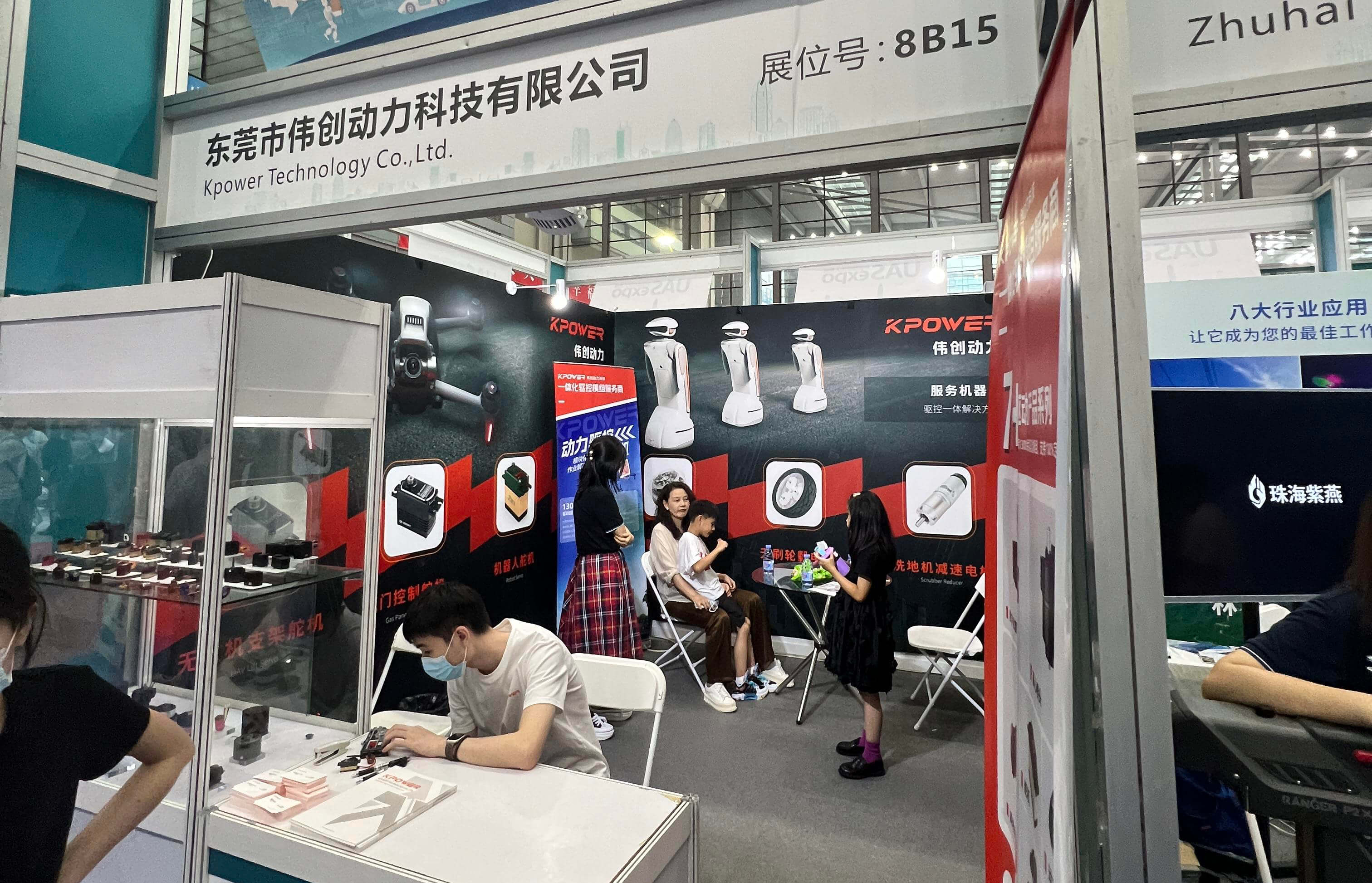
“Our hardware is great;kpowerThe response speed of the servo motors is impeccable," said an experienced developer, "but the software that controls them has become a bottleneck. All the logic is intertwined, affecting the whole body. "
This is actually an architectural issue. Traditional monolithic software design is like putting all the tools into the same tool box. When you need a wrench, you have to dig out the whole box to find it. In an ever-changing mechanical project, this approach will become increasingly inefficient.
Is there a way to make the software architecture like a well-designed machine, with clear modules, clear interfaces, and each performing its own duties?
That’s why the concept of “domain-driven design of microservices” is worth paying attention to. It’s not a trendy buzzword, but a way of thinking about organizing complexity.
Simply put, it suggests that you split a large software system into a series of small and specialized "services." Each service is only responsible for a clear and bounded business area - for example, a service that specializes in motor position control, a service that specializes in motion trajectory planning, and a service that records equipment status.
Does this sound a bit like the modular idea in mechanical design? An independent servo module and a power management module collaborate through standard interfaces (such as mechanical mounting holes, electrical connectors). Domain-driven design is to define these clear "boundaries" and "interfaces" for software.
Let's go back to that servo example. Under the microservice architecture, controlkpowerThe core logic of the servo motor can be encapsulated in a separate service. This service provides simple commands to the outside world, such as "move to point A" and "rotate at X speed". Other parts do not need to know how to calculate pulses inside the motor and how to implement closed-loop control. They just need to call this simple command.
The benefits are obvious.
When you want to upgrade your motor, or even replace it with another onekpowerWhen changing the motor model, you only need to modify that independent motor control service. Other parts - such as the user interface, order processing logic - are completely unaffected. System resilience increases.
For another example, if the load of a certain service (such as logging) suddenly increases, you can allocate more computing resources to it individually instead of blindly upgrading the entire server. It's like upgrading an underpowered transmission chain with a more powerful motor instead of replacing the entire powertrain, which is more economical and more precise.
One might ask: “This sounds great, but does it introduce more complexity? We have a bunch of services to manage.”
This is a good question. Indeed, distributed systems will bring new challenges, such as network communication and data consistency between services. But modern tools and platforms (such as containerization technology) have made these operation and maintenance tasks highly automated. It's like using prefabricated, standardized couplings and bearings. Although there are more parts, assembly and maintenance are more standardized and predictable.
The first step is often not technology selection, but understanding your own "business domain." Sit down with your team, put aside the technical details, and describe the core components of the system in business terms: What exactly are we doing? What are the core processes? Which parts change quickly and which parts are relatively stable?
The process itself brings clarity. You will find that behind those tangled codes are often vague business concepts.
A stable architecture is ultimately to maximize and stabilize hardware performance. When you use clear, decoupled software services to drive precision components like Kpower servo motors, you create not just “control” but a reliable, predictable collaborative relationship.
The service boundaries of software define a clear division of responsibilities; the precise response of hardware ensures deterministic execution in the physical world. Combined, complex projects become less daunting and become a rhythmic, scalable piece of music.
This is not just a technological upgrade, but also a management of complexity and an effort to build order in the digital world. When each part knows its responsibilities and collaborates with others through clear interfaces, the potential of the entire system can be truly unleashed. This may be the beauty of engineering - establishing simplicity amid complexity and maintaining stability amid change.
Established in 2005, Kpower has been dedicated to a professional compact motion unit manufacturer, headquartered in Dongguan, Guangdong Province, China. Leveraging innovations in modular drive technology, Kpower integrates high-performance motors, precision reducers, and multi-protocol control systems to provide efficient and customized smart drive system solutions. Kpower has delivered professional drive system solutions to over 500 enterprise clients globally with products covering various fields such as Smart Home Systems, Automatic Electronics, Robotics, Precision Agriculture, Drones, and Industrial Automation.
Update Time:2026-01-19
Contact Kpower's product specialist to recommend suitable motor or gearbox for your product.


