



























TECHNICAL SUPPORT


Published 2026-01-19
Did you know? Sometimes, machines, just like people, need not only instructions, but also "perception". Imagine that your equipment is running—perhaps a robotic arm in a factory, or a steering gear in a precision instrument. Everything runs according to the preset program until something unexpected happens: a sensor data suddenly jumps, an external signal breaks in, or a certain link is delayed. Then what? The entire system may grind to a halt or enter a chaotic error correction loop.
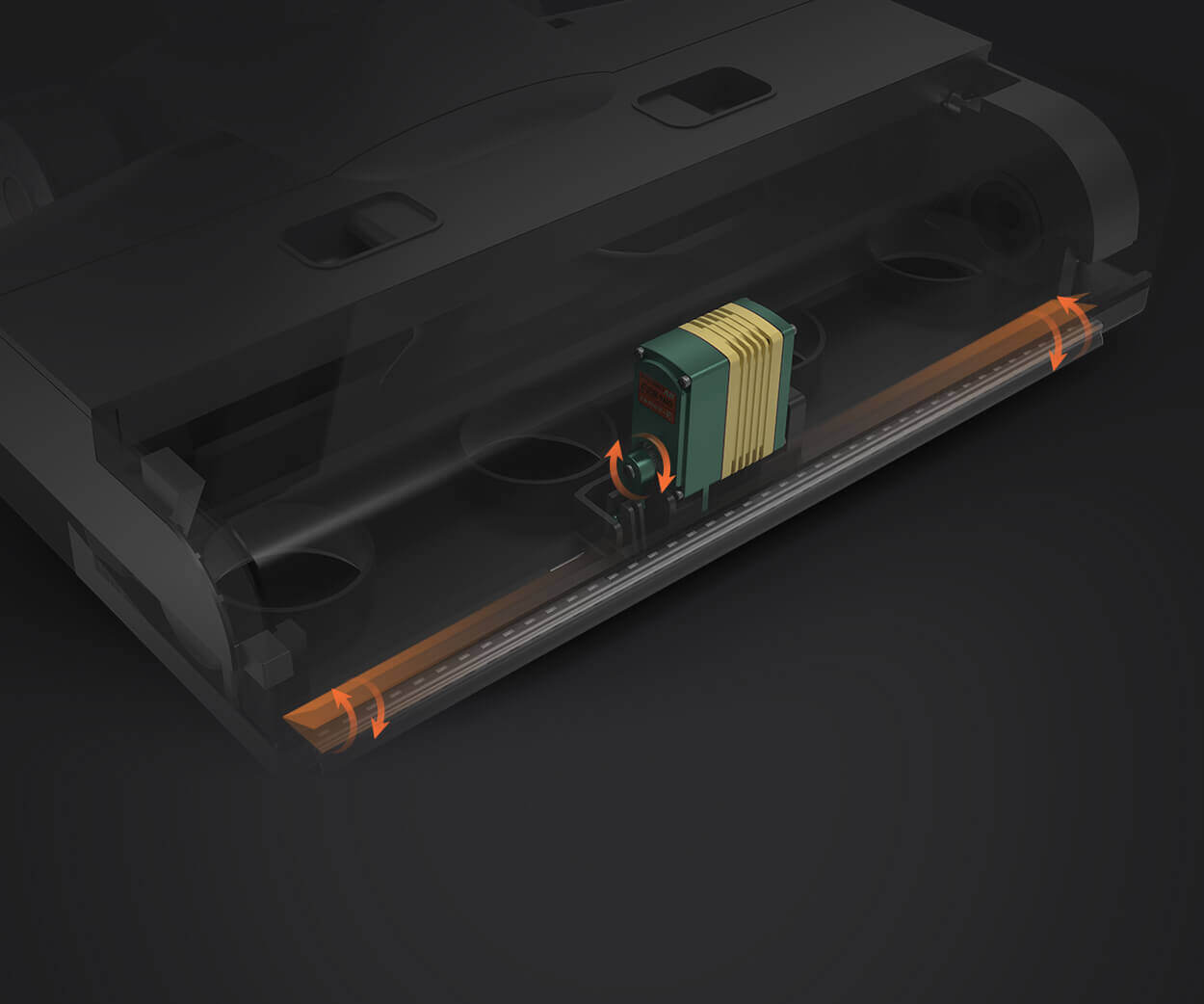
This reminds me of the story of an old friend. He was previously responsible for an automated production line project that used quite good servo motors, but the control system always "stuck" in unexpected situations. He smiled bitterly at the time: "The motor itself responded very quickly, but the whole system seemed to be waiting for a command that was delayed." This problem is typical: we have an agile enough execution unit, but we lack a brain that can respond to events in real time.
This is why the concept of "event-driven" is often mentioned recently. It is not a new word, but in a microservice architecture, it gives hardware control a new way of breathing.
Simply put, it allows each part of the system to become a relatively independent "listener" and "responder". Instead of relying on a central controller to constantly poll, query, and issue instructions, let each module—such as your servo motor control unit—listen to what’s happening in the environment. When an event (such as sensor threshold triggering, external command arrival, or even internal timing completion) occurs, the relevant service is immediately awakened, processed, and then a new event may be triggered.
It's like a group of people cooperating without having to wait for the captain to call out; someone sees the ball coming and will naturally catch it. After receiving it, they may directly pass it to the next open teammate. The entire process is smooth, has low latency, and is more fault-tolerant - in the event that a certain link is temporarily offline, events can be temporarily stored or routed to other places so that the entire process does not stall.
When this architecture encounters mechanical control scenarios such as servo motors and steering gears, what specifically changes?
The response was really fast. Because events are "push" rather than "pull". There is no need to wait for the main loop to scan for signal changes. Once the event is generated, the processing flow starts immediately. This immediacy is critical for multi-axis motion or complex trajectories that require real-time synchronization.
Systems become more loosely coupled. You can upgrade a control module individually, replace another, or even temporarily insert a new diagnostic service without worrying about affecting the whole system. This can save a lot of reintegration time for R&D projects that require frequent adjustments or expansions.
Also, debugging and monitoring are intuitive. All event streams can be recorded, traced and visualized. When a certain servo moves abnormally, you can trace back which event triggered it, what the input data was, and what the context status was. It’s like playing back a video of a game, and it’s clear where the problem lies.
This is a natural question. Moving from traditional centralized control to event-driven does require a change in thinking, but it does not mean overturning everything. Many times, it is more like adding a "nervous system" to an existing system.
You can start piloting the most critical and real-time parts first. For example, let the position feedback signal of the motor be used as an event source, and the signal of the emergency stop switch be used as another event. Let them directly trigger the corresponding control services, bypassing the original main logic loop. Slowly, you will find that some interlocking logic that was once a painstaking process can now be clearly expressed using event routing.
Choosing the right technology stack is important. You need a lightweight, reliable message bus or event streaming platform to ensure that events can be delivered safely and in a timely manner. You need to define clear event contracts so that services know what each other is "saying". You also need to consider state management - event-driven is often asynchronous, how to maintain data consistency?
But don’t worry, these are now supported by mature patterns and tools. The key is not to pursue a big and comprehensive approach when starting out, but to start with a specific small pain point and feel the smoothness of "moving as soon as the event comes".
Speaking of which, I rememberedkpowerexploration in this area. They have been focusing on how to make the hardware control layer smarter and more adaptive. The event-driven microservice architecture is becoming a bridge between them to connect high-performance servo drives and upper-level intelligent decision-making.
By modularizing functions such as motor control, trajectory planning, and fault monitoring into independent microservices and coordinating them through event streams,kpowerallows customers to build systems more flexibly. You can easily add a new sensor, connect a new AI inference module, or adjust motion parameters in real time, while the entire underlying control remains stable and timely.
It's like injecting reflex nerves into a mechanical device. It not only executes orders, but also has an "instinct" ability to respond to environmental changes.
The choice of technical architecture is sometimes like choosing a communication method. Centralized control is like a meeting, where all decisions have to wait for collective discussion; while event-driven, it is more like instant messaging in a team, where you talk about something and do it as soon as you say it, and everyone is responsible.
For fields such as servo motors and mechanical control, accuracy and speed are always the core. But how to maintain the accuracy and speed of the entire system in a changing environment requires a smarter coordination mechanism. Event-driven microservices may be the kind of communication language that allows each hardware unit to remain autonomous and collaborate tacitly.
It may not be suitable for all scenarios, but for projects that need to deal with uncertainty and pursue higher flexibility and observability, it is worth adding it to your options and considering it carefully. After all, making machines work more smoothly is in itself like solving an interesting engineering puzzle—and every architectural evolution brings us one step closer to a more elegant answer.
Established in 2005, Kpower has been dedicated to a professional compact motion unit manufacturer, headquartered in Dongguan, Guangdong Province, China. Leveraging innovations in modular drive technology, Kpower integrates high-performance motors, precision reducers, and multi-protocol control systems to provide efficient and customized smart drive system solutions. Kpower has delivered professional drive system solutions to over 500 enterprise clients globally with products covering various fields such as Smart Home Systems, Automatic Electronics, Robotics, Precision Agriculture, Drones, and Industrial Automation.
Update Time:2026-01-19
Contact Kpower's product specialist to recommend suitable motor or gearbox for your product.


