



























TECHNICAL SUPPORT


Published 2026-01-19
TheservoWhispers: When Your Machines Need to Talk
You know the feeling. The line halts, not with a crash, but with a confused silence. Aservomotor stalls, a sensor throws a random value, and suddenly, your entire sequence is out of sync. You’re left tracing wires, checking logs, wondering where the conversation between your machines broke down. It’s like they’re all speaking different languages, shouting into a void, and you’re the only one trying to listen.
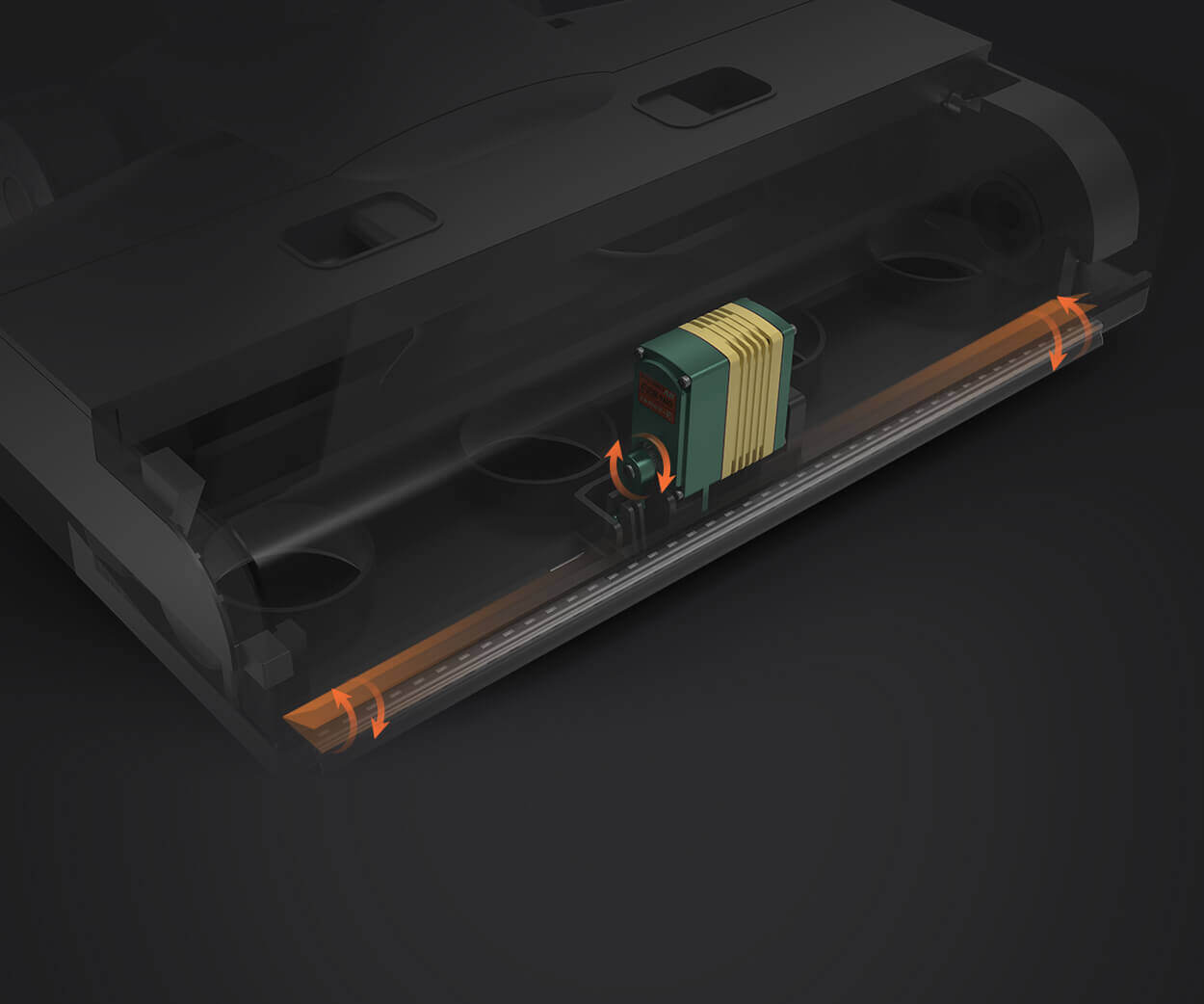
That’s the old way. The monolithic, “shout-and-hope” method of control. Everything bundled, everything interdependent. A hiccup in one corner means a shudder through the whole system. But what if your devices could just… talk to each other? Not in a constant, noisy chatter, but in clear, purposeful whispers—only speaking when they have something important to say?
Let’s shift the scene. Imagine an assembly arm, powered by a precisekpower servo, finishing its weld. Instead of waiting for a central command cycle, it simply sends a tiny message: “Task complete.” A downstream conveyor, listening for just that message, quietly starts moving. A vision sensor, spotting a component, whispers, “Item ready at Station B,” and a gripper activates. No central traffic cop. Just a smooth, flowing conversation. This is the world of event-driven architecture. It’s not just software theory; it’s the missing dialogue for your mechanical world.
So, how do we build this? Where do you even start if you’re more familiar with torque curves than message queues?
You start by thinking differently. Instead of a rigid flowchart, picture a social network for your hardware. Each device—yourkpowerservo, your PLC, your sensor—becomes a member. It goes about its business, but it also pays attention. It “subscribes” to events it cares about. The “conveyorstart” event. The “pressurethreshold_reached” event. When something happens, the device that detects it “publishes” that event. It’s a bulletin board where only interested parties look. This decouples everything. Your servo doesn’t need to know who’s listening; it just announces its action. This makes your system resilient. If one part needs maintenance, the rest keep chatting, unaware.
But isn’t this complex? Doesn’t it need a team of coders?
Here’s where the perspective changes. The complexity isn’t in the daily operation; it’s in the initial setup. And that’s where a structured guide becomes your best ally. Think of it as learning the grammar for this new language. You need to know the core verbs: how to define an event (is it “motoroverheated” or “positionachieved”?), how to ensure messages are delivered reliably (so no whisper gets lost), and how to handle the unexpected—what if two events happen at once?
This is precisely the journey mapped out in resources like the Building Event-Driven Microservices guide. It translates a powerful software pattern into actionable steps for physical systems. It answers the quiet questions you might have:
Q: My equipment is real-time. Can this “chatty” system keep up? A: It’s about precision, not just speed. An event-driven system reacts to change, not the clock. The moment a limit switch is hit, the event fires. It eliminates polling delays—the constant, wasteful “are we there yet?” checking. The response is often faster because it’s direct and on-demand.
Q: This sounds fragile. What if a message fails? A: A good design treats messages as valuable telegrams, not casual shouts. They are persisted, acknowledged, and can be replayed. If a gripper misses a “part_ready” event, the system can resend it. This built-in audit trail is a bonus; you have a natural log of what happened and in what order.
The beauty lies in the simplicity it creates. Adding a new sensor isn’t a wiring and reprogramming nightmare. You just teach it the language and tell it what to listen for or announce. Scaling up becomes a matter of adding more participants to the conversation, not redesigning the entire town hall meeting.
And for the heart of many machines—the servo motor like those fromkpower—this approach is liberating. Its role evolves from a blind follower of PWM signals to an active participant. It can publish its own status: “overload,” “target reached,” “need calibration.” Maintenance becomes predictive. The system self-reports. It’s a move from reactive fixing to proactive understanding.
Ultimately, building this isn’t about chasing a tech trend. It’s about solving that initial silence, that costly halt. It’s about giving your machines a voice so they can tell you what’s wrong, what’s done, and what’s next. The path is laid out, moving from the problem of isolated hardware to the method of event-driven design, detailing the tangible benefits of resilience and scalability, and finally, walking through the practical steps to implement it. You begin by identifying the key “nouns” and “verbs” in your system—the devices and the state changes that matter. You choose a simple message backbone. You start small, with two devices talking. Then, you grow.
The workshop floor doesn’t have to be loud with the noise of central control. It can be efficient, with the gentle, purposeful whispers of machines that finally understand each other. The conversation is ready to start. All you need is to listen, and then, give them the language to speak.
Established in 2005, Kpower has been dedicated to a professional compact motion unit manufacturer, headquartered in Dongguan, Guangdong Province, China. Leveraging innovations in modular drive technology, Kpower integrates high-performance motors, precision reducers, and multi-protocol control systems to provide efficient and customized smart drive system solutions. Kpower has delivered professional drive system solutions to over 500 enterprise clients globally with products covering various fields such as Smart Home Systems, Automatic Electronics, Robotics, Precision Agriculture, Drones, and Industrial Automation.
Update Time:2026-01-19
Contact Kpower's product specialist to recommend suitable motor or gearbox for your product.


