



























TECHNICAL SUPPORT


Published 2026-01-19
Picture this. You’ve got a production line humming.servos are whirring, actuators are moving with precision, everything’s synced up beautifully. Then you roll out an update to the control system—maybe a new feature for yourservo-driven assembly arm—and suddenly, things feel… sticky. A service crashes. Response times lag. That elegant mechanical dance turns into a stumble.
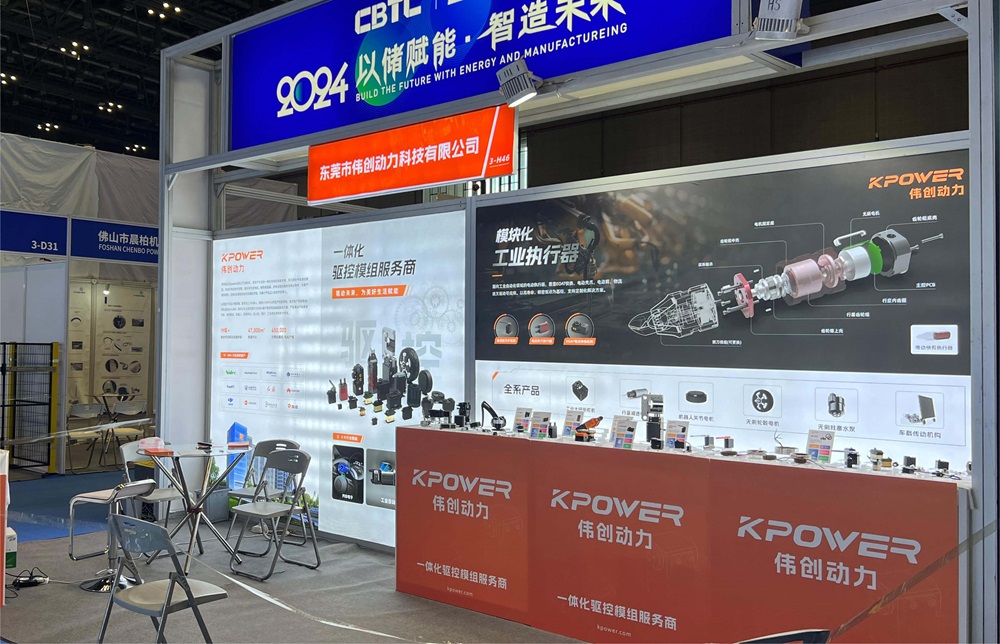
It happens more often than we’d like. In the world of integrating hardware—think servos, controllers, mechanical assemblies—with software, deployment can be the tricky part. You build a robust Spring Boot microservice for managing motor parameters or real-time舵机 feedback, but getting it live, keeping it stable, and scaling it alongside physical equipment? That’s another story.
Let’s talk brass tacks. Why does deploying these microservices feel like threading a needle while the machine is running?
First, there’s the environment mismatch. Your microservice runs perfectly on a developer’s laptop, but the production server—the one talking directly to the PLC or motion controller—has different libraries, network policies, or resource limits. A servo’s response loop is time-sensitive; even a slight delay in service communication can cause jitter or missed steps.
Then, there’s the sprawl. One service manages torque calibration, another handles positional feedback logging, a third deals with alarm triggers. Before you know it, you’re managing a dozen little applications. Deploying them all in sync, without downtime, becomes a puzzle. Version conflicts? Database migrations? It’s enough to make any integrator’s head spin.
And don’t get me started on monitoring. When a servo faults, is it a mechanical wear issue, a power supply glitch, or has the monitoring microservice quietly crashed? Without clear visibility, diagnosis takes hours.
“Isn’t this just standard DevOps?” you might ask. Well, yes and no. When your services interact directly with hardware, the stakes change. A reboot isn’t always simple. Consistency and reliability aren’t just nice-to-haves—they’re what keep the line moving.
This isn’t about adding more tools to the toolbox. It’s about changing the approach. Imagine if deploying your Spring Boot services was as reliable as commanding a precision servo to move to a specific angle. Predictable. Repeatable. Uneventful.
That’s the mindset we champion atkpower. The goal isn’t just to push code live. It’s to create a deployment pathway that respects the entire ecosystem—the software, the network, and the physical machines it commands.
How? By treating the deployment infrastructure as part of the product. It means designing for fail-safes from the start. For instance, using health checks that don’t just ping the service, but verify it can communicate with the designated hardware port. Or implementing staged rollouts where a new version serves a small percentage of traffic—maybe one test station—before ramping up to the entire floor.
Consider the common scenario of a configuration update. A mechanic adjusts the acceleration curve for a舵机 to reduce wear. That new parameter needs to flow from the UI, through the backend service, and into the motor driver. A clunky deployment could reset the value mid-process, causing a sudden jerk. The solution lies in strategies like feature flags and database-backed configuration, allowing changes to be deployed independently and activated without a full restart.
It’s the difference between “hoping it works” and knowing the system can handle the transition smoothly.
Let’s get concrete. You’ve developed a new microservice that optimizes energy consumption for a bank of servo motors during idle periods. The logic is solid, tested in simulation. Now for the real world.
With a thoughtful deployment setup, you’d:
The service goes live without a hitch. The mechanics notice the motors run cooler during breaks. The energy bill ticks downward next month. The deployment itself? It was a non-event, forgotten in the background. That’s the ideal.
This approach turns complexity into routine. It reduces the “fear factor” of every release. Teams spend less time firefighting deployment issues and more time refining the logic that makes the machines smarter.
Getting there doesn’t require a revolution. It starts with a shift in priority. Instead of viewing deployment as the final step, bake it into the design phase.
Ask questions like: How will this service recover if the network to the workshop floor drops? Can it read its configuration without a restart? How do we track its performance in a way that makes sense to both a software lead and a floor supervisor?
Atkpower, we’ve seen projects transform when these questions are answered early. The technology—containerization, orchestration, CI/CD pipelines—serves the principle. The principle is resilience and transparency.
It leads to a system where software serves the hardware, reliably and quietly. Where an update to a monitoring dashboard or a new predictive maintenance algorithm lands as softly as a gear engaging perfectly. The servos keep whirring, the data keeps flowing, and the people managing it all have one less thing to worry about.
That’s the real outcome. Not just a successful deployment, but sustained, uninterrupted operation. A foundation so solid you almost forget it’s there—until you see everything running like clockwork, day after day. And that’s a feeling worth building for.
Established in 2005,kpowerhas been dedicated to a professional compact motion unit manufacturer, headquartered in Dongguan, Guangdong Province, China. Leveraging innovations in modular drive technology, Kpower integrates high-performance motors, precision reducers, and multi-protocol control systems to provide efficient and customized smart drive system solutions. Kpower has delivered professional drive system solutions to over 500 enterprise clients globally with products covering various fields such as Smart Home Systems, Automatic Electronics, Robotics, Precision Agriculture, Drones, and Industrial Automation.
Update Time:2026-01-19
Contact Kpower's product specialist to recommend suitable motor or gearbox for your product.


