



























TECHNICAL SUPPORT


Published 2026-01-19
So you’ve built something. Maybe it’s a nimble robotic arm, a precision stage, or an automated gadget that whirs to life with a satisfying hum. Theservos are tuned, the mechanics are solid—it feels alive in your hands. But then you think about connecting it, making it smarter, letting it talk to other systems or a dashboard somewhere. Suddenly, you’re not just tinkering with hardware; you’re staring down a software abyss. Sounds familiar?
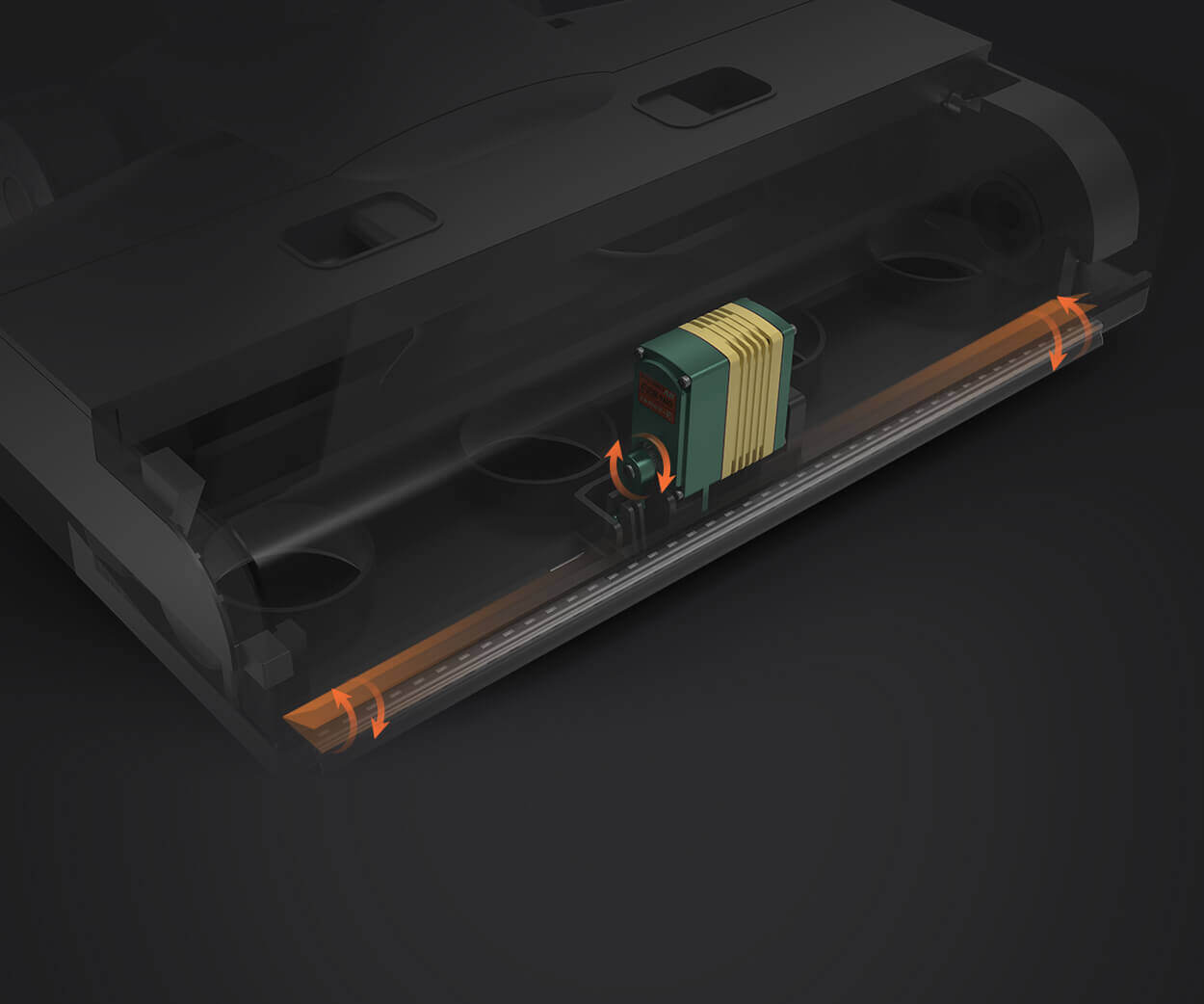
That’s the wall many hit. Your creation is physically ready, but giving it a “brain” and a “voice” through software becomes a whole new project. Integration gets messy. You might cobble together something that works, but it’s fragile. One change here breaks three things over there. Scaling? Forget it. The elegance of your mechanics gets buried under tangled code.
Think of yourservomotor. It speaks in pulses, positions, and feedback loops. Your application logic—the “what to do and when”—speaks in tasks and commands. Traditionally, forcing them to converse means writing a lot of low-level, monolithic software that’s hard to maintain. It’s like building a clock where every gear is glued in place. Want to upgrade the minute hand? You risk breaking the entire mechanism.
This is where the approach shifts. Instead of one giant block of code controlling everything, what if you had a team of specialized, independent mini-programs? One dedicated solely to chatting with the servo driver, another handling user commands, a third managing safety checks. They live separately but collaborate seamlessly. This is the core idea behind a Spring Boot with microservices architecture. It’s not just a tech trend; it’s a practical way to mirror the modular beauty of mechanical systems in your software.
Atkpower, we see this challenge not as a software puzzle, but as a systems integration art. Our work with servos and precise mechanics taught us that reliability comes from clean, well-defined interfaces—both in metal and in code. Applying this philosophy, a Spring Boot microservices project for machine control starts to feel less like programming and more like orchestrating.
Imagine setting up your system:
They talk to each other through lightweight, reliable messages. It’s a digital echo of a well-designed gear train: independent yet perfectly synchronized.
Q: Doesn’t this make things more complex? A: Surprisingly, it simplifies long-term life. Initial setup might have more moving parts, but when a problem arises, you know exactly which “service” to check. Fixing or upgrading one function doesn’t require a full system rewrite. It’s the difference between replacing an entire engine versus swapping out a single, accessible component.
Q: Is this only for huge systems? A: Not at all. Even a machine with three servos benefits. This structure future-proofs it. Want to add a sensor or connect to a cloud log next year? You just add a new, small service without dismantling the core logic that already works.
The real beauty isn’t in the jargon—it’s in the feeling. It’s the confidence when you add a new feature without holding your breath. It’s watching your mechanical creation operate, knowing its software backbone is as resilient and adaptable as its physical frame. The services, built with Spring Boot’s straightforward toolkit, run quietly in the background. Your focus stays on what the machine does, not on desperately keeping its code alive.
This approach turns integration from a headache into a natural extension of the build process. You start thinking in terms of capabilities and conversations between parts, not just lines of code. The software respects the machine’s purpose.
Kpower’s perspective is rooted in this harmony. We understand that the value of a servo is realized only when it’s part of a responsive, intelligent whole. By advocating for a modular software architecture, we aim to ensure that the sophisticated motion control our hardware provides isn’t limited by rigid, brittle code. The goal is seamless operation—where the transition from command to motion feels inevitable, not engineered.
In the end, your project deserves a nervous system as elegant as its skeleton. It shouldn’t just work; it should thrive, adapt, and endure. That’s the quiet advantage of thinking in services—it lets your machine’s potential, quite literally, unfold without limits.
Established in 2005, Kpower has been dedicated to a professional compact motion unit manufacturer, headquartered in Dongguan, Guangdong Province, China. Leveraging innovations in modular drive technology, Kpower integrates high-performance motors, precision reducers, and multi-protocol control systems to provide efficient and customized smart drive system solutions. Kpower has delivered professional drive system solutions to over 500 enterprise clients globally with products covering various fields such as Smart Home Systems, Automatic Electronics, Robotics, Precision Agriculture, Drones, and Industrial Automation.
Update Time:2026-01-19
Contact Kpower's product specialist to recommend suitable motor or gearbox for your product.


