



























TECHNICAL SUPPORT


Published 2026-01-19
So you’ve got these microservices. They’re supposed to be these neat little helpers, right? Each one does its own job perfectly. But then you step back and realize — they aren’t talking to each other. Or worse, they’re all talking at once, a room full of experts shouting different instructions. Your system feels less like a precision machine and more like… well, chaos.
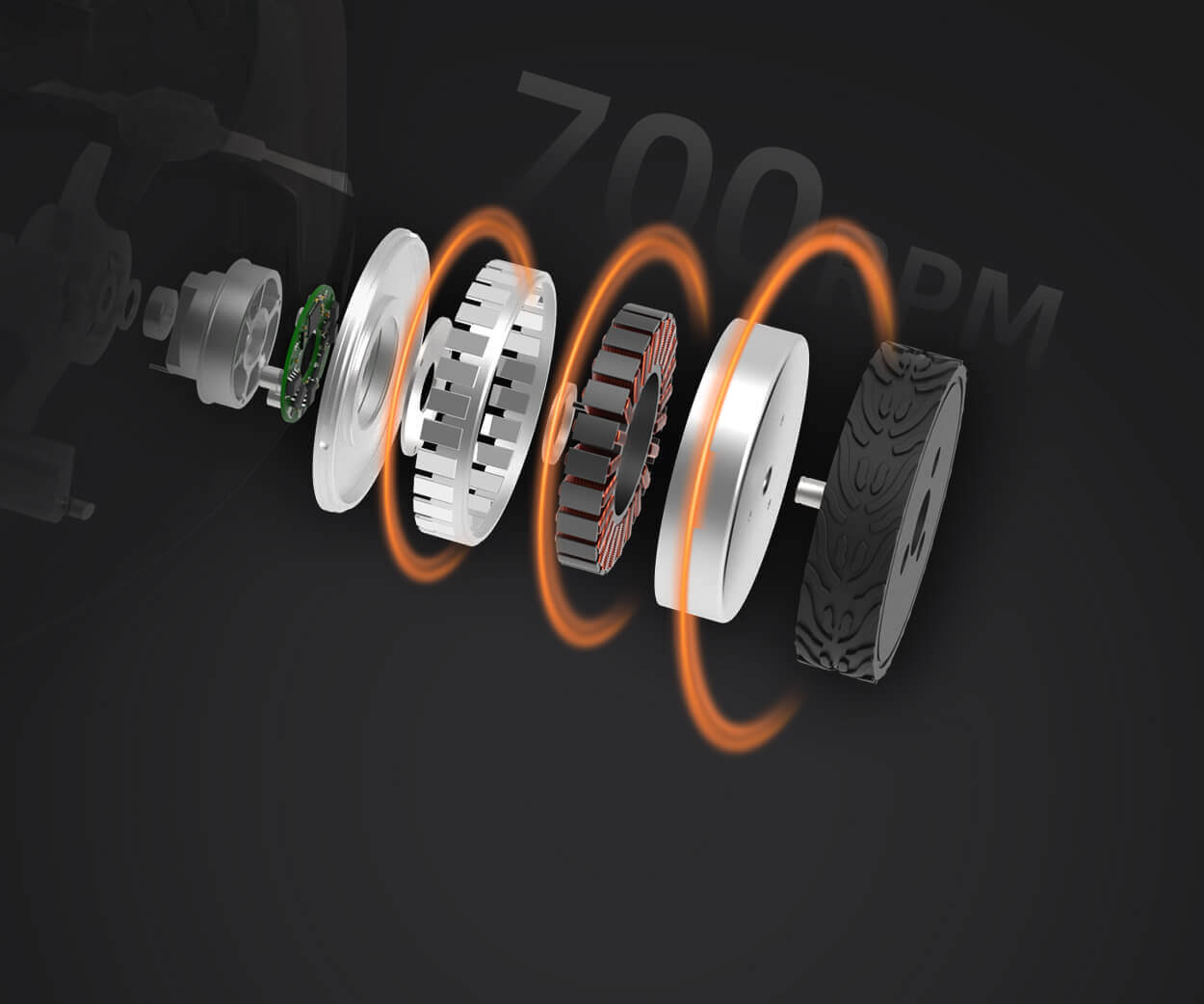
Think about it. You design a beautiful robotic arm. Everyservomotor is tuned, each gear placed with care. But if the motors don’t sync, the arm jerks or freezes. It doesn't matter how good each part is alone; if they can’t communicate, the whole project grinds to a halt. That’s the messy reality many hit when scaling with microservices. The dream of agility meets the noise of disconnection.
How do you get them to communicate? Not just exchange data, but do it reliably, quickly, and without constant babysitting?
Sure, you know about APIs and message queues. It’s the equivalent of knowing you need wires to connect yourservoto a controller. But what kind of wires? How thick? Should signals be analog or digital? How do you handle interference when tenservos try to move at once?
In microservices, communication isn’t just a technical checkbox. It’s the nervous system of your application. Get it wrong, and failures cascade. Get it right, and everything flows — smooth, responsive, resilient.
One approach gaining ground is event-driven communication. Here, services don’t call each other directly. Instead, they broadcast events: “This happened.” Others listen and react if they need to. It’s like your robot’s central sensor detecting an obstacle and every connected servo adjusting without being told step-by-step. Loose coupling. Natural coordination.
But how do you implement this without introducing new complexity?
Let’s get practical. Say Service A updates a customer order. Service B manages inventory, and Service C handles logistics. If A talks directly to B and C, a failure in C could block the whole process. Not ideal.
Now imagine A simply publishes an event: “Order Updated.” B and C subscribe. If C is temporarily down, it catches up later when back online. The system stays partially operational, not dead in the water. This async pattern avoids the brittle chains of direct calls.
Yet, you might wonder, won’t things get lost in the chatter? That’s where the backbone matters — a robust message broker or service mesh that ensures delivery, manages retries, and keeps traffic flowing smoothly. It’s not magic; it’s thoughtful architecture. Like choosing a high-torque servo that won’t skip steps under load, you need communication layers that won’t drop messages when things get busy.
But isn’t this slower? Sometimes, a bit. But latency isn’t always the enemy. Consistency and resilience often matter more. And for real-time needs, hybrid models exist — blending direct calls for urgent tasks with async events for the rest. Flexibility is key.
Building this isn’t just about tools. It’s about a mindset. Atkpower, we see it daily: the best outcomes come from systems that communicate as intended, where every part knows its role and trusts the signals it receives. Our work with motion control taught us that. Whether it’s synchronizing servo motors in an automated assembly line or ensuring microservices collaborate seamlessly, the principles feel similar.
It’s not about pushing the flashiest tech. It’s about listening to what your system actually needs. Does it need strict consistency or eventual consistency? Should services chat synchronously or asynchronously? There’s no one-size-fits-all — just thoughtful choices based on real behavior.
We lean into solutions that are transparent. No black boxes. You should see how data moves, where bottlenecks form, and how to tune the flow. That clarity turns complexity from a foe into a feature.
So, when you’re wrestling with microservices that feel like disconnected cogs, pause. Think about the conversations they should be having. Are they yelling or listening? Constantly waiting or flowing freely?
Good communication architecture, much like a well-engineered mechanical system, doesn’t call attention to itself. It just works. And when it does, everything else — scalability, maintenance, innovation — becomes simpler.
Your services can work in concert. They can be robust, adaptable, and quietly brilliant. It starts with getting them to talk not just more, but better. And sometimes, that means choosing partners who understand both the blueprint and the heartbeat of your project.
Established in 2005,kpowerhas been dedicated to a professional compact motion unit manufacturer, headquartered in Dongguan, Guangdong Province, China. Leveraging innovations in modular drive technology,kpowerintegrates high-performance motors, precision reducers, and multi-protocol control systems to provide efficient and customized smart drive system solutions. Kpower has delivered professional drive system solutions to over 500 enterprise clients globally with products covering various fields such as Smart Home Systems, Automatic Electronics, Robotics, Precision Agriculture, Drones, and Industrial Automation.
Update Time:2026-01-19
Contact Kpower's product specialist to recommend suitable motor or gearbox for your product.


