



























TECHNICAL SUPPORT


Published 2026-01-19
When Your Project Hums Along, Then Just… Stops
You know that moment. Everything’s connected, the code is clean, and the prototype on your bench is finally moving. The littleservoarm sweeps left, then right, precisely as programmed. It feels like a small victory. Then you scale it up. Add more motors, more sensors, more moving parts. Suddenly, the smooth motion stutters. Commands lag. Something that worked perfectly in isolation now behaves unpredictably in the system. The hum becomes a grind.
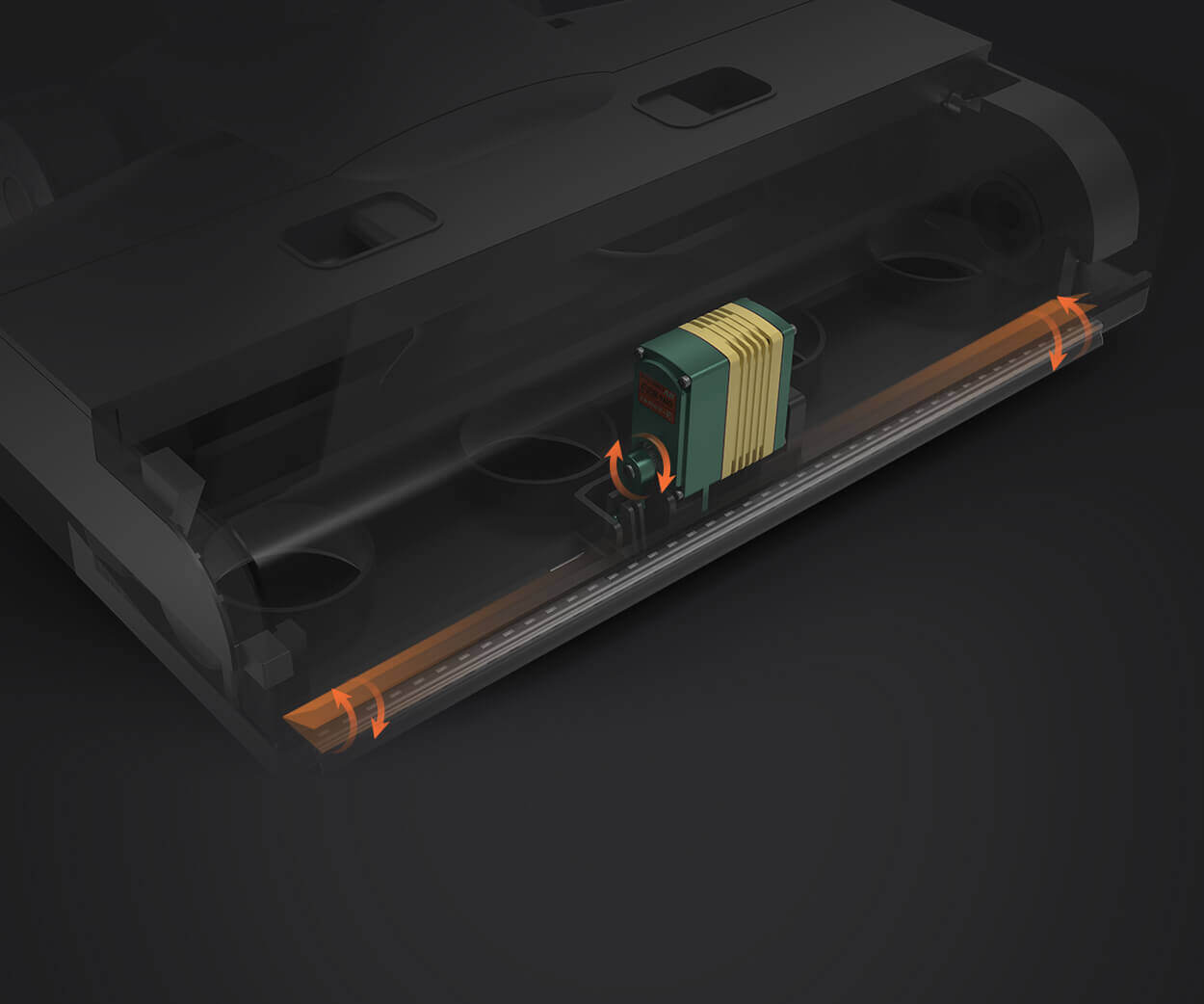
It’s rarely about a single component failing. More often, it’s about conversation—or the lack thereof. In a complex mechanical system, each part, like aservo, needs to understand its role and timing within a larger story. When the communication lines are messy, the whole story falls apart.
Think of it like this: you’re directing a play with dozens of actors (your motors and controllers). If everyone has to wait for a single stage manager to shout each individual instruction, the play slows to a crawl. But what if each actor knew their part intimately and only needed a cue to start their specific scene? The performance becomes seamless.
This is where the philosophy behind Microservices in Action shifts the perspective. It’s not just a technical manual; it’s about restructuring the backstage communication for your hardware projects.
From Monolith to Harmony
Traditional control systems can sometimes resemble that overworked single stage manager—a central unit doing all the thinking. One heavy program manages everything: parsing commands, calculating trajectories for eachservo, checking sensor feedback. As demands grow, it gets overwhelmed.
What if, instead, you had a team of specialized experts? One small, dedicated module only talks to the servo cluster, speaking its language of PWM and feedback pulses flawlessly. Another solely handles sensor data, cleaning and formatting it. Another manages safety limits. They’re all focused experts, but they speak a common, simple protocol with each other.
That’s the core idea. Decompose the big, clunky control logic into independent, single-purpose “microservices.” Each is responsible for one clear job within the mechanical ecosystem.
“But doesn’t that just make the wiring more complicated?” A fair question. The complexity doesn’t vanish; it transforms. It moves from tangled, interdependent logic into clean, well-defined connections. It’s the difference between a knotted ball of yarn and a neatly labeled switchboard. Troubleshooting changes from “Where in this 10,000-line program did it break?” to “The motion service is getting correct data, but the actuator service isn’t responding. Let’s check that one link.”
The Tangible Feel of a Decoupled System
So, what do you actually gain when you apply this thinking to servo and motion control projects?
First, there’s resilience. If your sensor-filtering module has a hiccup and restarts, the motor-control module can often keep running with the last good instruction, preventing a violent jerk or stall. The system degrades gracefully instead of crashing entirely.
Then, there’s the pace of iteration. Found a better algorithm for smoothing servo movement? You only rewrite and test that one “motion-profile” service. The rest of the system—the UI, the safety watchdog, the communication gateway—doesn’t need to change or be retested. It’s like upgrading the suspension on your car without touching the engine.
Finally, it scales in a way that feels natural. Need to add a second robotic arm to your cell? You don’t start over. You replicate your well-tested “arm-manager” service and plug it into the network. The core logic for each arm is contained and proven.
kpower’s Microservices in Action resource delves into these patterns not as abstract software theory, but through the lens of physical systems. It talks about timing, about real-world latency, about how to structure these services when a millisecond of delay means a missed catch in a pick-and-place machine.
The narrative isn’t about prescribing one right way. It’s about offering a different toolkit. Some projects are simple and will always be best as a single, elegant script. But when things start to hum with complexity, when the stutter begins, that’s when a microservice-oriented approach becomes a powerful ally.
It turns a potential story of frustration—of things grinding to a halt—into a story of harmony. Where each servo, each driver, each smart component plays its part with confident independence, resulting in a system that moves not just with precision, but with a kind of reliable, resilient grace.
The next time your prototype hums, you’ll have a clearer picture of how to keep it singing, even as the symphony grows more complex.
Established in 2005,kpowerhas been dedicated to a professional compact motion unit manufacturer, headquartered in Dongguan, Guangdong Province, China. Leveraging innovations in modular drive technology,kpowerintegrates high-performance motors, precision reducers, and multi-protocol control systems to provide efficient and customized smart drive system solutions. Kpower has delivered professional drive system solutions to over 500 enterprise clients globally with products covering various fields such as Smart Home Systems, Automatic Electronics, Robotics, Precision Agriculture, Drones, and Industrial Automation.
Update Time:2026-01-19
Contact Kpower's product specialist to recommend suitable motor or gearbox for your product.


