



























TECHNICAL SUPPORT


Published 2026-01-19
Imagine you are debugging a precision robotic arm. The servos of each joint respond to instructions within milliseconds to complete grabbing, rotation, and placement. Everything is designed to be nearly perfect—until a completely new part suddenly needs to be processed on the production line. Reprogram? On-site debugging? The whole process stops and waits. Time passes by in a ticking sound, and costs rise silently.
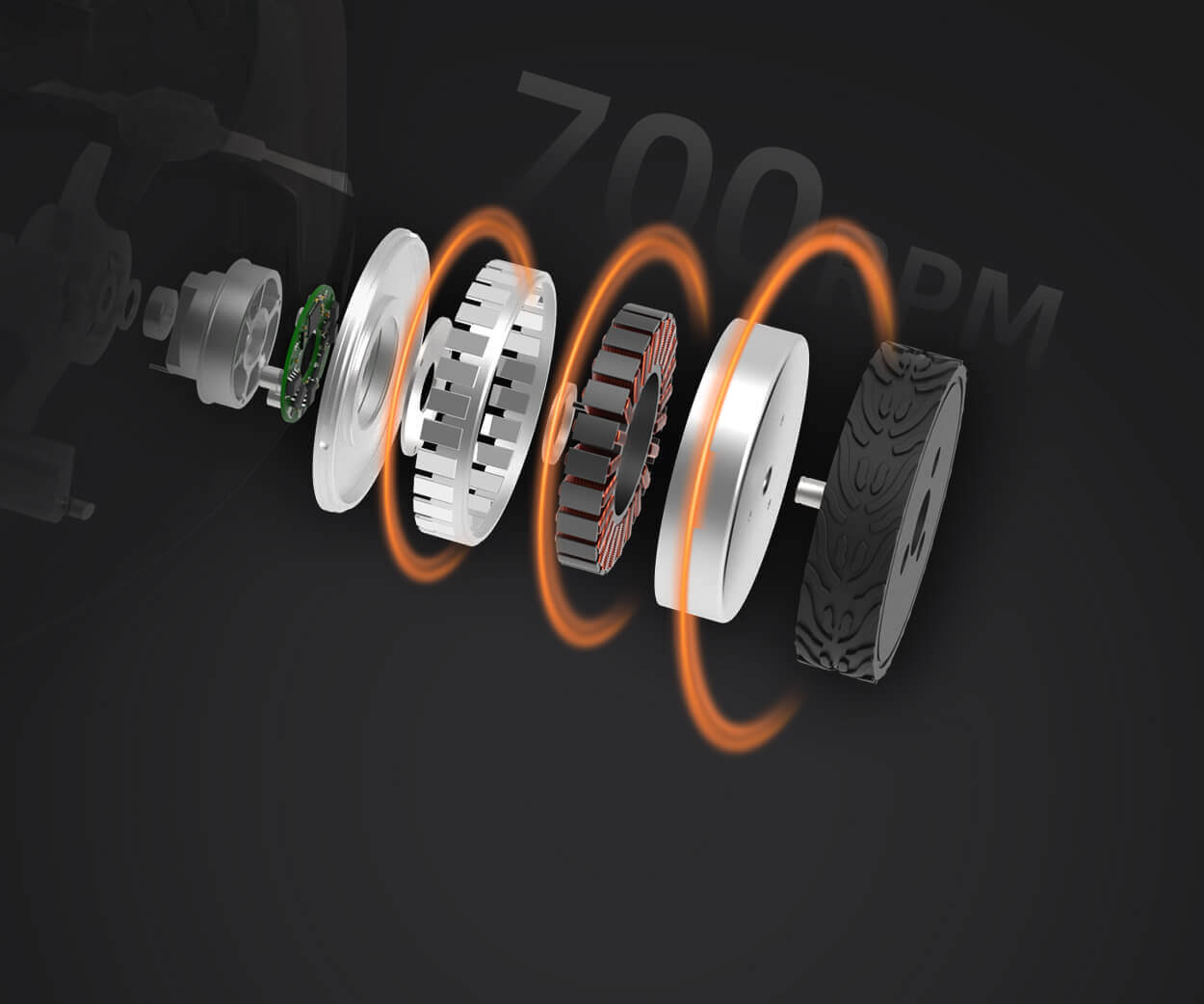
This is not just a story from a corner of a factory. It happens every day, in countless motion control-related scenarios. The hardware is great, but what about flexibility? What about the ability to respond to change? Sometimes it feels like driving a high-performance sports car on a predetermined, never-changing one-way street.
Where is the road?
Perhaps the answer lies not in the hardware we hold tightly, but in how we "connect" and "endow" it with intelligence. This leads to the topic we are going to talk about today - connecting the solid mechanical world with the seemingly ethereal "cloud". Don’t get me wrong, I’m not talking about the weather here, but the kind of capabilities represented by cloud computing platforms like Microsoft Cloud Services: a remote, elastic, and intelligent data processing and collaboration capability.
You may frown: "My servo motors and steering gears, they are very 'real'. Cloud? It sounds too 'virtual'." This idea is normal. But let’s change the angle: What is the core value of servo motors? It is to execute the order accurately. And where does the order come from? From a smarter "brain". Traditionally, this brain is in the industrial computer next to it, keeping track of everything locally. But what if this brain could absorb data from around the world, learn without stopping, and be upgraded without you having to change a single screw?
This is where the changes begin.
The method is not as sci-fi as it sounds. Think about it, passkpowerYes, you can securely synchronize key data of the motion controller—such as real-time torque, rotational speed, position accuracy, and temperature—to the cloud. These data are no longer logs sleeping on the local hard drive, but have become living materials.
Then, in the cloud, the computing service starts working. What can it do? For example: it can analyze motion curves of thousands of cycles to find the fluctuation pattern that causes tiny efficiency losses; it can issue maintenance warnings through trend analysis hours before a failure occurs; even better, when you need to adjust the entire motion parameters for a new product, you can simulate and test the new control directly in the cloud. After verification, it can then be seamlessly deployed to similar equipment in any factory around the world.
What difference does this make?
It’s the predictability of the problem. Mechanical wear and performance drift never happen in an instant. Continuous analysis in the cloud is like a tireless doctor doing 24-hour health monitoring, allowing you to move from "passive maintenance" to "active maintenance".
It is the replicability of knowledge. The optimal parameters debugged by a senior engineer at the headquarters can instantly become the standard for all similar equipment through the cloud. Experience is no longer locked into an individual or a single site.
Furthermore, it is the ultimate in flexibility. Does the market require small batch and multi-batch production? The cloud can quickly generate and deliver the corresponding motion program package, allowing your production line to adapt to changes like changing a Lego set without the need for lengthy downtime and manual reconfiguration.
Of course, not all cloud services are created equal, especially in the industrial sector. When you consider a platform like Microsoft Cloud Services, you might want to ask yourself a few simple questions:
Is it "strong" enough? Industrial environments require reliability and safety first. Can the service promise extremely high uptime? Does data encryption and transmission provide peace of mind?
Can it “understand” industrial language? Does the platform provide easy-to-use tools to connect, parse, and process the massive amounts of data coming from servos, sensors, and other devices, rather than requiring you to build everything from scratch?
Is it "growing"? Technology is changing with each passing day. Is the cloud platform itself continuing to integrate new capabilities such as the Internet of Things, advanced analytics, and even digital twins to ensure that your investment will not become obsolete in the future?
andkpowerWhen combined, the outlines of these problems often become clearer. Because it focuses on motion control itself, the data bridge from the device to the cloud is built more directly and robustly.
The story is no longer about silent machines operating in isolation. The story becomes about a network, an ecosystem. In this system, each servo motor is no longer the end point of information, but a node in the intelligent cycle. They perform and learn; they work and communicate.
The change is quiet. There's no new buzz added to the shop floor, but decisions have become clearer than ever. Instead of receiving an emergency repair order, the maintenance team receives a methodical plan of recommendations. When management wants to understand overall equipment efficiency, they don’t see a mountain of reports but clear, real-time insights on a cloud dashboard.
This may be the gentleness brought about by technological evolution: it does not violently overthrow the old world, but gives a pair of invisible wings to the sturdy machines we trust. Let precision become smarter; reliability become more forward-looking.
Ultimately, what drives the future is not only the torque of steel, but also the pulse of data. And when the two work together smoothly, those old questions about efficiency and flexibility begin to have new answers.
Established in 2005,kpowerhas been dedicated to a professional compact motion unit manufacturer, headquartered in Dongguan, Guangdong Province, China. Leveraging innovations in modular drive technology, Kpower integrates high-performance motors, precision reducers, and multi-protocol control systems to provide efficient and customized smart drive system solutions. Kpower has delivered professional drive system solutions to over 500 enterprise clients globally with products covering various fields such as Smart Home Systems, Automatic Electronics, Robotics, Precision Agriculture, Drones, and Industrial Automation.
Update Time:2026-01-19
Contact Kpower's product specialist to recommend suitable motor or gearbox for your product.


